

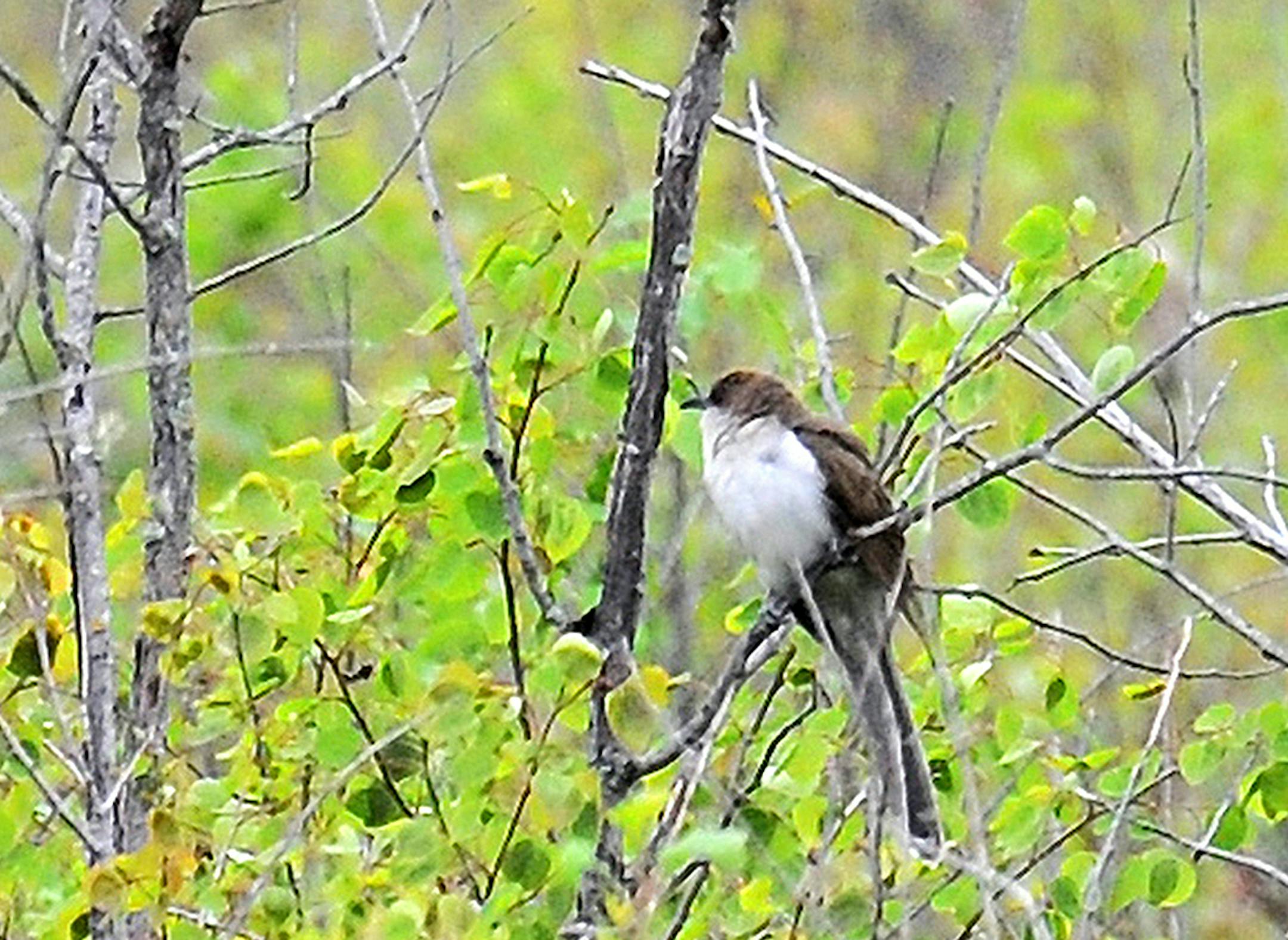
If I say "cuckoo" what word comes to mind?
Yes, clock. One of the world's most interesting bird families is tied to my grandmother's mantelpiece.
If German clockmakers in the early 18th century had been successful in their first desire — a rooster popping out of that little door and crowing on the hour — there would be no "coo-coo" clocks. The clockmakers could not replicate the crowing sound.
Cuckoos are named for the sound they make. This is an example of onomatopoeia — the dictionary definition being: a word created from the sound associated with what is named.
The equivalent of "coo-coo" exists in at least 19 languages as name for the bird, according to Mark Cocker, author of the book "Birds and People." In English, cuckoo is the bird, but also a person regarded as crazy.
Local species
There are 144 species of cuckoos worldwide, two of which can be found in Minnesota: black-billed and yellow-billed cuckoos.
Cuckoos are known for laying eggs in the nests of other bird species. Of the 144 species, 57 are obligate nest parasites — obliged by nature to behave that way.
The two species found here build nests and tend their own eggs and hatchlings unless there is a bountiful food supply. In that case, the hen will continue to lay, searching for nests of other bird species in which to make a deposit.

