

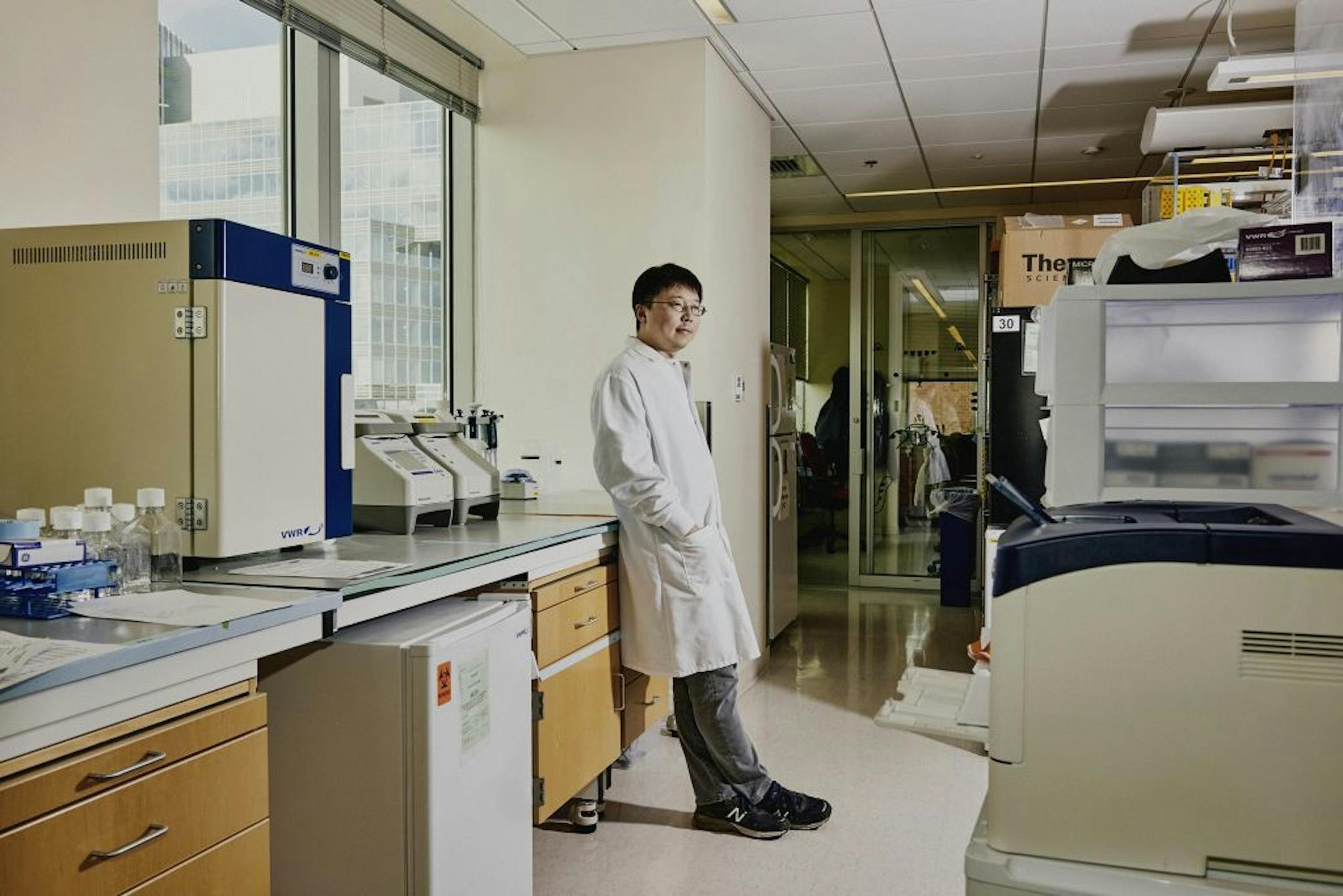
The gene-editing tool that has revolutionized biology is becoming even more powerful.
CRISPR, as the system is known, allows scientists to target and snip a specific sequence of letters on a strand of DNA with unprecedented precision. That has opened up new possibilities for treating genetic diseases, helping plants adapt to global warming and even preventing mosquitoes from spreading malaria.
CRISPR is made up of two basic components. The first is a piece of RNA that locates a predetermined sequence of DNA in an organism's genome that scientists want to alter. The second is a type of protein called an enzyme that attaches itself to the target section of DNA and splices it.
Cas9 has been the workhorse enzyme because it executes a neat, blunt cut. But in the last few years, scientists have started to search for — and find — alternative CRISPR systems that cut with enzymes other than Cas9.
"Cas9 is a powerful tool, but it has limitations," said CRISPR pioneer Feng Zhang, a bioengineer at MIT and the Broad Institute. "Each of these proteins has shortcomings and strengths, and together they help us create a much more versatile box of tools."
Some of the new Cas enzymes cut DNA in different ways that make certain edits more likely to work. Other enzymes are smaller, allowing scientists to more easily insert them into cells.
"The diversity of CRISPR proteins is exceptionally broad," said Benjamin Oakes, an entrepreneurial fellow at the Innovative Genomics Institute, a joint project of the University of California, Berkeley and the University of California, San Francisco. "They have been evolving over millennia and nature has developed hundreds, if not thousands, that can work."
In nature, bacteria use this technology as a defense mechanism to find and destroy attacking viruses.


