

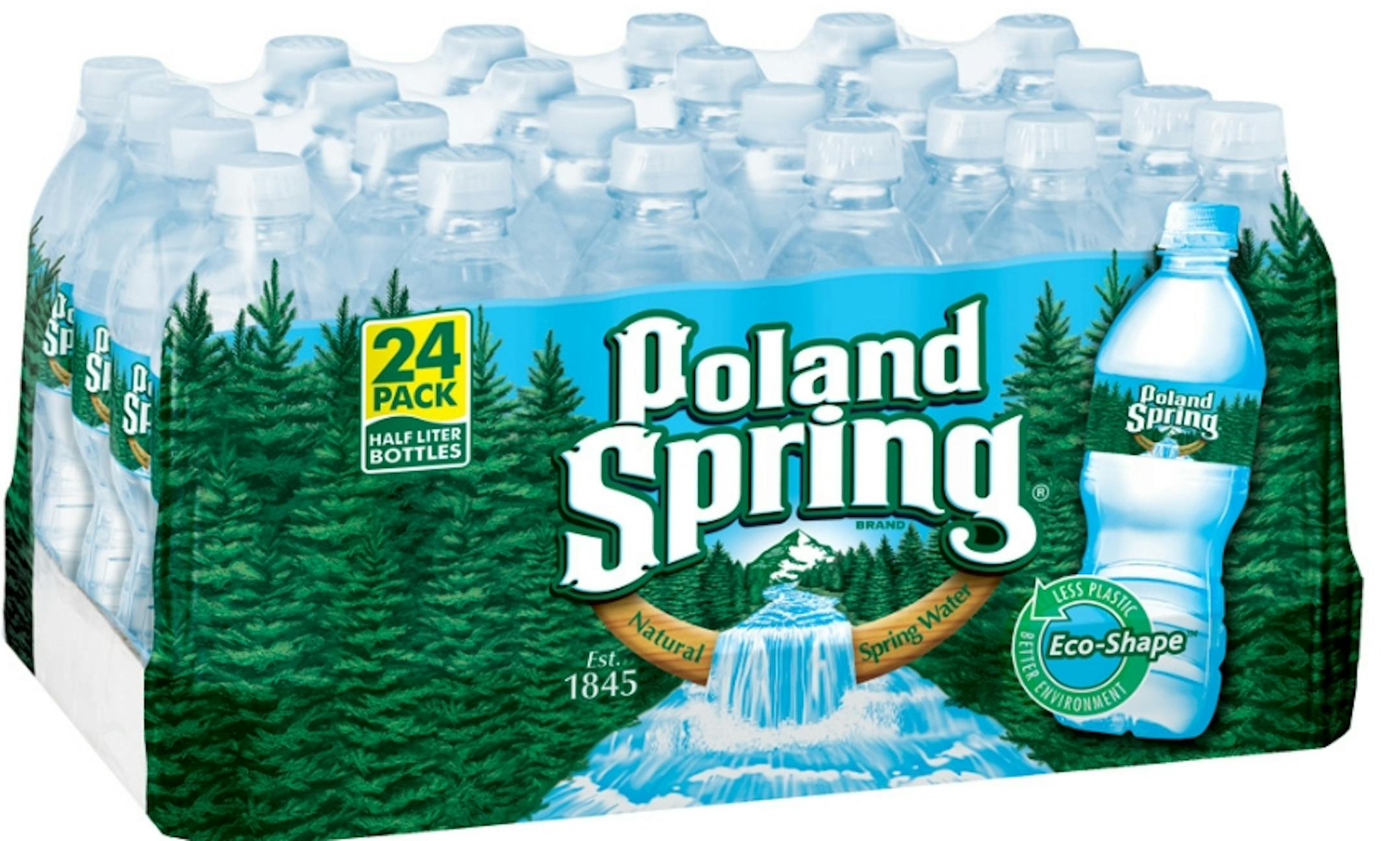
If you've bought a bottle of spring water recently -- a little, half-liter one, the single serve kind -- you might have noticed how fragile it was: cellophane-thin walls, so easy to squish and crinkle; tiny, fiddly caps that seem to come off without any effort.
Why have the bottles become so insubstantial?
The answer: environmentally friendly operations. Or, less charitably but perhaps more accurately, operations that cut down on raw material use and, along the way, have environmentally pleasant side benefits.
Often, we think of operations management as a quest simply to cut costs, or speed up processes, in the name of ever-larger profits. It is that. But when companies tweak their operations to save money, they often end up having a positive environmental impact as well.
Consider Nestlé Waters North America, the company behind water brands such as Poland Spring, Arrowhead and Deer Park. It manufactures its own bottles -- an astonishing 20 billion each year. Starting about seven years ago, the company began to examine its processes. It discovered that it could use far less material in manufacturing its bottles, and that those bottles represented 55 percent of the company's carbon footprint.
"When you make improvements, you tackle the items with the most impact first," CEO Kim Jeffery said. "The bottle was the logical place to go."
In a comparison of a Poland Spring half-liter bottle from 2005 and one from 2012, the differences aren't merely aesthetic. Making the 2005 bottle required 14.6 grams of resin. The 2012 bottle uses only 9.2 grams.
"We used to go through 600 million pounds of resin each year," Jeffery said. "Today, even though we're making more bottles because the business has grown, we use 400 million pounds of resin."


