

WARRENS, Wis. — Trying to walk in bulky waders feels wobbly enough. Add the challenge of moving through a flooded marsh without snagging a boot on a mat of underwater vines, and there's a real risk of pitching forward face-first.
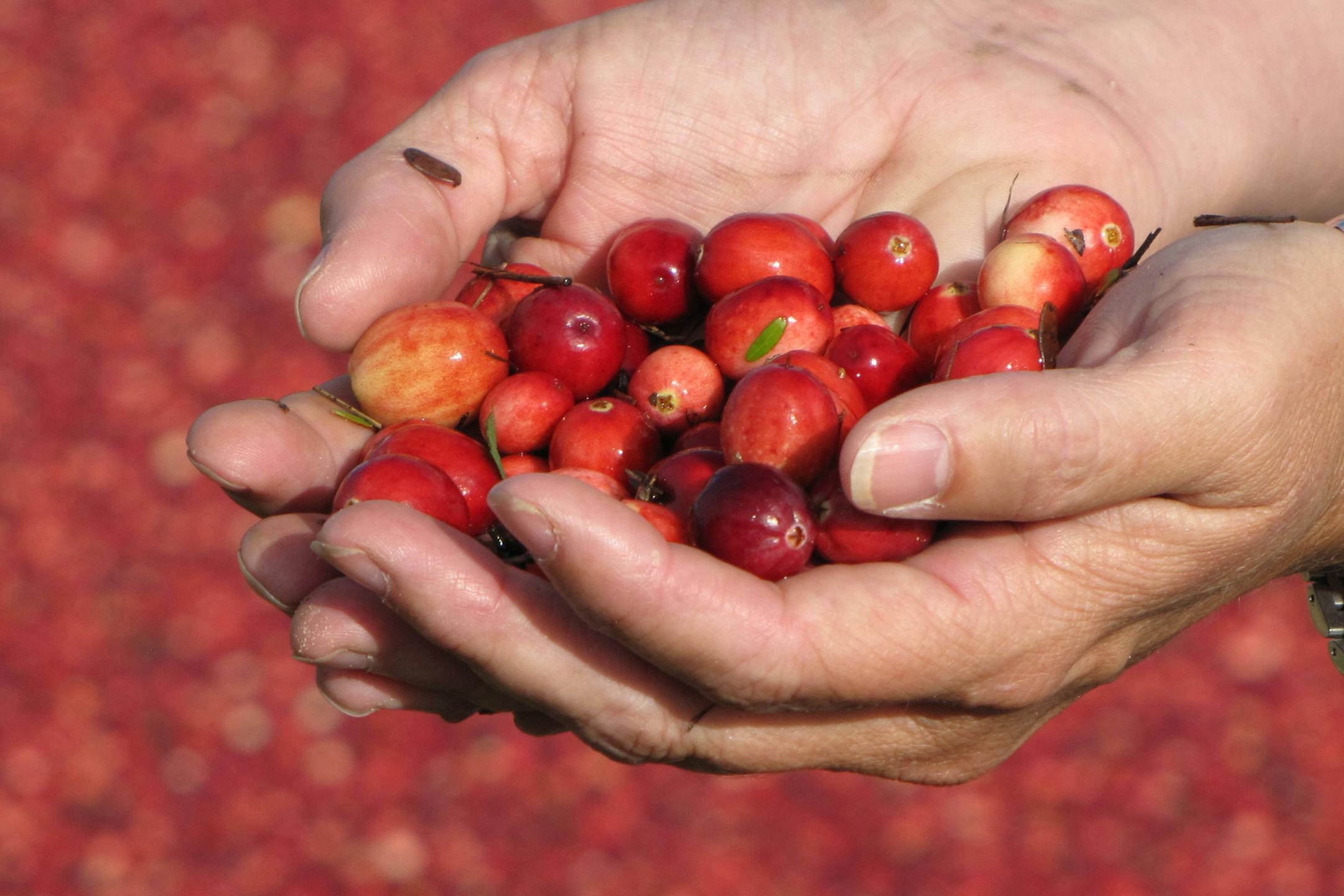
But the reward is a glorious visual feast, a thick sea of candy-red cranberries that undulates with each clumsy step. It's harvest season in Wisconsin, and a chance to witness one of the Midwest's more eye-popping autumn activities.
Roughly 20 counties in Wisconsin grow cranberries with most clustered around Warrens and Wisconsin Rapids southeast of Eau Claire, with some between Manitowish Waters and Eagle River in the state's northeast corner.
Wisconsin State Cranberry Growers estimate the 2014 harvest will be close to 5.4 million barrels, which is more than half of America's harvest and more than twice as much as Massachusetts, the second-largest cranberry-producing state.
While Wisconsin easily ranks No. 1 for the tart fruit synonymous with Thanksgiving, cranberries often get overlooked in a state where cheese, brats and beer typically take top billing. This weekend, though, the tiny town of Warrens (pop. 400) welcomes more than 160,000 visitors who come for the world's biggest cranberry festival.
Take a 2½-hour road trip southeast of the Twin Cities, and you'll probably spot fruit growers along most of Warren's rural roads. The farms nurture large rectangular beds that take advantage of sandy, acidic soils left behind by ancient Glacial Lake Wisconsin. Another necessity — a landscape rich with water through ponds, streams and marshes — also enhances an autumn drive with reflections of fall colors and by drawing waterfowl that gather and prepare to migrate.
A sandhill crane calls across a pond just outside Warrens, then lifts off in the early morning light, leaving behind a group of Canada geese floating across placid water. Early European settlers, who learned about the native berry from American Indians, named the fruit craneberries because spring's tiny pink blossoms looked like the nodding head of a crane. Somewhere along the way, it was shortened to cranberry.
Public activities
The Wisconsin Cranberry Discovery Center in Warrens makes a wise first stop, offering a history of the plant, descriptions of how it grows, insight into the state's cranberry harvests (which go back to the 1830s), and a look at how cranberry consumption has expanded far beyond the Thanksgiving table and famously tart juice — especially since dried sweetened cranberries hit the shelves a few decades ago.


