

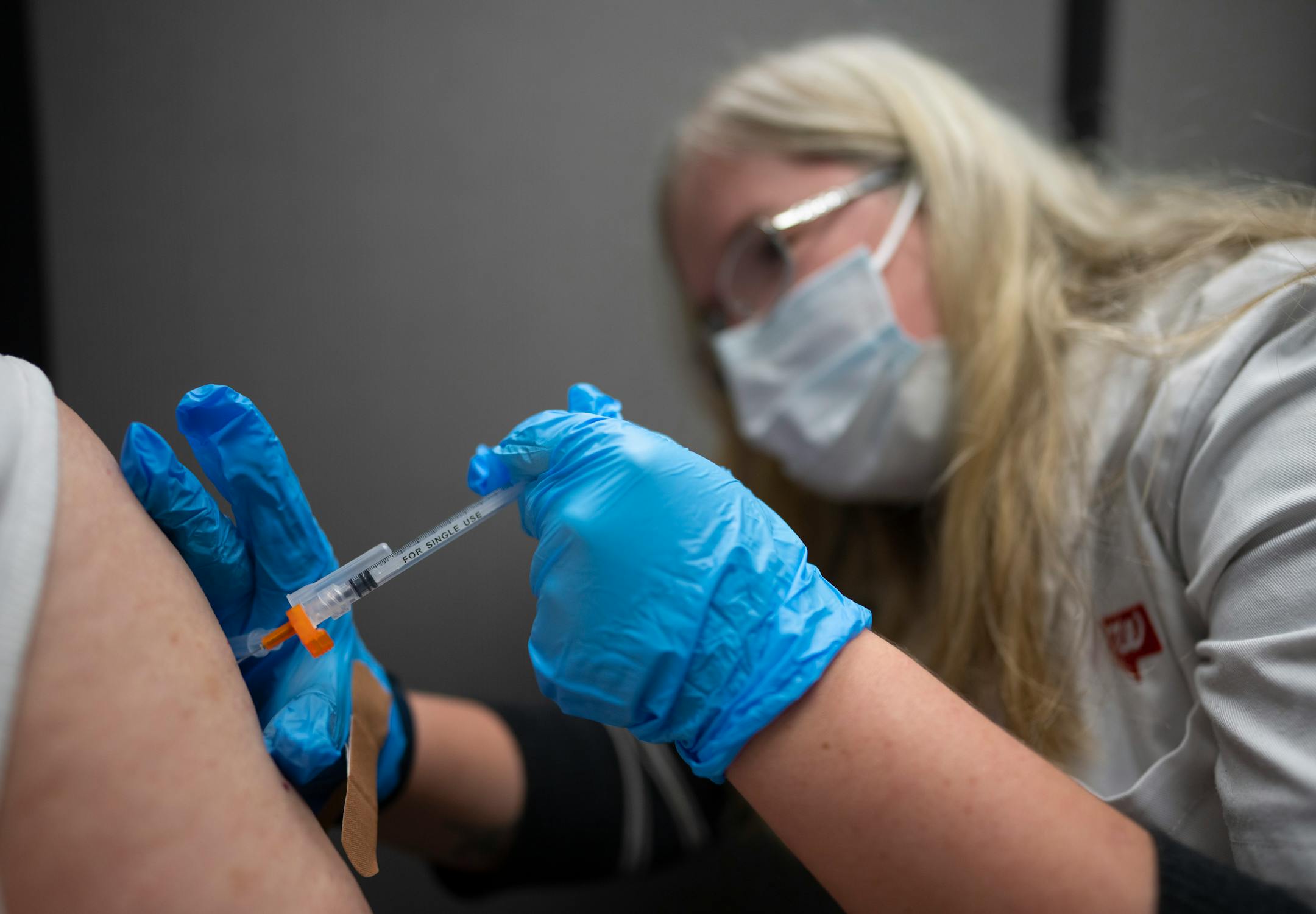
Uptake of new variant-specific COVID-19 booster shots has been slow in Minnesota, despite continued evidence that the vaccine protects against severe outcomes from the infectious disease.
Less than 240,000 doses of the bivalent boosters have been administered in Minnesota this month after they were recommended for fully vaccinated people 12 and older. While 3.7 million Minnesotans in that age range have received some COVID-19 vaccine, only 3.9% are considered up to date, according to the state's weekly pandemic update on Thursday.
Up to date means they have completed the initial series or received an older booster within the past two months, or they have received the new booster more recently.
Gov. Tim Walz said he was concerned about the lack of progress on Wednesday, when he received his influenza shot at a public event and encouraged Minnesotans to seek the recommended vaccinations.
"It is more clear, now than ever," Walz said. "The way to stay out of the hospital and certainly to avoid fatality in this [COVID-19 pandemic] is to get the booster."
COVID-19 levels in Minnesota are flat or declining, showing none of the increases yet that occurred after the start of the K-12 school year in the past two years. New coronavirus infections have remained below 1,000 per day in Minnesota in September, down from about 1,400 per day in early August. The infection numbers only show positive results at clinics and testing centers. At-home test results are not publicly reported.
Pandemic pressure has remained low all summer on Minnesota hospitals, which on Tuesday had 416 inpatient COVID-19 cases, including 41 in intensive care. On the same date in 2021, the severe delta variant had pushed Minnesota to 768 COVID-19 hospitalizations, including 196 patients requiring intensive care.
Thursday's pandemic update still showed a disparity by vaccination status in severe outcomes. Unvaccinated Minnesotans make up 24% of the state's adult population, but 37% of the 2,740 COVID-19 patients admitted to hospitals since July.


