

It takes two people to make a baby. But to prevent pregnancy, the burden has almost always fallen on the woman.
A new method being tested at the University of Washington aims to change that.
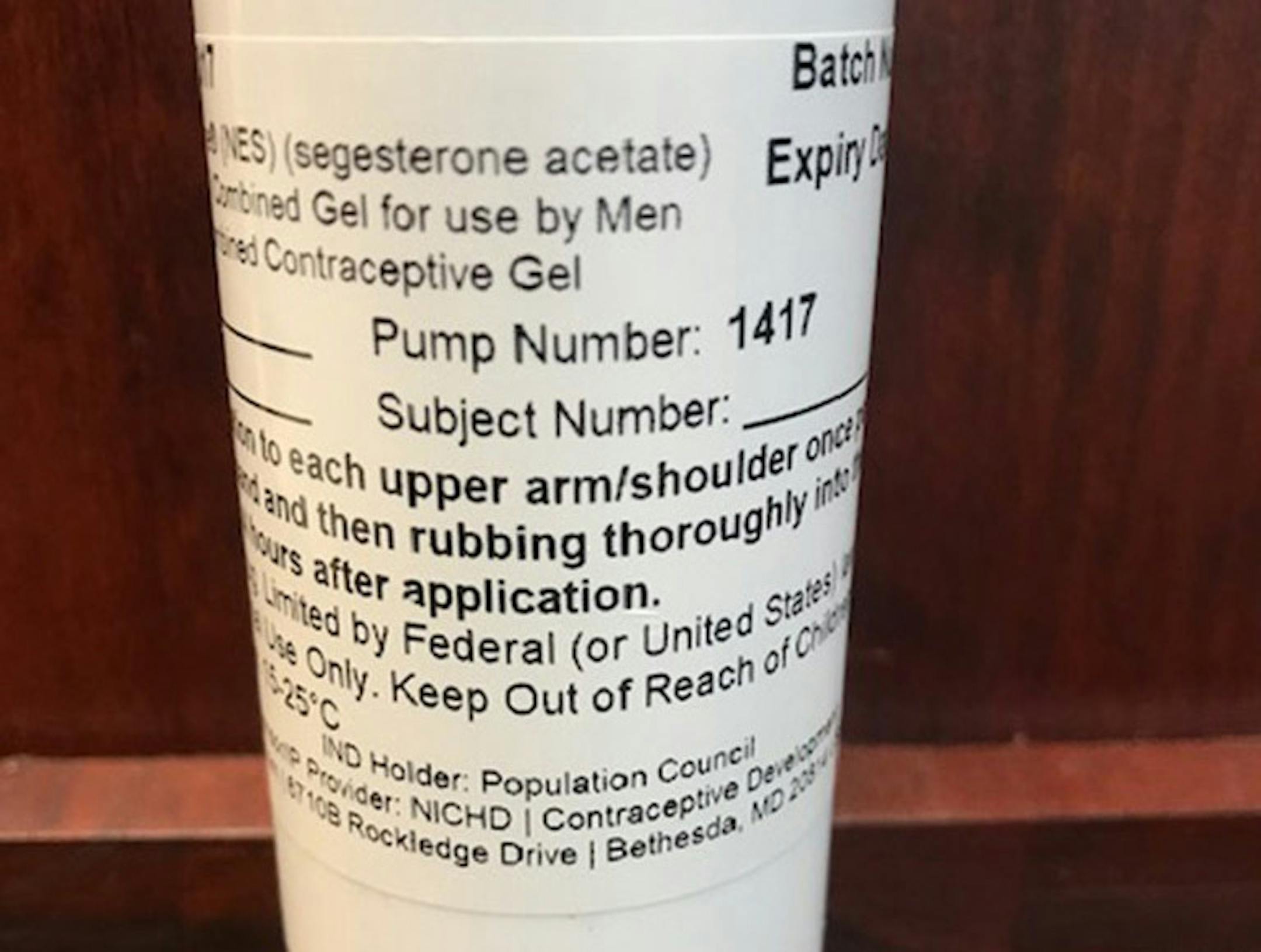
The UW School of Medicine is one of three sites testing a contraceptive gel for men, which works by reducing sperm production when applied daily on the upper arms or shoulders, according to researchers. If the trials are successful, the substance may soon be available to people seeking to avoid unplanned pregnancies whose options traditionally have relied on more than a dozen options for women, including pills, implants, shots, patches and rings, compared with just condoms for men.
"We are neglecting 50 percent of the population with our current methods," Dr. Stephanie Page, a UW School of Medicine endocrinologist and the study's principal investigator, said in a phone interview. "There's every reason for men to be more engaged."
UW researchers are enrolling about 50 couples for the three-year trial, which started Nov. 28. The testing, which is also being conducted in Los Angeles and Kansas City, Kansas, is funded by the National Institutes of Health. The gel was developed by NIH and the Population Council, an international nonprofit focused on reproductive health.
Participants will receive a clear gel that contains progestin, a hormone used in female birth control, and testosterone to counter the effects of progestin. Men enrolled in the study will apply the gel to each shoulder once a day and, within eight to 16 weeks, their sperm counts should be low enough to prevent pregnancy. Once the count drops sufficiently, couples will receive the go-ahead to use the gel as their only method of birth control for a year.
Page is among a group of UW researchers who have been working on male contraception for decades. But it's been a challenging area in a field focused primarily on females, according to Dr. William Bremner, a UW professor of medicine who is directing the trial. There's long been a social bias against birth control for males, he said.
"Among other things, there's been a perception that pregnancy is 'the woman's problem,' in some people's view," he said.


