

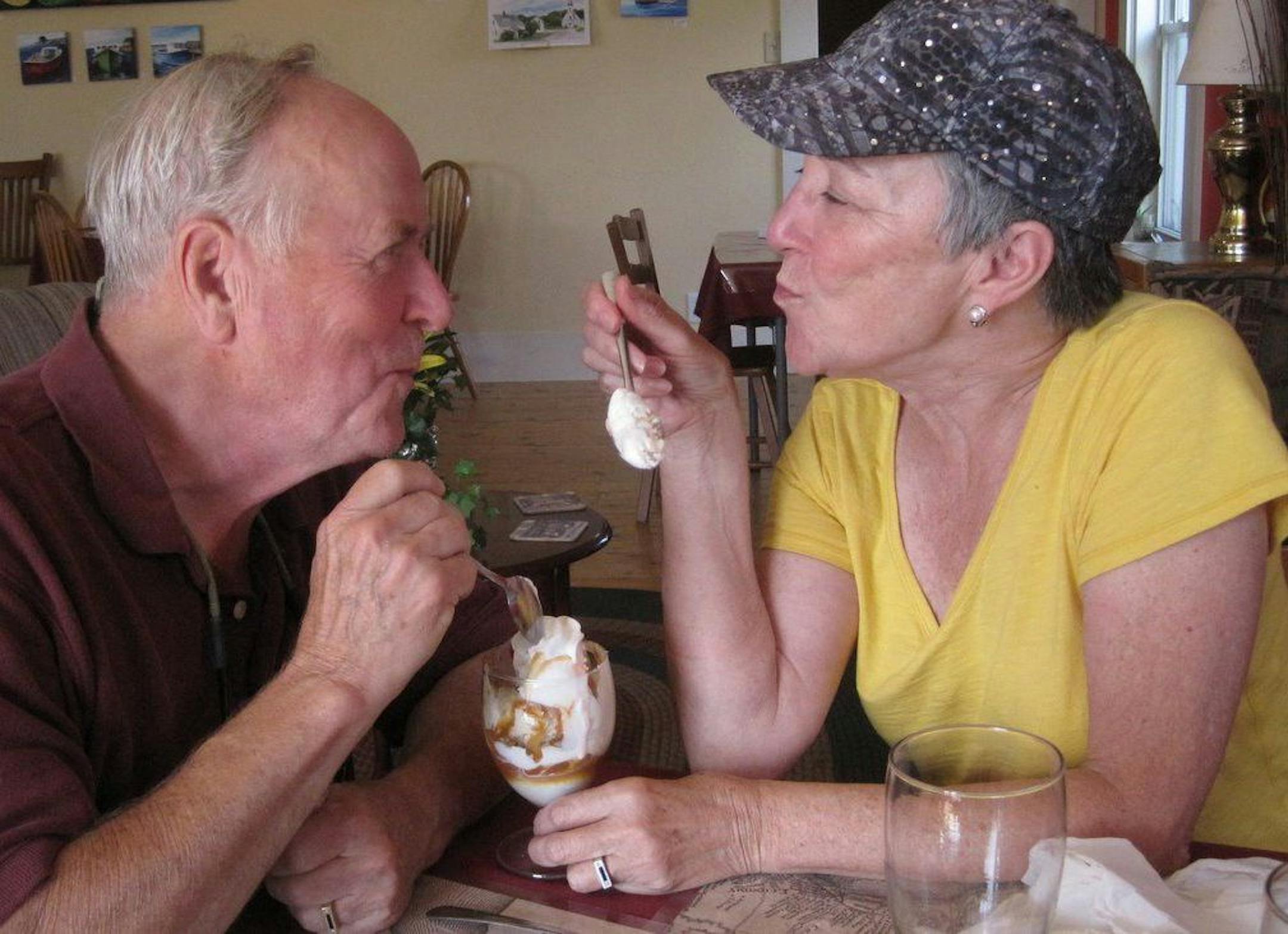
We had just finished watching a mystery thriller on TV. It was somewhat disturbing, but not memorable. What was memorable was my husband's reaction.
Bob was crying, his shoulders shaking.
"What, what?" I asked, surprised and alarmed. The movie wasn't that moving. He said, "It hurts. My hearing, my not hearing. The way you treat me." This movie had no subtitles for the hearing-impaired, and Bob frequently interrupted our viewing with "What?" when he missed some dialogue. I had reacted with angry impatience because answering him meant missing more dialogue. As if it mattered so much.
I had let him down big time.
We've known each other for 10 years, married five. Bob is 78 and I'm 73. When we met I hadn't noticed his hearing loss. It became more obvious when we'd go biking and he'd be unaware of cyclists or cars behind us. I joked about getting him a T-shirt with a giant ear on the back, a red slash through it to warn others that he was "Unsafe at any speed." When Bob couldn't hear an owl at night or the spring peepers in daytime we knew his world was growing more silent. After some searching he found hearing aids that substantially improved life for him and for us. But they aren't entirely reliable.
I suggested that we learn some basic American Sign Language for our everyday exchanges. Bob gave me the finger.
Aware that our relationship was being tested, we agreed on some new rules for communication. "Speak up, I can't hear you" is a demand: I feel blamed and resentful. "Speak up, I want to hear you" is an invitation; I'm open and more likely to respond graciously. No "Huh?" or "What?" No gum chewing or talking with backs turned or from another room. If Bob didn't understand me, he'd repeat as much of what I'd said as he could, so I wouldn't have to, and I'd fill in the blanks. I would be his hearing-ear girl and he'd be my seeing-eye guy.
Before my own cataract surgery a few years ago, I had been fearful at night when Bob was driving — certain that he was as night blind as I was — and that he would hit a deer, common in Minnesota. After my surgery, I realized it was just me who saw only darkness ahead. It's so easy to assume others perceive the same as we do.


