

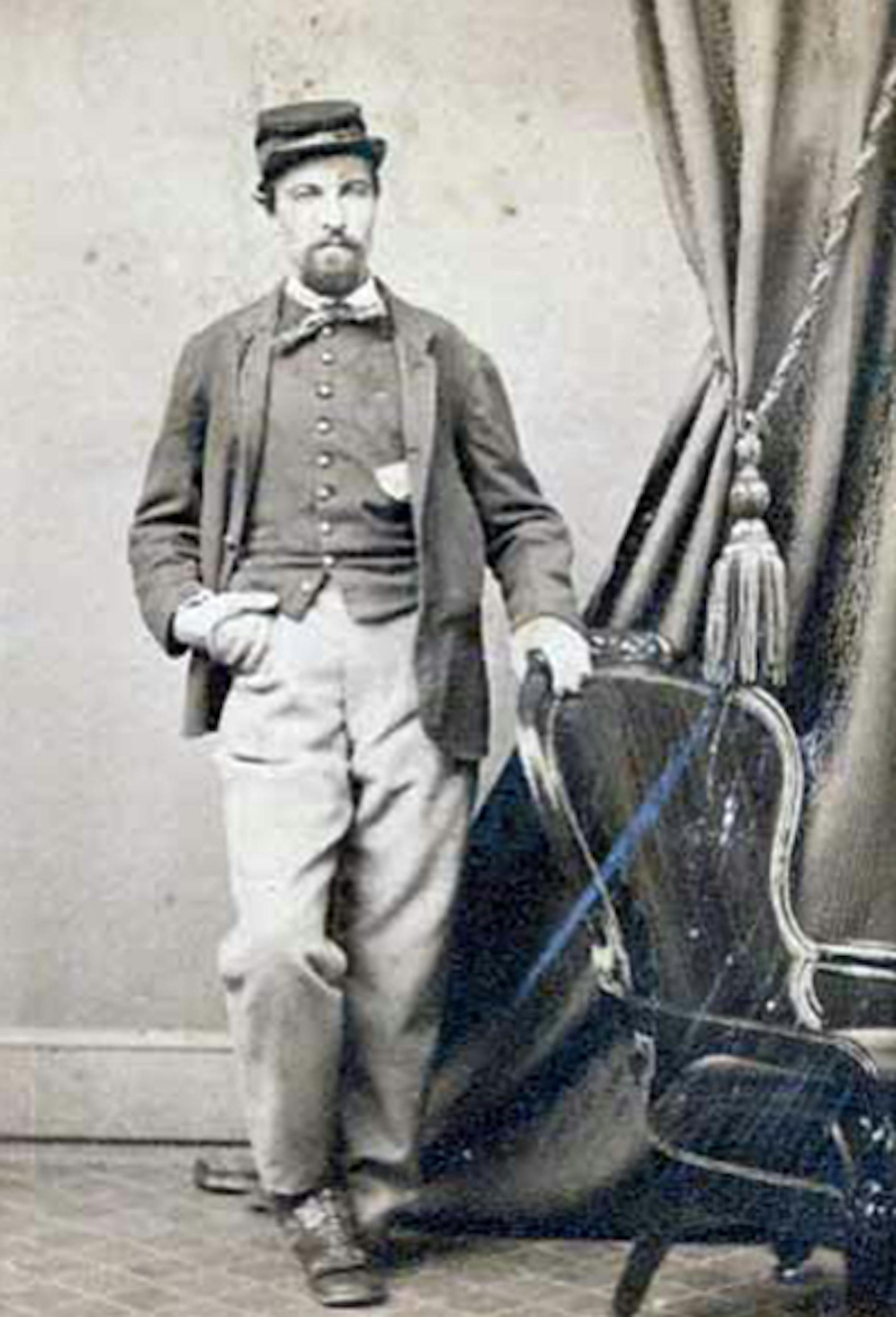
Arnold, George, wounded at Gettysburg; Aucker, Wm. H., wounded at Gettysburg; Bates, Wm. F., killed at Gettysburg; Blanchard, Rufus G., wounded at Gettysburg; Caplazi, Albert, wounded at Gettysburg …
In a few words of summary, the roster of Company B, First Minnesota Volunteer Regiment, bears testament to the awful sacrifice that fateful midsummer day in a Pennsylvania field made by a group of about 100 men from Washington County. That sacrifice 150 years ago was celebrated this past week with thoughtful fanfare.
The First Minnesota's act of desperate valor at Gettysburg to charge a vastly larger regiment of Alabama soldiers to buy a few moments for Union reinforcements to gather on July 2, 1863, has been lionized in verse, monuments and paintings, and parsed and retold in several books. The precise numbers have been debated by historians, but the charge that began with about 260 soldiers ended with more than 80 percent of them dead or wounded.
It was a pivotal moment in the battle, and for the state — and for the men of Company B, who were from the lumber camps, shops and farms of a young Washington County. Many were immigrants, like Adam Marty, who had come from Switzerland. A house painter by trade, his cousin, Sam Bloomer, also was a member of Company B and would lose his leg at Antietam.
"If you think about it, Gettysburg really solidified Minnesota's role and reputation in the Civil War. You have to remember, Minnesota had only been a state for three years when the war broke out," said Brent Peterson, executive director of the Washington County Historical Society, which has amassed an impressive collection of materials from the veterans. It also solidified the state as a member of the Union. "We weren't just newbies anymore."
Ten companies comprised the First Minnesota, lettered A-K, each primarily comprised, in turn, from different communities — places like St. Paul, Hastings and Faribault. Company B was from Washington County, specifically, from the Stillwater Guards, a local militia that had been formed in 1858, Peterson said.
When the Civil War broke out in April of 1861, things turned serious very quickly.
Minnesota leapt to the first call for volunteers, and Washington County was no different. Minnesota sent 25,000 men, or about half of the state's eligible male population, to war. The county sent hundreds of men to the war in other regiments of infantry, cavalry, artillery and sharpshooters.


