

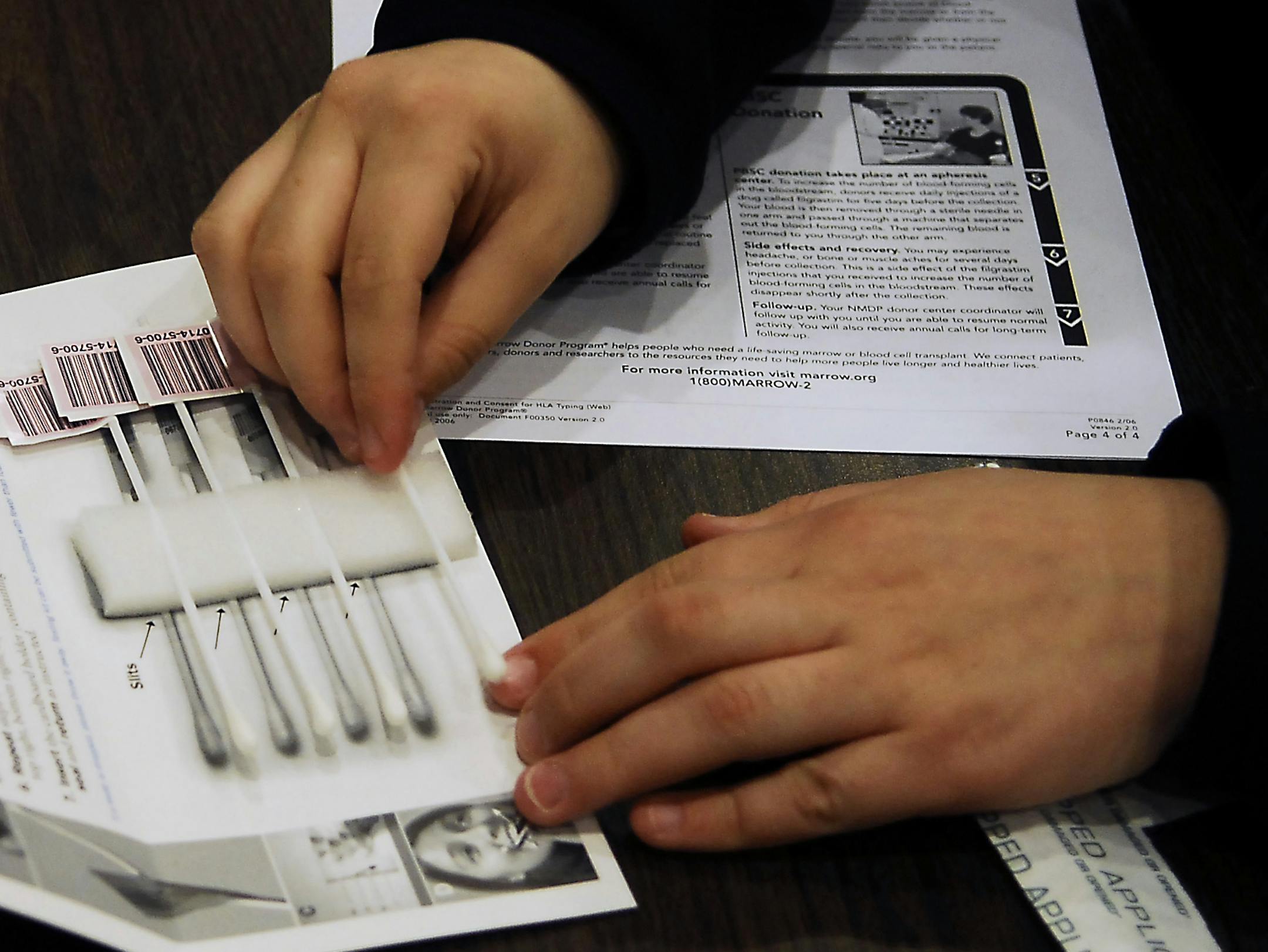
"Let's put a price tag on marrow donations," by Michael Rush (Aug. 16), suggests that paying people to donate marrow for transplantation would improve the process.
We appreciate Mr. Rush's decision to join the registry and his willingness to offer his marrow to save another individual. But, while well-intended, his proposal is based on a misunderstanding of the safety mechanisms underlying the donation of human organs and tissues. It would likely threaten the well-being of both patients and donors.
To be clear, volunteer altruistic donors never have to pay for donating or incur out-of-pocket costs. All aspects of marrow donation are covered, including medical expenses and travel, as well as things like meals, child care, pet sitting, hotel, Internet and more. Lost wages, which Rush specifically requested, are also provided when time away from work is not covered by an employer.
Outright monetary compensation of donors, however, could harm patients and donors. Substantial evidence shows that people who seek compensation for sharing their organs or cells are more likely to withhold pertinent medical information — information that could endanger not only the patient's life, but also the donor's. Paying donors might induce some to withhold information about their own health, which might make the currently very safe process of being a donor a bit riskier.
Donor honesty throughout the registration process is critical, because some potentially transmissible diseases such as mad cow disease or very early HIV infection do not show up on physical exams or by blood tests. Financial compensation for donation might alter how potential donors answer questions posed to identify activities or behaviors with the potential to expose recipients to such hazards. And unlike plasma, marrow and peripheral blood stem cells used for transplantation cannot be treated or sterilized once collected to protect against communicable diseases that a donor may not disclose.
Proponents of compensation argue that exposing patients to diseases like HIV and mad cow is a risk worth taking. We disagree. Any preventable risk to patient and donor safety is not worth taking, particularly when the current system is working.
Today, the majority of patients are able to find a matched donor on the national registry — a finding confirmed in a study published in the New England Journal of Medicine just last month. The study showed that a patient's likelihood of having a suitably matched, available donor on the registry ranges from 66 percent to 97 percent, depending on the patient's genetic makeup and ethnic background. Additionally, patients' access to donated umbilical cord blood — which doesn't need to match as closely as marrow — is improving these numbers even more.
Paying donors in the United States would actually decrease patients' access to donors, because we would no longer conform to international standards under which such payment is prohibited. Nearly half of all transplants facilitated today involve an international patient or donor. Our partners in 41 countries are vital to maintaining patients' access to donors across the world.


