

Opinion editor's note: Star Tribune Opinion publishes a mix of national and local commentaries online and in print each day. To contribute, click here.
•••
Minneapolis City Council Member LaTrisha Vetaw's recent commentary ("On Gaza, council out of its lane, meeting out of control," Jan. 11) is a far reach from the call for collaboration she claims it is. Vetaw's article, published on the eve of South Africa's appearance in the International Court of Justice to provide evidence of Israel's violation of the Genocide Convention, demonstrates that Minneapolis leadership needs to pay attention to the voices of its constituents now more than ever.
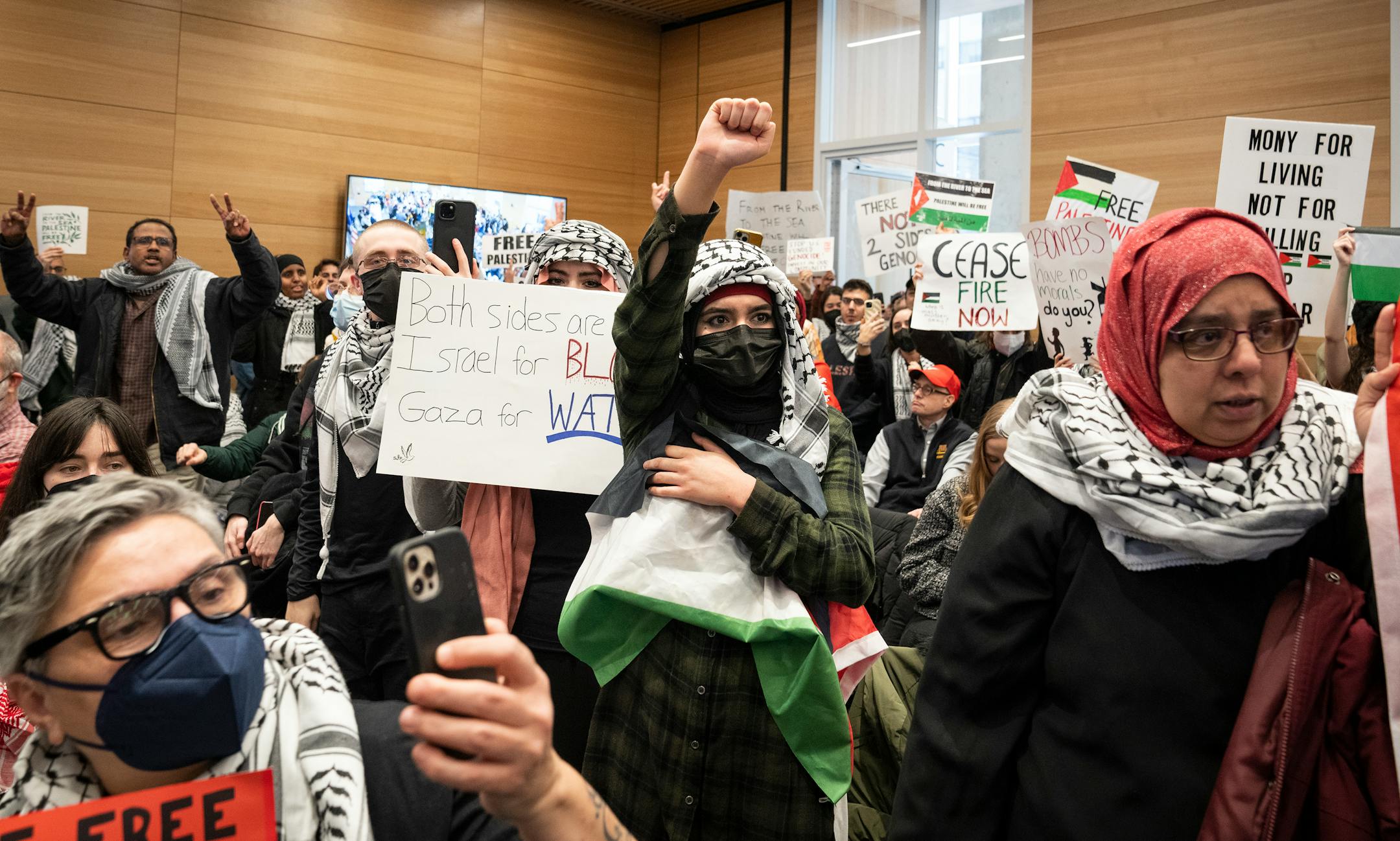
The City Council has a moral obligation to place pressure on the state and national governments to end aid to Israel's ongoing siege on Gaza. As a collective of Ward 4 constituents and stakeholders, we are concerned by Vetaw's blatant lack of regard for the more than 23,000 lives stolen since Oct. 7, and the many thousands still under the rubble.
This genocide has been livestreamed for the world to see. Despite numerous human rights organizations concluding Israel is engaged in war crimes and a "textbook case of genocide," Vetaw suggests the issue is just too complicated for constituents and leaders in Minneapolis to understand.
In reality, passage of resolutions supporting a cease-fire by local governments is neither new nor unfounded. A number of cities across the United States have already passed resolutions supporting a cease-fire, including Atlanta, Seattle, Detroit, San Francisco and Oakland, Calif.
Council Member Vetaw poses a question: "What makes my colleagues think anyone in Israel or Gaza cares what they think?" A brief Google search will show you that Palestinians have been tirelessly sharing about their struggle for decades. Mohammed El-Kurd, a Palestinian poet and correspondent for the Nation, challenges us to "be unabashed in [our] support and articulation of Palestinian's right to liberation and self defense against Israeli terror."
On Nov. 1, Palestinian poet Refaat Alareer shared one of his last poems before being killed by an Israeli airstrike, "If I must die, you must live to tell my story … if I must die, let it bring hope, let it be a tale." Our timelines are flooded with videos of airstrikes, hospitals in ruins and parents mourning their children, because Palestinian people want us to know what is happening and they are insisting that we speak out against it.


