
Advertisement

Counterpoint: Lawmakers should look to past compromise to reach a transportation deal

Minnesotans' 2006 vote proportioning money among roads and transit is a model. There's no need to settle for just part of a federal match.

June 13, 2022 at 10:45PM
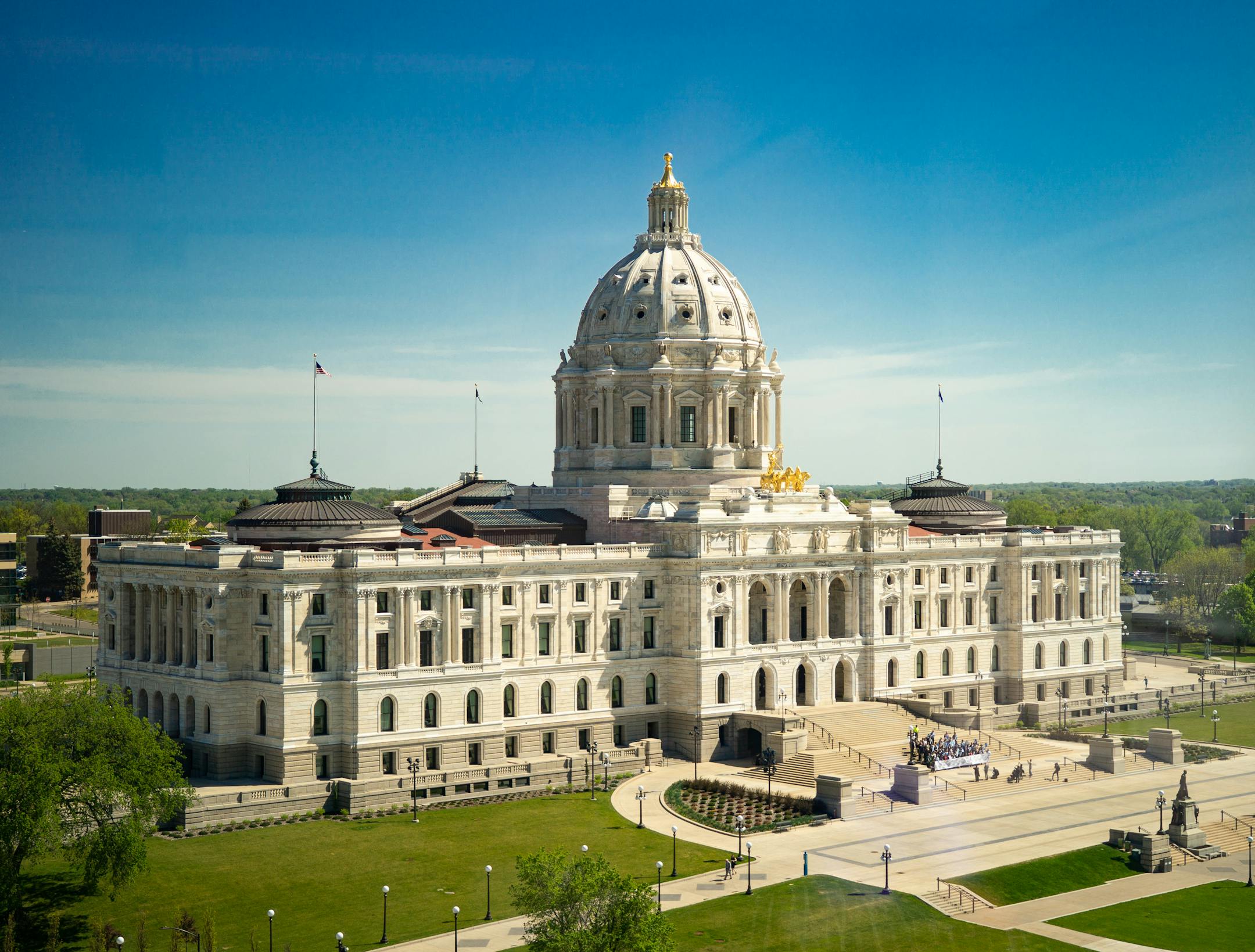
The Minnesota Capitol building.
Minnesota state Capitol (Glen Stubbe, Star Tribune/The Minnesota Star Tribune)
Advertisement

Opinion editor's note: Star Tribune Opinion publishes a mix of national and local commentaries online and in print each day. To contribute, click here.

•••

Minnesotans are at risk of losing billions of dollars in federal infrastructure funding to other states. This is because our state lawmakers have not passed the matching funds required. It is imperative that the Legislature come back to work and address this, but the state Senate needs to participate. So far, senators are saying no, even though more than $7 billion is at stake.

Part of the problem is that the Senate Republican leadership is only concerned with securing some, not all, of the available money. Senate Transportation Chair Scott Newman basically acknowledges this in a June 3 commentary ("Only politics is blocking use of federal funds"), in which he theorizes that the Minnesota Department of Transportation could perhaps secure federal road money without the Legislature taking action.

Newman is willing to sacrifice Minnesota's share of transit and electrification funding, which will go to other states if the Senate can't get its act together. Unfortunately, this opposition to transit and electrification is consistent for the Senate, which has passed bills to drastically cut, and even eliminate, funding for Metro Transit. Even more shocking is the Senate's willingness to decline road money in order to block investments they don't like.

Newman acknowledges that legislative agreement on transportation "comes down to a single issue": whether to dedicate all existing revenue from the sales tax on auto parts to roads alone, or whether to support a complete multimodal transportation system with those dollars. These revenues currently go to the general fund.

Fortunately, there is a clear alternative to the "all or nothing" approach in Minnesota's history of bipartisan compromise on transportation.

In an exact parallel to the discussion today, Minnesota voters decisively approved dedicating all revenue from the motor vehicle sales tax (MVST) to transportation in November 2006, with 60% going to roads and 40% dedicated to transit. Just like in 2006, dedicating existing revenue represents a compromise for Democrats who prefer to raise new revenue for transportation rather than "raid" money from the general fund, which pays for education, health care and other essential services.

Advertisement

Part of what sealed the deal in 2006 was the 40% minimum for transit — including both metro and greater Minnesota needs — which was explicitly approved by voters that November. The 40% minimum for transit was included because a broad coalition of business, labor, faith, nonprofit groups — and legislators — insisted on a balanced approach that would provide equitable access to jobs, increase our regional economic competitiveness, ensure mobility for an aging population, address multiple forms of racial inequality, improve air quality and public health (especially for children), and combat the then-already alarming climate crisis.

These challenges are not less important today than they were in 2006, making the same 60/40 split the obvious path forward.

Minnesota voters were right to approve a balanced approach because the transit projects that it has helped fund — Blue Line light-rail transit, Green Line LRT, A Line bus rapid transit, C Line BRT and more — have been hugely successful. These projects all met, or drastically exceeded, their operations and ridership goals.

But today, conservative senators reject the clear benefits of a balanced approach, instead demanding that transit and electrification funding be as little as possible, preferably none.

The Senate's willingness to leave road money on the table is mystifying to some longtime observers. But when you consider what matters most to today's senators, it makes perfect sense: The top legislative priority of the fossil-fuel lobby and their allies is not getting funding for roads but rather to stop any funding for either transit or electric vehicle infrastructure. Because when more Minnesotans have more choices for traveling without paying at the pump, that is a direct threat to polluters' profits.

Our organizations represent thousands of Minnesotans who care about clean transportation choices — for a thriving state, stable climate and more equitable future. We know that Minnesotans want and deserve action from their elected leaders. And the bipartisan, multisector leaders that championed the 2006 amendment can do so again. From a massive budget surplus to the auto-parts sales tax and bonding for bus rapid transit, lawmakers have an array of tools and solutions right in front of them. We call on them to put the people of Minnesota first — and do their job.

Advertisement

Peter Wagenius is legislative director of Sierra Club North Star Chapter. Tee McClenty is executive director of MN350. Sam Rockwell is executive director of Move Minnesota.

about the writer

about the writer

Peter Wagenius, Tee McClenty and Sam Rockwell

More from Commentaries

See More
card image
Renée Jones Schneider/The Minnesota Star Tribune

With a two-year moratorium, the state could build a model for rational development of these facilities.

card image
card image
Advertisement