

As a parent of a college student, I have come to have a renewed appreciation for the necessity of free speech as well as the importance for diversity of opinion on college campuses.
Donna Shalala, a former secretary of the U.S. Department of Health and Human Services and a former college president — and someone with whom I share very little in the way of political views — once said: "You can't have a university without having free speech, even though at times it makes us terribly uncomfortable. If students are not going to hear controversial ideas on college campuses, they're not going to hear them in America. I believe it's part of their education."
On this, I wholeheartedly agree with Shalala.
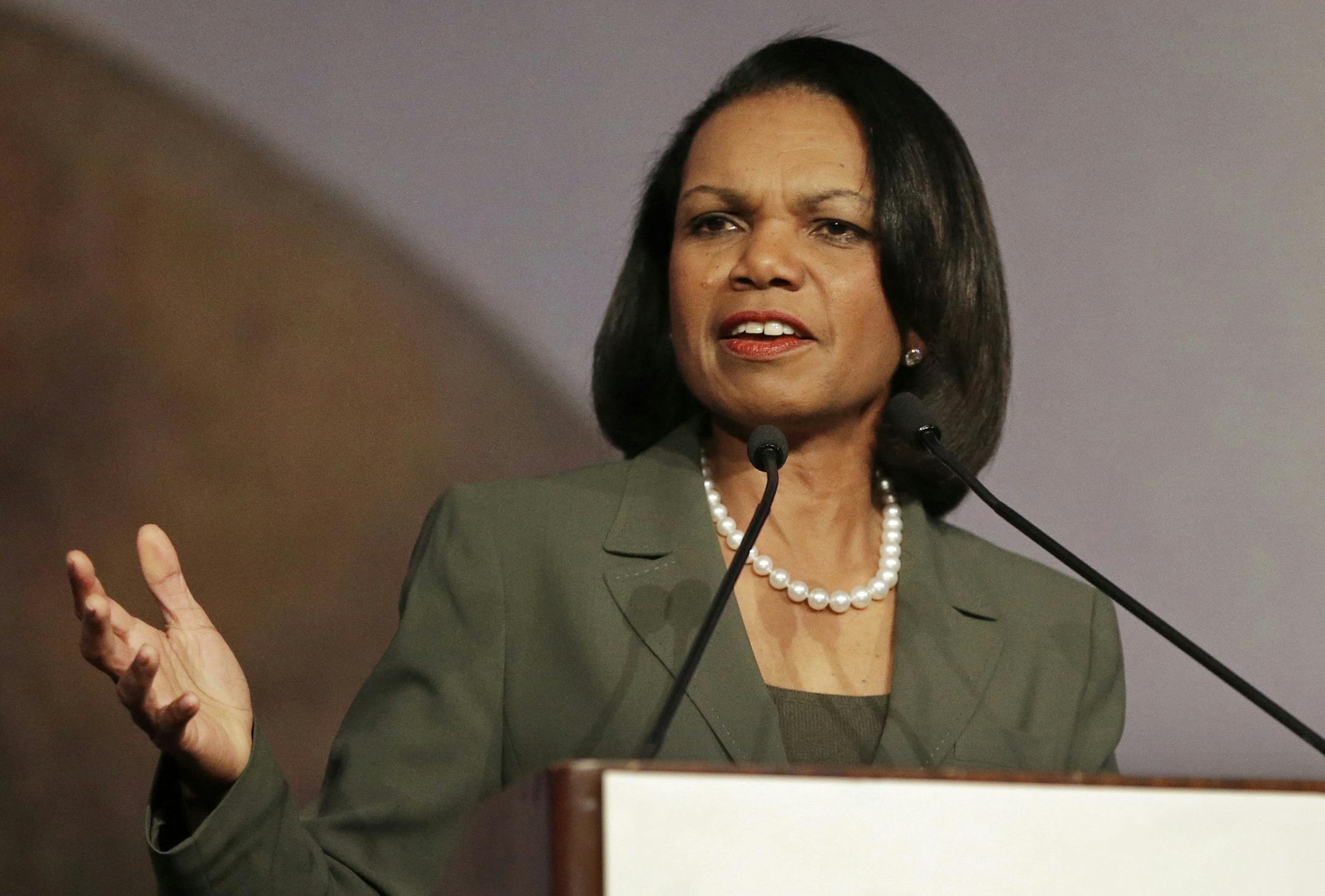
The desire by some on the campus of the University of Minnesota to restrict the ability of former U.S. Secretary of State Condoleezza Rice to speak and be heard is, at one level, understandable. At another level, it is not just incongruous with, but perilous to, free speech.
I get it. Her opponents reject the policies Rice has supported. But my understanding of their rationale is not enough for me to support their goal of blocking the speech of one they disagree with — and the right of others who may agree or disagree with that speech to hear it.
Is Rice being paid a lot of money to give her speech? Yes. So are folks like former President Bill Clinton.
Are they worth it? I suppose, like many things, it's in the eyes (and ears) of the beholder.
Should their speeches be paid with public dollars? Absolutely not. Rice is being paid with dollars raised by private individuals.


