

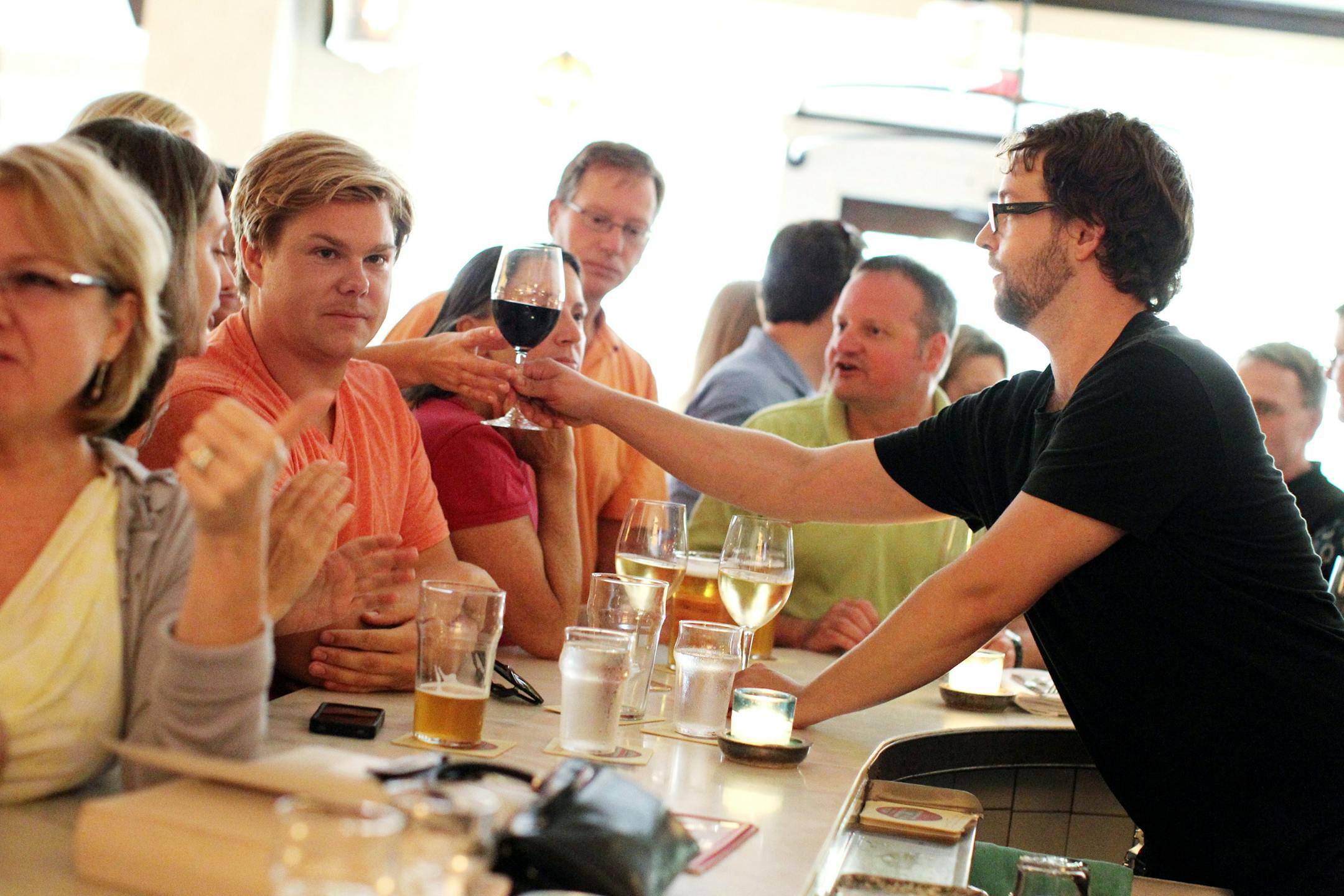
A city ordinance requiring some restaurants outside of downtown to maintain a careful balance of their food and alcohol sales has been scrapped by the Minneapolis City Council.
The council voted 12-0 Friday to overhaul the rules governing alcohol sales for restaurants located along commercial corridors like Uptown. Those restaurants had been required to ensure that at least 60 percent of their revenues came from food sales, and to cap alcohol sales at 40 percent. Council members said the popularity of higher-priced craft and local beer, wine and cocktails had made it almost impossible for businesses to comply with the rule.
Now, those businesses won't have to follow a food and beverage ratio. Instead, the city will employ new tactics aimed at ensuring the restaurants don't lead to problems in their neighborhoods. Restaurants will now follow new rules about the hours in which they must serve food, provide specific alcohol service training, and risk losing their entertainment license if problems crop up.
Council Member Cam Gordon said he's aware of some neighborhoods' concerns that changing the rules could lead to problems from customers who have to much to drink. But he said he believes the city has provided enough checks and balances to avoid trouble.
"I challenge all the restaurants and all the bars and all the city regulators to prove how this is going to be better," he said. "And we're going to end up with less issues, and fewer problems."
A proposal for a similar change for restaurants tucked further into neighborhoods will be put to voters this November. Those restaurants are currently required to make 70 percent of their sales from food and limit alcohol sales to 30 percent.
Separately, the council voted 12-0 to approve a change to the rules for business' restrooms. Now, businesses operating in the city will be allowed to have gender-neutral, single-user restrooms, rather than being required to have separate restrooms for men and women.
Council Member Andrew Johnson, who introduced the change, said the requirement sometimes proved to be a burden for businesses. He said restrooms not limited to a particular gender allows for more flexibility for families and an option for transgender customers.


