Ask me what I want to eat at this very moment, and my answer would definitely be the sea bass at Cosmos.
What a beauty. The succulent fish is prepared confit-style and served over what appears to be risotto but turns out to be shaved cauliflower, slow-simmered in vegetable stock until it mimics the form and mouth feel of risotto. Caper berries and olives add a piquant accent, and then the server adds a finishing touch, pouring out a pristine tomato broth with a practiced flourish. I'm sighing as I think about it.
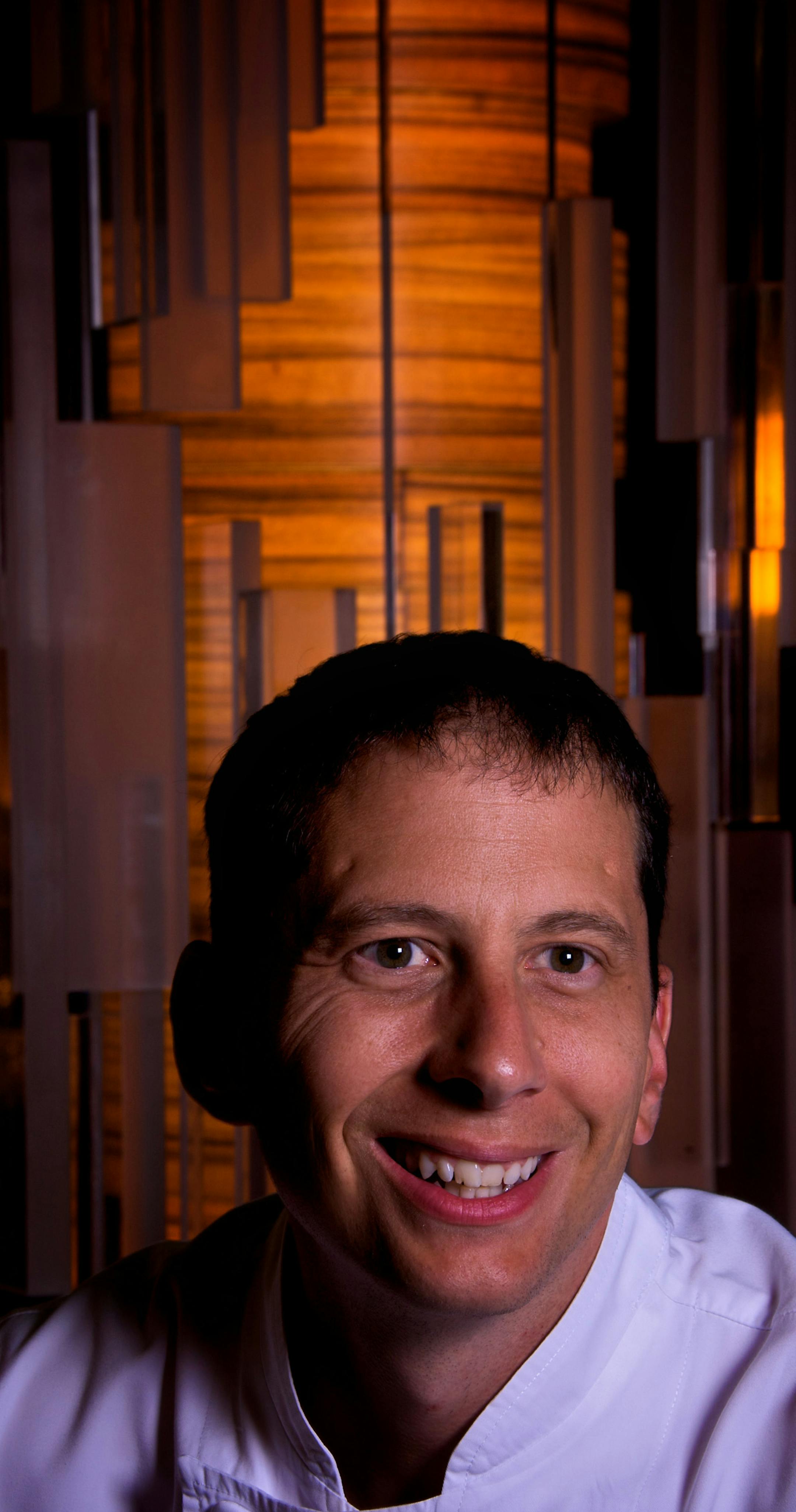
The dish is a Cosmos staple, although by the time I write this chef Stephen Trojahn and chef de cuisine Håkan Lundberg will have replaced the sea bass with a more seasonal halibut, keeping all other elements equal. Why change a good thing? That would seem to be the lietmotif of Trojahn's tenure. A vet of the Ritz-Carlton chain, Trojahn has been running the food operations at the Graves 601 hotel for about 18 months, and during that time the restaurant has continued on the trajectory set by opening chef Seth Bixty Daugherty, one of unadulterated and unapologetic luxury.
It's also a lot of fun, particularly at dinner, where Trojahn allows Lundberg to flex his molecular gastronomy (MG) muscles. Chicago is the epicenter of the country's MG craze, but aspects of this fascinating kitchen-as-chemistry-lab trend have trickled north to the Twin Cities. Lundberg is probably the region's most overt local convert, but, borrowing a page from the Lutheran Minnesotan playbook, his is a reserved form of mad-scientist cooking.
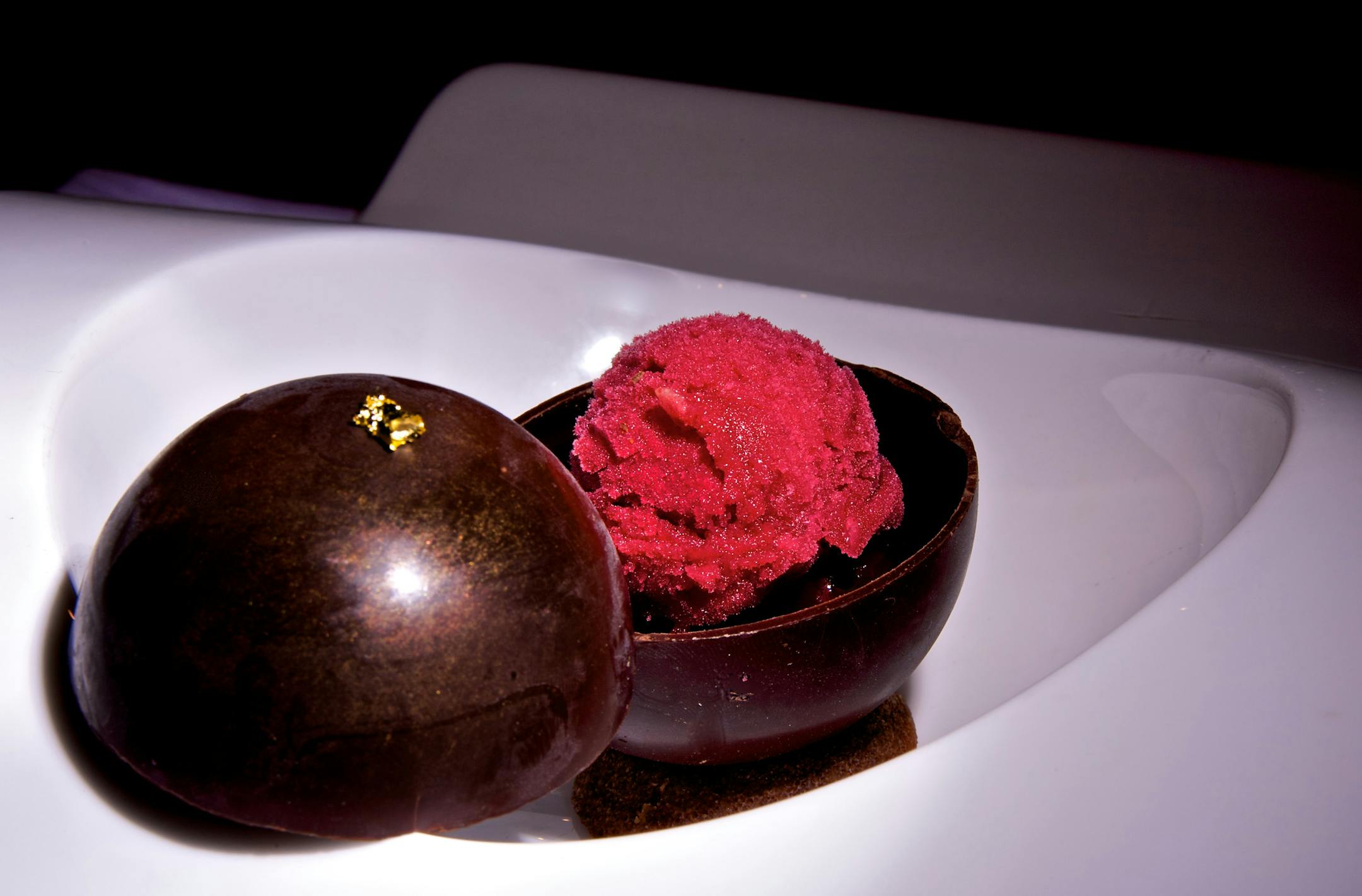
Lundberg's most entertaining showstopper isn't on the menu. He dubs it an "explosion," and it appears as a between-course interlude. The name fits for what appears to be a frozen gelatin-like sphere served in a shot glass. As the thin membrane quickly thaws in your mouth, it reveals a quick flashbulb-fast burst of lemon or raspberry or whatever intensely refreshing flavor Lundberg feels like flaunting at the moment. Suddenly a palate-cleansing sorbet feels very Mamie Eisenhower.
"That's what molecular gastronomy is all about," Trojahn explained. "Not masking any true flavors, but getting people to think about the way your mouth feels different flavors. We just don't get too crazy with it, to the point where people can't recognize what they're eating. We're not that type of restaurant."
Yes, the flavors come through loud and clear, and the visual freak-out factor is almost nonexistent. I loved a rectangular terrine of slow-poached shrimp, which preserved the crustacean's lively texture while cleverly upping the flavor ante. The glories of Minnesota-raised duck were amplified by a similar low-and-slow cooking technique, and the woody accents of a mushroom-duck confit cake only ramp up that taste quotient. Lundberg and Trojahn play with wild rice by popping it like popcorn, crushing it and using it as a crust for a stunningly seared ahi tuna. A gorgeous avocado ice cream adds a chilly luster to sushi-grade raw tuna. Grilled lobster, cured lamb belly garnished farm-fresh lamb chops; if only I could go on.
Even the misfires have panache. Two examples: Watermelon, sliced into logs, encrusted with black sesame seeds and seared to resemble rare tuna, didn't add up to much, despite considerable kimchee/curry/soba-noodle distractions. And a squeaky-fresh mozzarella curd, blown up like a balloon and injected with a pert sweet pea soup, started out as an amusing stunt but ultimately regressed into a bland dairy blob. But kudos to Trojahn and Lundberg for not shying away from the Next Big Idea.