

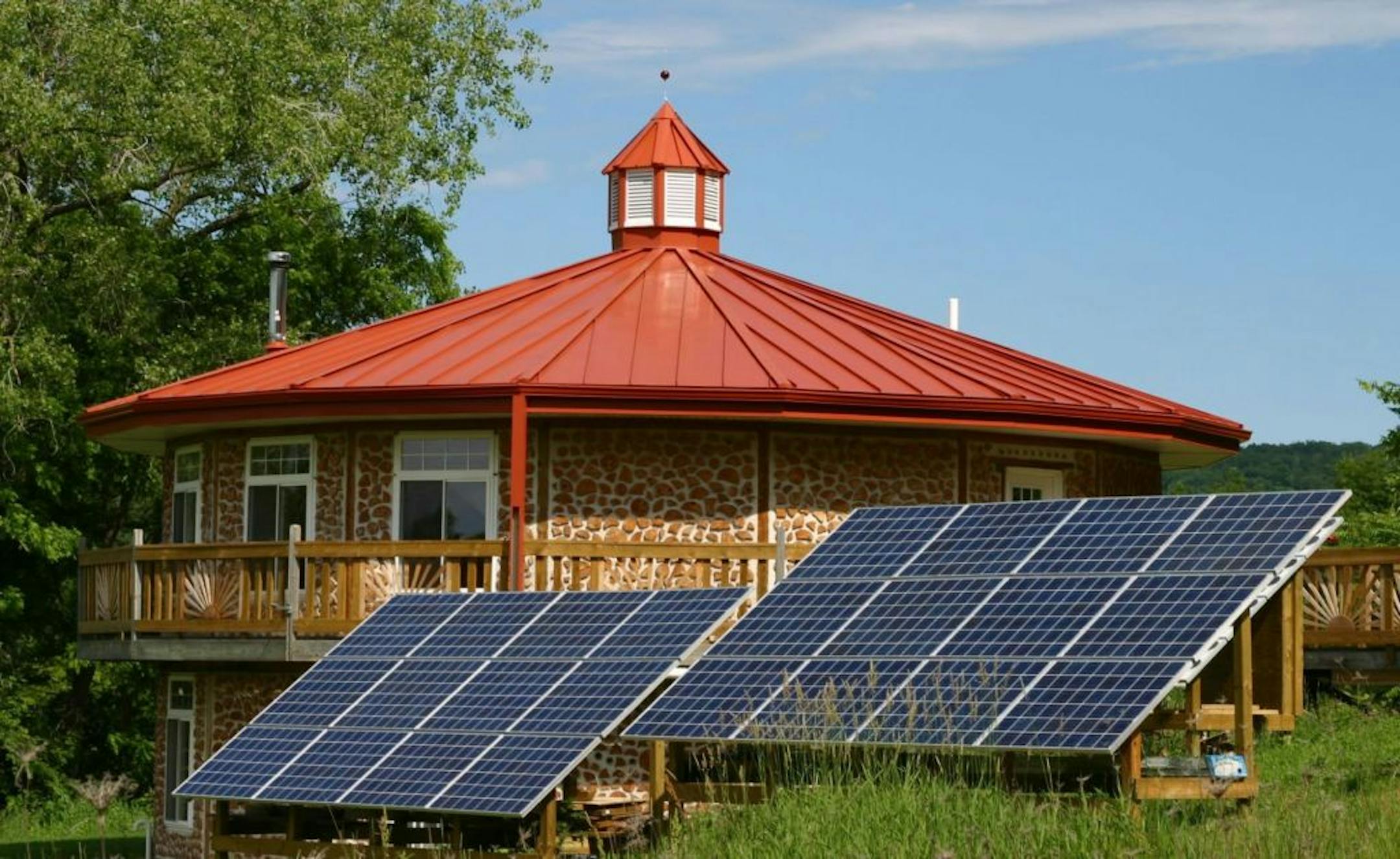
When Alan Stankevitz bought land near La Crescent, Minn., he knew he wanted to build an eco-friendly home there. But he wasn't sure what kind.
An earth-sheltered house? "You need a crew to pour the concrete," he said. "I wanted to do it myself."
A log home? "I could do it myself but it's not energy-efficient," he said.
Then he came upon an old article from Mother Earth News touting the benefits of cordwood masonry, a 19th-century building method in which short lengths of exposed wood are used with mortar, in place of brick or stone.
After attending a workshop, Stankevitz became convinced that cordwood was the way to go. Then he had to convince his wife. So he took her to a cordwood B&B in Canada. "She fell in love with it," he said. "That was the deal closer."
Cordwood construction has been around since at least the mid-1800s, but its rustic look and thrifty character are finding new fans among the budget-minded and the eco-conscious.
"Building your own home is kind of an American tradition," said Richard Flatau, author of the new book "Cordwood Construction: Best Practices." And cordwood masonry is one of the most cost-effective building methods available, provided you're willing to invest sweat equity, he said. To help handy wannabes learn techniques, Flatau runs workshops and a website (www.cordwoodconstruction.org). "When the economy worsens, interest increases," he said.
Cordwood also appeals to those who favor a rustic aesthetic. "People seem to like it for its unique style," Flatau said. "No two cordwood walls are alike because of the unique mortaring style of the person."


