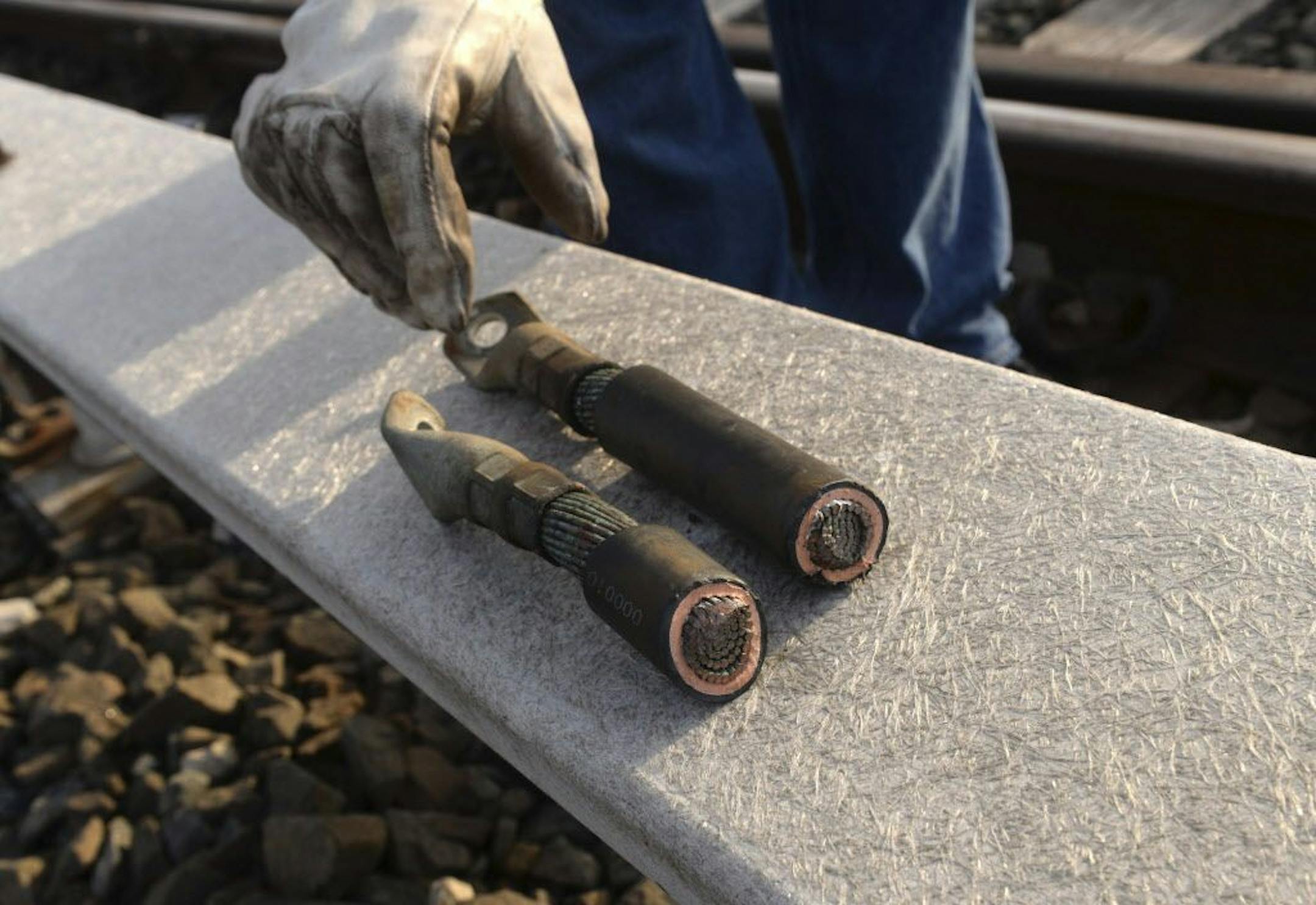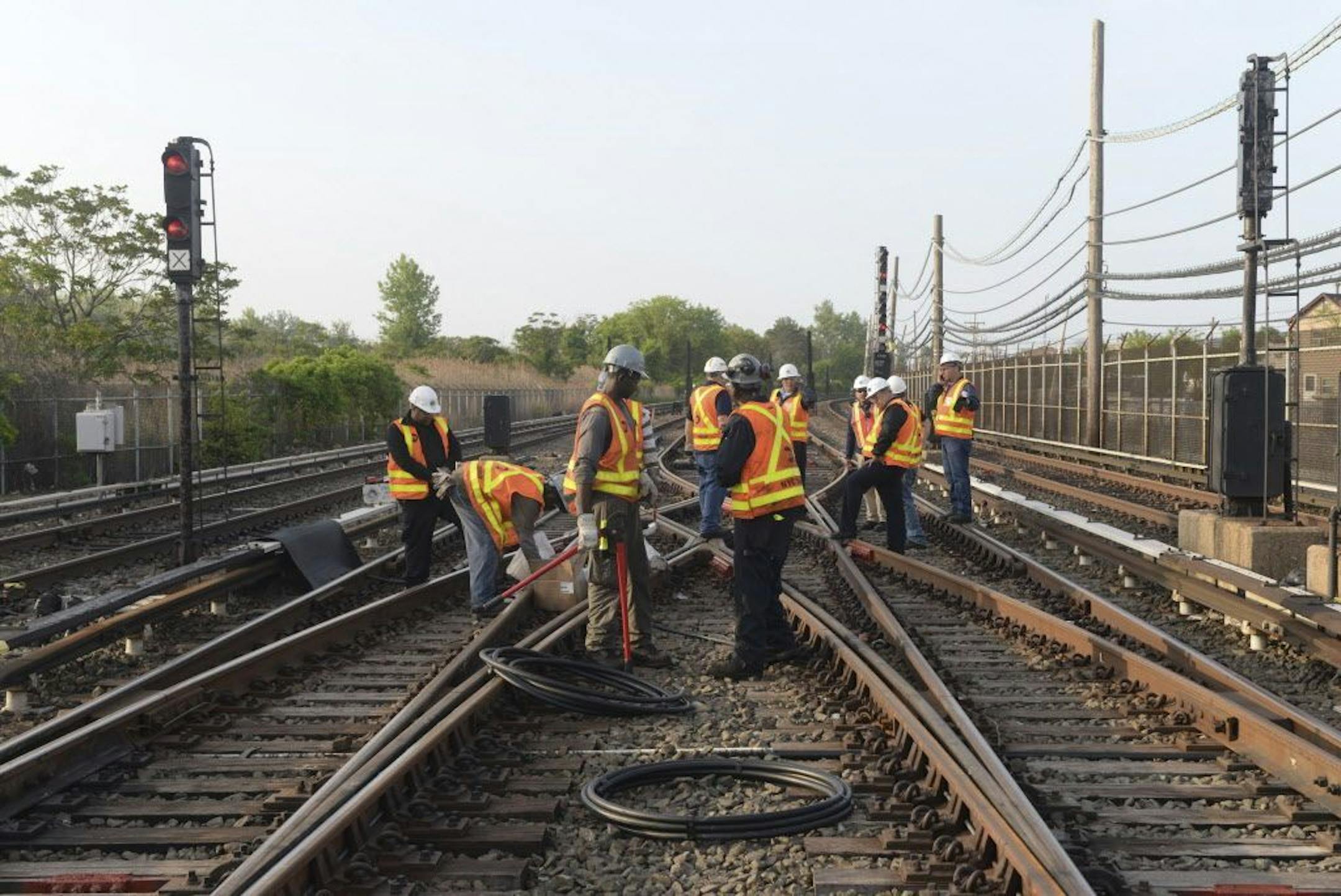
NEW YORK — Longtime New York City subway cops have seen copper thefts before, but last week's heist on a stretch of open-air tracks was particularly brazen: 500 feet of inch-thick cable stripped from the rails in the middle of the night.
The theft that shut down parts of the subway's biggest lines and snarled the commute for 100,000 people is only the latest example of a troubling trend on the nation's railways linked to the soaring price of copper.
"This is a money-making crime," said Chief Joseph Fox, commander of the New York Police Department's Transit Bureau. "It's economy-driven."
Copper, which now hovers at $3 a pound on the scrap market compared to about 80 cents a decade ago, is essential to the running of commuter railways, carrying electrical power from substations to the live third rail.
But the lure of easy cash at scrapyards has proved tempting to thieves willing to venture onto the tracks, risking electrocution and the safety of unsuspecting passengers.
In California, thieves removed copper from San Francisco's BART rail system in Oakland, San Francisco and San Mateo counties on a single weekend in 2011. In Washington state in 2013, a man clipped 70,000 pounds of copper wire from the light rail tracks south of Seattle. That same year, some telecommunications linemen at New York's Long Island Rail Road made off with $250,000 worth of copper in 56 thefts.
Insurance claims for metal thefts across the country have skyrocketed from about 13,000 from 2006 to 2008 to about 25,000 from 2009 to 2011, according to the National Insurance Crime Bureau, which tracks such thefts, though not specifically for rails. Nearly 96 percent of the more recent claims were for copper.
Along New York City's 840 miles of subway tracks, there have been a dozen such rail thefts in the past year.