

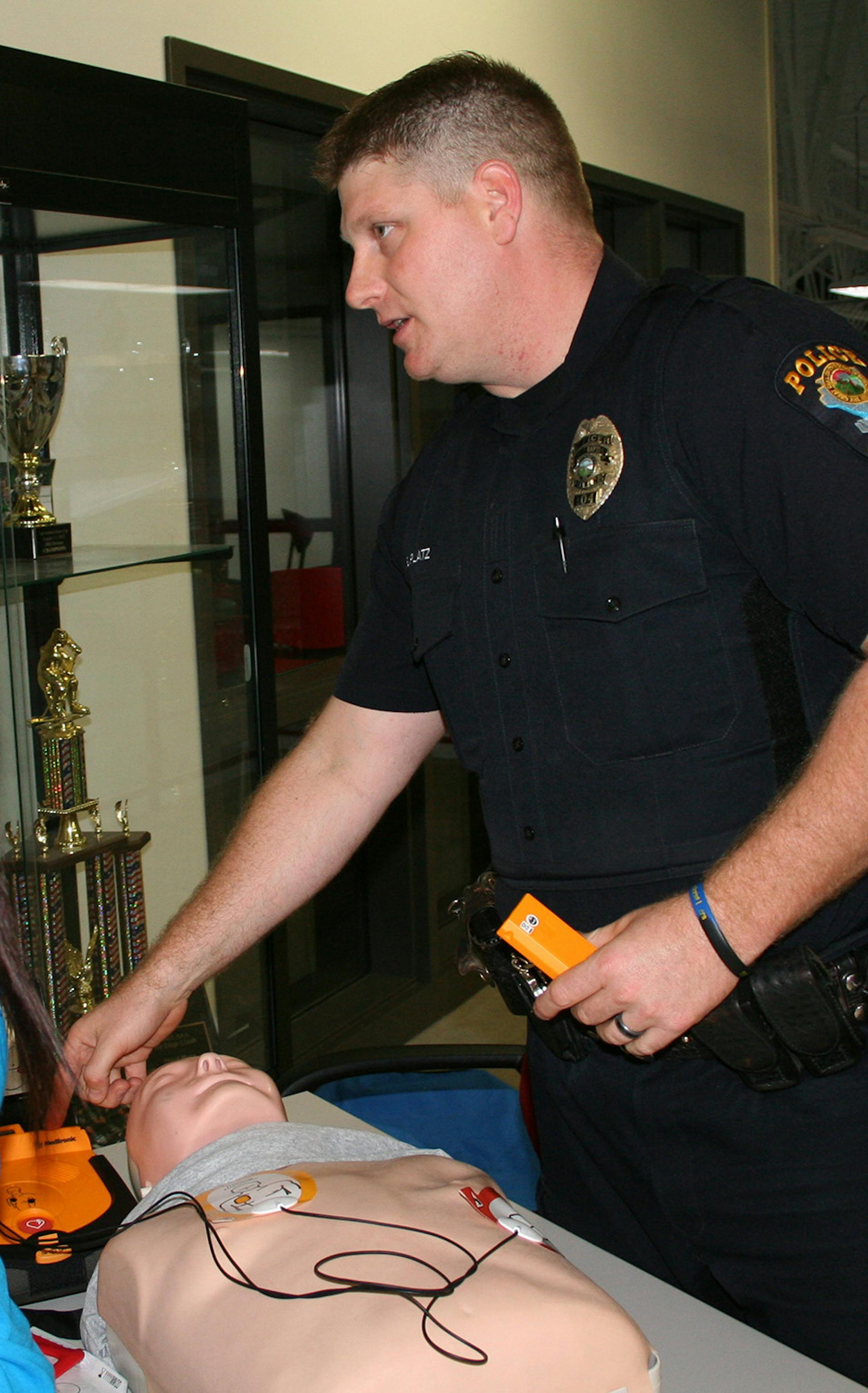
When Coon Rapids police officer Bryan Platz arrived on the scene, bystanders had circled the man who lay dying on the ground. He had collapsed on his way into a retail store, suffering sudden cardiac arrest.
No one helped. No one knew how.
"There were no less than 10 people who were standing around this man doing nothing. Half of those people were in the store's uniform," Platz said. "It haunts you. You say, 'what if?' "
The advent of the AED, or automated external defibrillator, and hands-only CPR makes it easier for bystanders to render aid and save lives. Yet many opportunities are lost because of lack of action and training.
Platz is trying to change that. He has launched a grass-roots-style campaign to make Coon Rapids a Heart Safe community, a designation awarded by the Minnesota Department of Health and nonprofit partners including Allina Heath. About 20 communities in the state have it.
Being Heart Safe means teaching hands-only CPR and making sure businesses have AEDs — with batteries charged — and that their employees know where they are and how to use them.
In the United States, only 8 percent of the 383,000 people who suffer out-of-hospital sudden cardiac arrest each year survive, according to the American Heart Association. In Minnesota, it's about 14 percent. Effective bystander CPR can double or triple the chance of survival, but bystanders intervene only about one-third of the time.
In Minnesota bystanders intervene even less often — about 23 percent the time, said Katie Tewalt, Heart Safe Community Supervisor at Allina Health.


