

By Beth Dooley • Special to the Star Tribune
"Look for the mile marker off 61, just north of Silver Bay," my host said from his crackly cellphone. But in November's fading afternoon light, the demarcation between ditch and driveway blurred so that I missed the entrance twice. Circling back, I found the black mailbox, turned and warily rumbled down the grassy drive following the tire ruts. As I rounded the bend, in the sweep of my headlights, a stone and timber lodge emerged, as stately as any Scottish manor. Drawn to the scent of wood smoke and candlelit windows, I paused at the massive door, taking in the pines lined like sentries behind me. This was going to be good.
Having grown up in New Jersey, I bring a convert's enthusiasm to rituals and traditions taken for granted by my Upper Midwestern friends. Just last week, I'd learned to put up sauerkraut. Now I wanted to understand the "fall opener" that drew so many guys into the woods.
When I mentioned this, my host Jack Driscoll, aka "Jacques the Voyageur," was eager to share all he knows. A historian and seasoned re-enactor, "Jacques" entertains audiences and school groups across the region. Driscoll, himself, is a loquacious neighbor and an old friend — our kids played T-ball together. He's also an avid outdoorsman. His family's North Shore home, built by his grandfather shortly before WWII, is appointed with ironwork, woodland art and handcrafted furniture. This would be a magical setting for a fall hunting feast.
Driscoll laid out his kill on a butcher block in the kitchen — five plump ruffed grouse — shot that morning on his property. These birds, I learned, can be wary, either sitting like bumps or, if flushed, a blur on the wing. Ruffed grouse is uncommonly beautiful, too, its plumage a study in understated elegance. Minnesota's most popular game bird, the grouse is a hearty, snow-loving native that thrives in severe winters that can decimate flocks of partridge, quail, pheasant and turkey. In our region, the population is nearing the low point in its ten-year cycle for mysterious reasons.
I am no stranger to butchering birds. As a journalist, I'd reported on a large turkey processing facility with its bloody kill floor, plucking machines and nose-singeing chemicals. And I'd helped a friend butcher her chicken for on-farm sale. Still, I was surprised by how clean and bloodless dressing these game birds can be when done properly. In one swift movement, Driscoll snapped off the head, then gently ran his fingers under the skin on the breast and deftly removed it in one piece. Having caught and cleaned "blues" on the Jersey shore, I found this whole process faster and less messy than filleting fish. Driscoll had also breasted out several canvasback ducks earlier in the week.
"Just don't overcook them," Driscoll said as he left me to join other friends now gathered at the enormous fireplace, playing cribbage and other card games. This meant I should use either high and quick, or low and slow heat.
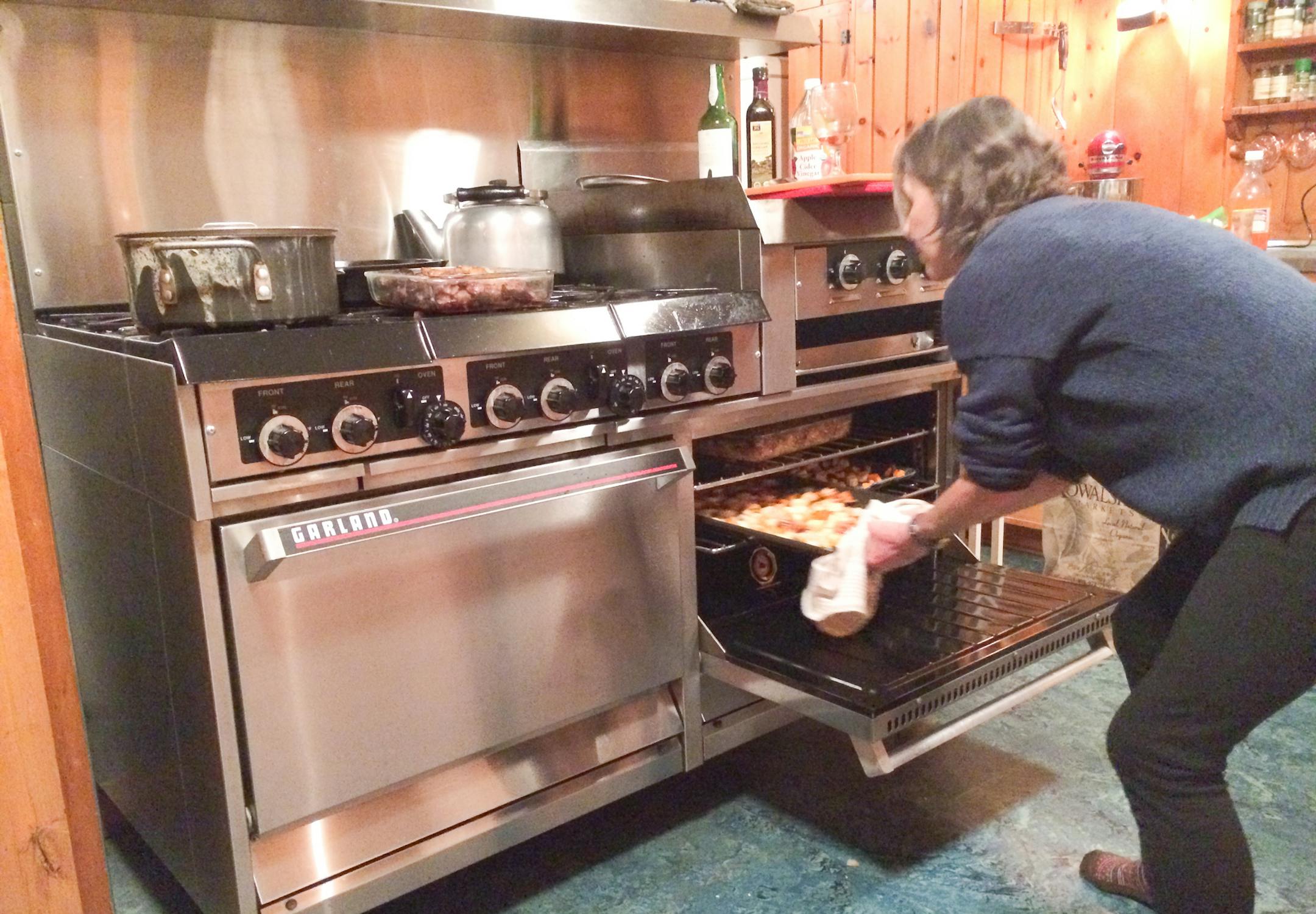
Lean and delicate, grouse need both fat and moisture to keep from drying out, so I wrapped the breasts in peppered bacon to roast for just under an hour, using low heat, with apples, shallots, thyme and a little cider. I basted them often as the pan juices reduced into a salty-sweet sauce to spike with a splash of bourbon.


