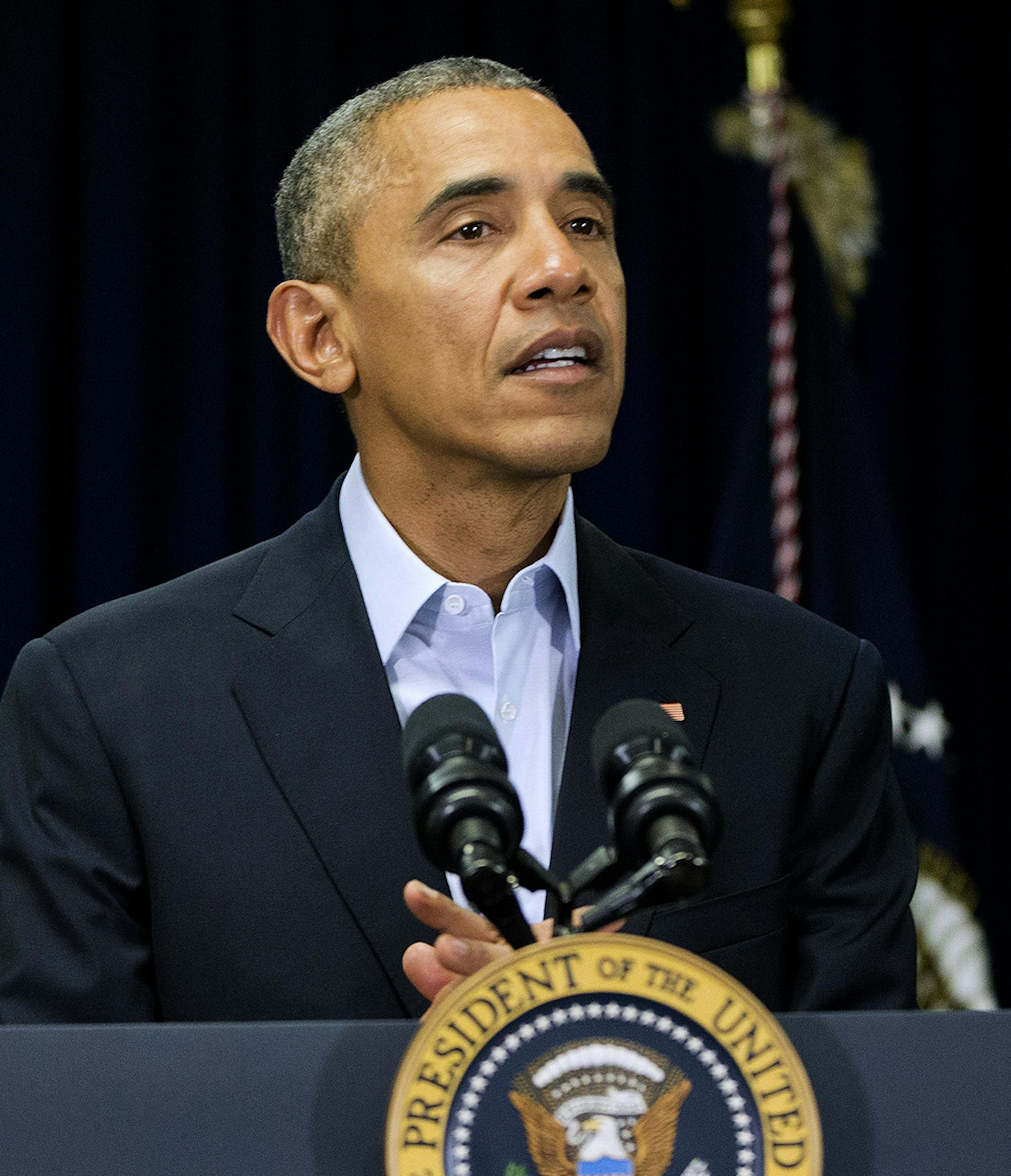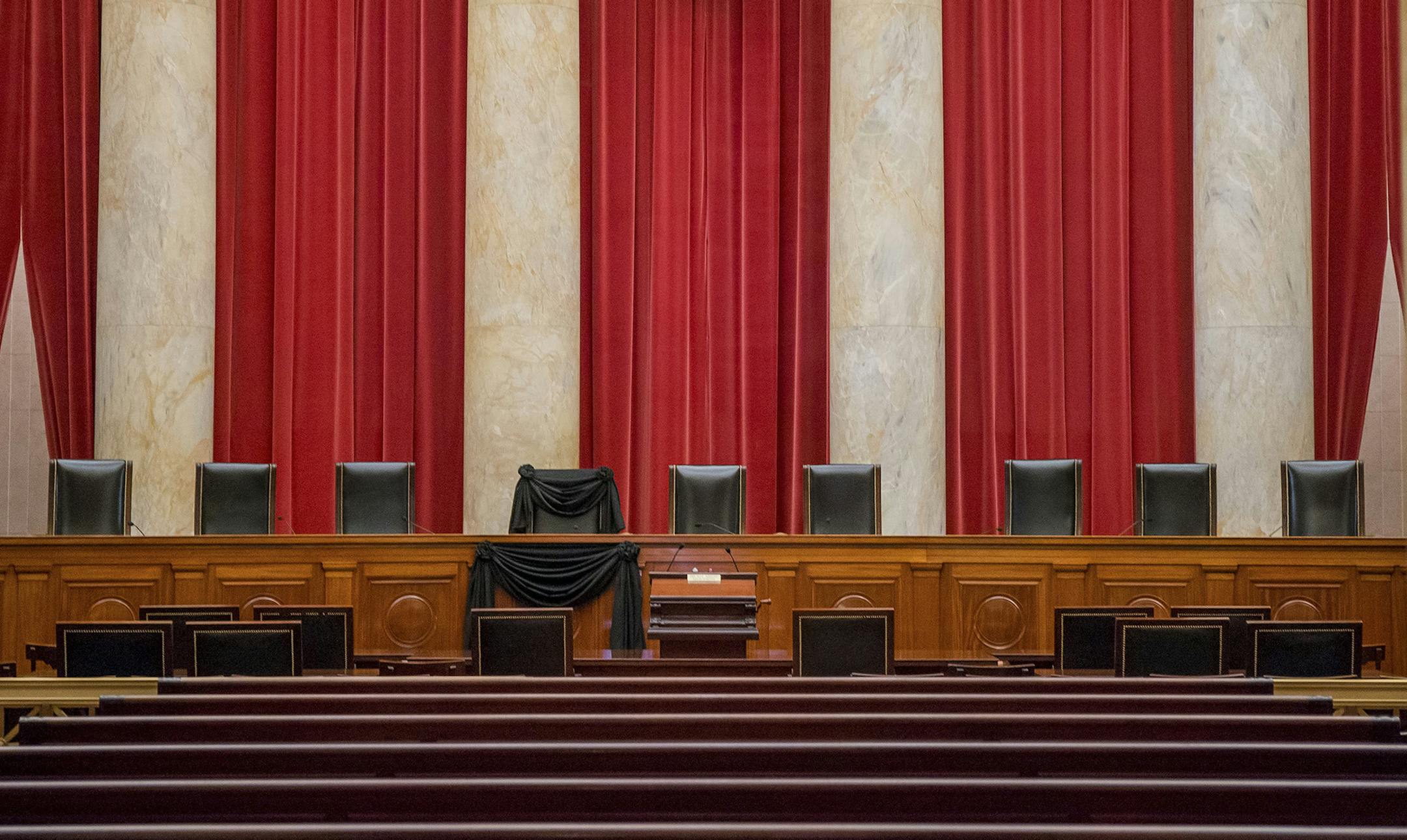
President Obama has said "the Constitution is pretty clear about what should happen now" that Justice Antonin Scalia's death has left a vacancy on the Supreme Court. What should happen now, he said in a news conference this week, is that he should nominate someone to fill that vacancy and then the Senate should approve or disapprove the nomination.
Republican senators have said they will not confirm any Obama nominee this year, allowing the winner of this year's presidential election to make the choice. Obama mocked this idea:
"There's no unwritten law that says that[Supreme Court confirmations]can only be done on off years — that's not in the constitutional text. I'm amused when I hear people who claim to be strict interpreters of the Constitution suddenly reading into it a whole series of provisions that are not there."
Obama is battling a straw man, as is his wont. Republican senators are not contending that the Constitution bars them from confirming a nominee this year. They're saying it allows them to hold off until next year.
Which it does. The framers considered requiring the Senate to take action to keep a nominee from being confirmed. They rejected that idea, writing a Constitution that made confirmation depend on affirmative steps by the Senate. The practical difference between these arrangements is that under our Constitution, the Senate can kill a nomination passively, by doing nothing.
When Obama was himself a senator, he tried to block an up-or-down vote on the nomination of Samuel Alito to the Supreme Court — going against what he now says the Constitution obliges. When this history came up at the news conference, the closest Obama came to a response was that Alito made it to the court anyway. A spokesman later said the president regrets the decision to take part in the filibuster. But if Obama wasn't shirking his constitutional duty back then — and he wasn't — neither are Senate Republicans now.
The fact that the Constitution allows the Senate to ignore a Supreme Court nomination does not mean it is right to do so. Chris Cillizza, in the Washington Post, suggested that Republicans are making a "big mistake" even from the standpoint of their own political interests. Instead of saying no from the beginning, he argued, they should hold hearings and then filibuster Obama's nominee. (They could also hold hearings and then vote that nominee down.) He speculated that Republicans would look more reasonable this way.
How to defeat a nomination, though, is just a tactical question. The more fundamental issue is whether it's reasonable — actually reasonable, not just reasonable-looking — to deny Obama the chance to fill this vacancy this year.