
Conservation deal preserves long stretch of shoreline along northern Minnesota’s Rainy River

The 1.6 miles of riverfront sits directly across from Ontario near International Falls. It will become a 276-acre public wildlife area named for two longtime local politicians who worked to preserve wilderness in the state.

The Minnesota Star Tribune
October 6, 2025 at 7:17PM
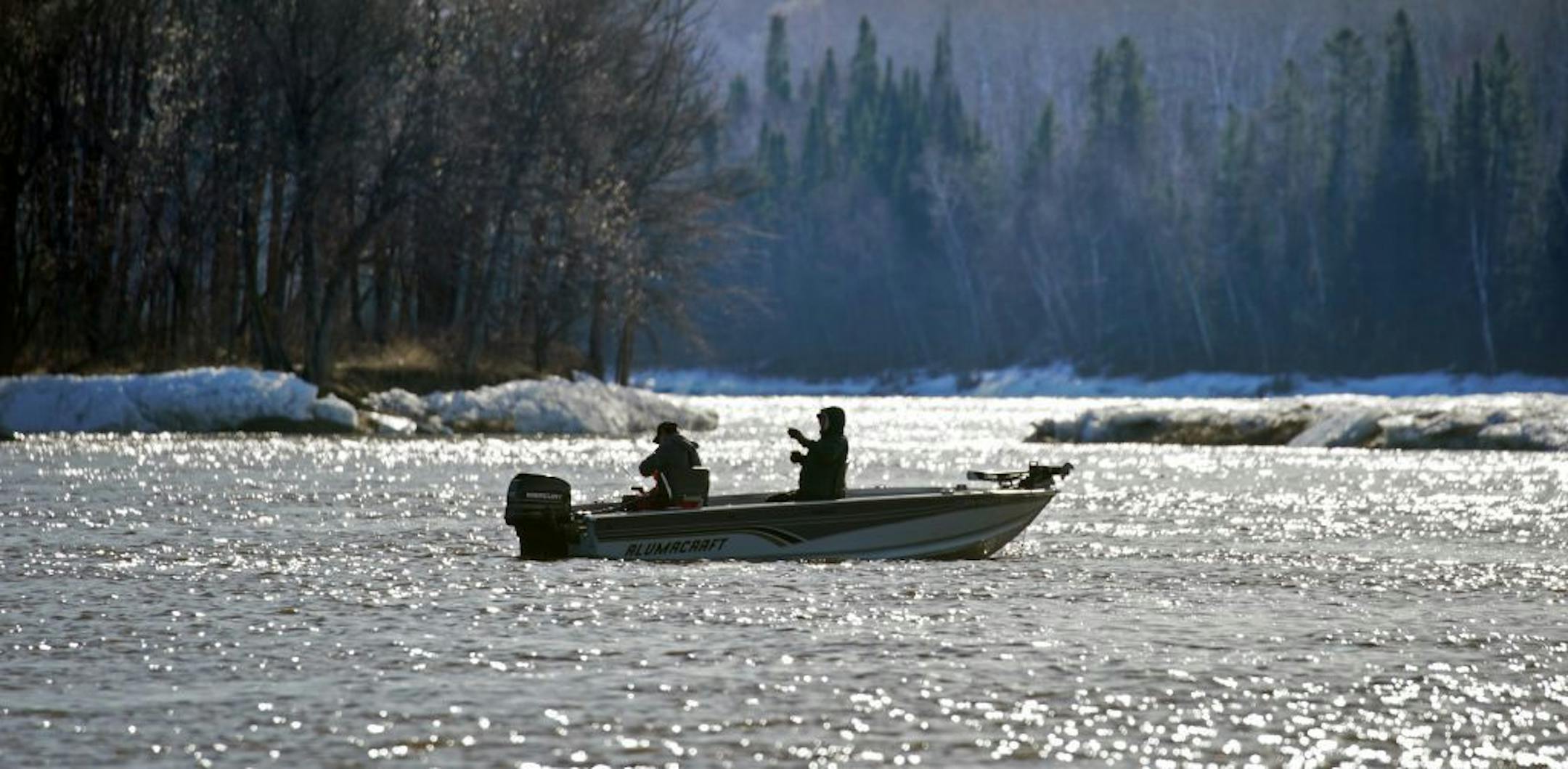
The Rainy River flows from Rainy Lake in International Falls to Lake of the Woods in Baudette. A land deal long in the making has preserved 1.6 miles of the river's shoreline for public recreation and professional wildlife management. (The Minnesota Star Tribune)

It was 12 years ago when a woodland manager from northern Minnesota told Joe Duggan about a tract of vacant land on the Rainy River, west of International Falls.

A conservationist with powerful connections throughout Minnesota’s fish and game world, Duggan dreamed of turning it into a public wildlife area. Not only did the land hug 1.6 miles of shoreline across the river from Ontario, but it contained distinctive grouse habitat and 276 acres of mixed wildlife cover – Norway pine trees and tamaracks, aspen stands, marshy lowlands and brushy uplands.

“It’s a phenomenal landscape,” Duggan said. “I remember thinking, ‘If and when this comes to market, it would be a great opportunity.’”

The “if and when” happened. On Monday in Koochiching County, partners in the $820,000 land deal will gather to christen the tract as the state’s newest wildlife management area. It’s named after 94-year-old outdoors legend Bob Lessard and the late Bob Anderson, a former mayor of International Falls who worked for Boise Cascade and once chaired the Lessard-Sams Outdoor Heritage Council.

“This is for future generations to have and enjoy,” Duggan said. “A lot of folks came together to make this happen.”

The Lessard-Anderson Wildlife Management Area, 35 miles west of International Falls, joins Minnesota’s network of more than 1,500 such lands across the state. WMAs are open to hunting, trapping, foraging, wildlife watching and other public uses. Together, they provide 1.4 million acres of habitat.

Despite the tract’s location far north of Minnesota’s pheasant range, Pheasants Forever took the lead on the project. The group acquired the former Boise Cascade property from Molpus Woodlands Group, a timber management firm based in Ridgeland, Miss.

It was a Molpus supervisor who first showed the land to Duggan.

When it came up for sale about 18 months ago, Duggan needed to act quickly.

He said he turned to Pheasants Forever, where he works part time, because DNR had reservations about taking the lead on the project. Based in the Twin Cities, the nonprofit conservation organization had the cash needed for a timely closing.

“When we were asked to help it was a no-brainer for us,” said Sabin Adams, Minnesota state coordinator for Pheasants Forever. “To protect 1.6 miles of shoreline on the Rainy River? That’s the real cherry on the top of this property.”

Sabin said Pheasants Forever had never negotiated a land purchase that far north in Minnesota, but it made sense for its overall conservation value and came together with the generosity of partners.

This spring, Pheasants Forever bought the land for $800,000 and took on another $15,000 to $20,000 in fees to close the deal. In turn, the DNR acquired the property from Pheasants Forever for $740,000 in proceeds from the Reinvest in Minnesota critical habitat license plate program.

The partners who covered the difference were the Minnesota Deer Hunters Association, Minnesota Forest Industries, National Wild Turkey Federation and Packaging Corp. of America (owner of the paper mill in International Falls). The coalition will be memorialized on a stone monument still to be built for the Lessard-Anderson WMA.

Duggan said the deal wouldn’t have transpired if it weren’t for the unanimous backing of the Koochiching County Board. He sought the board’s approval before anything else happened because counties in northeastern Minnesota are sensitive to adding public land to their property tax rolls.

“I really think it’s a win-win,” County Board Chair Jason Sjoblom said. “It opens the property for public use and wildlife management. … It’s probably the best use of that land."

Sjoblom said it’s also fitting that the WMA is named after Lessard and Anderson. “Those two names go back 60 years in International Falls for public service,” he said.

Lessard, who owns a Canadian fly-in fishing camp, served many years at the Capitol as a state senator. His fingerprints are on key funding mechanisms for the outdoors, including Minnesota’s Environmental Trust Fund, which uses lottery proceeds to fund natural resource projects. He fought for hunting and fishing rights at the Legislature and was instrumental in pushing 2008’s Clean Water, Land and Legacy Amendment that now generates more than $100 million a year to restore, protect and enhance habitat for fish, game, and wildlife.

Duggan said there’s already an access road on the property, but it stops shy of the river. The shoreline, some of which is steep, is a short walk from where the access road ends. First on the list of improvements for the WMA will be signage and a public parking lot.

The tract is located between Franz Jevne State Park and Manitou Rapids. Because both of those sites already provide river access for boats, there’s no immediate plan to build a boat ramp at the new WMA.

“This deal was a long time brewing, but it’ll only provide more value as time goes on,” Duggan said.

about the writer

about the writer

Tony Kennedy

Reporter

Tony Kennedy is an outdoors writer covering Minnesota news about fishing, hunting, wildlife, conservation, BWCA, natural resource management, public land, forests and water.

See Moreicon

More from Outdoors

See More
Rising above the treeline (Top of this photo), on the shore of Birch Lake, the Twin Metals Copper Nickel Mine Plant site and Tailings Management site is part of the proposed plan. ] In theory, the copper-nickel mine Twin Metals wants to build in the headwaters of the Boundary Waters Canoe Area Wilderness is a zero-discharge mine — a closed loop that will endlessly recycle millions of gallons of water, including rainwater and the polluted process water it uses to extract ore and
Brian Peterson/The Minnesota Star Tribune

The copper-nickel mine is controversial for its proximity to the Boundary Waters Canoe Area Wilderness, and the Biden Administration had canceled its leases.

card image
card image