

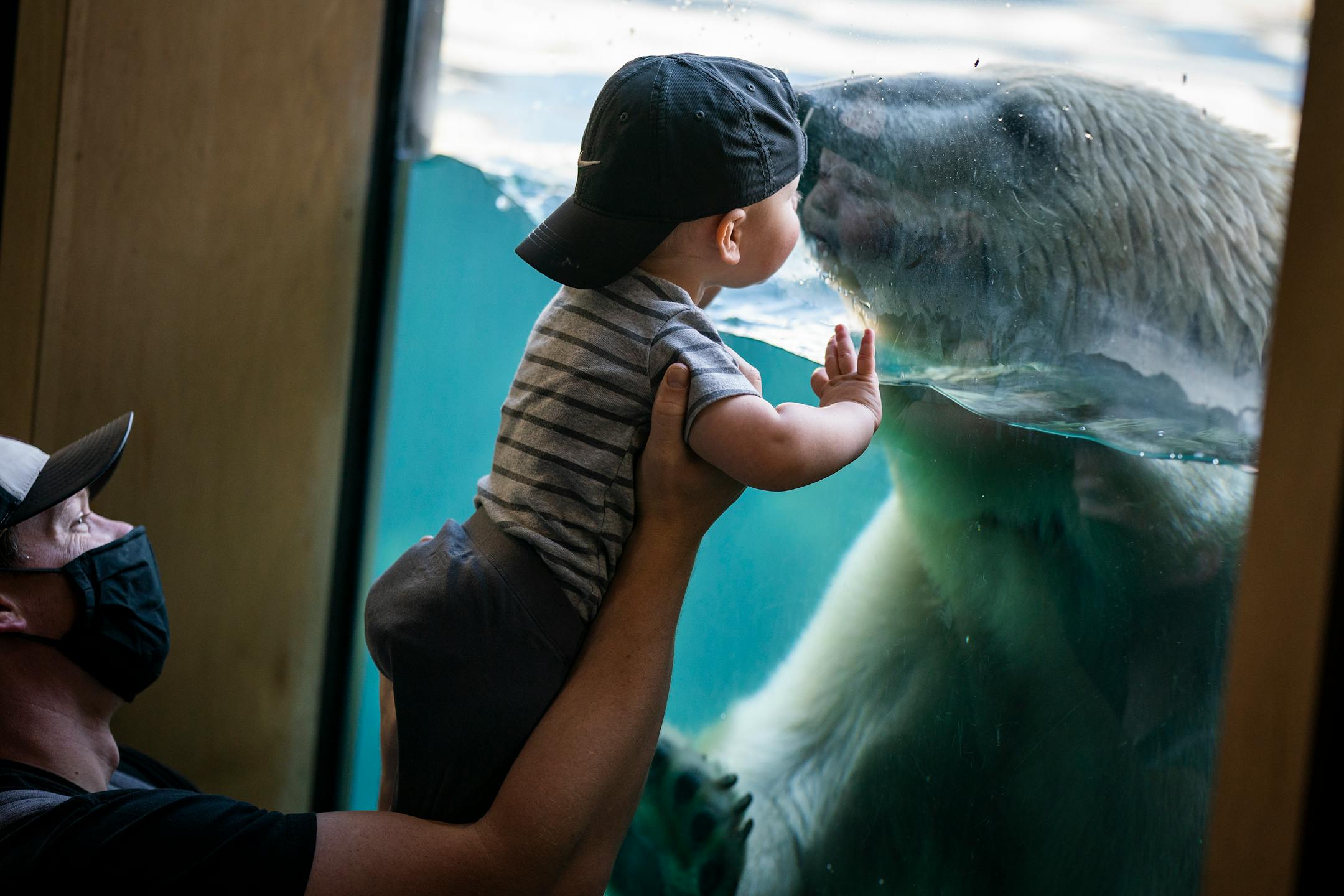
Treading water outside the glass wall of the Polar Bear Odyssey pool at the St. Paul Como Zoo, Kulu looked like he was performing a flirtatious dance for visitors — sociably waving all four legs, white fur gently swaying, always staying inches from the window while children leaned close, eyes wide with awe.
From all appearances, Kulu was enjoying the interaction as much as the kids were.
Kulu, who turns 2 this month, is still an exuberant youth himself. He recently arrived at his new home from the Columbus (Ohio) Zoo and Aquarium, where he was born. He joins Como's longtime polar-bear residents, Nan and Neil, who are 25 and 26, respectively (which is old for polar bears).
At over 700 pounds, Kulu already looks big, but will gain at least a few hundred more pounds by the time he's full grown, said Allison Jungheim, senior zookeeper at Como and a coordinator for the Polar Bear Species Survival Plan, an advisory group for the Association of Zoos and Aquariums.
Young though he is, Kulu is already performing services that may someday help his distant relatives — distant in both senses of the word — for the relatives he's helping are wild polar bears living in the Arctic, primarily in Canada, but also in Alaska, Russia, Greenland and Norway.
One of Kulu's important jobs is testing a new radio tracking device that may help scientists keep a better eye on polar bears as their populations decline due to global climate change.
Polar bears are particularly hard to track in the wild because of their harsh, remote and rugged habitat. Traditionally, tracking devices have been held in unwieldy plastic collars that could be placed only on female bears; young polar bears would quickly outgrow the collars, and they would slide off males because their necks are wider than their heads.
Newer trackers are an improvement. Unlike their cumbersome predecessors, they're smaller than a "fun size" Halloween candy bar which allows them to be, theoretically, attached to a bear's long fur. But that requires a tag that would stay in place in the rugged conditions to which a polar bear would subject it — lumbering through the dense brush that covers much of their onshore habitat, rolling around in the snow, roughhousing with other bears.


