

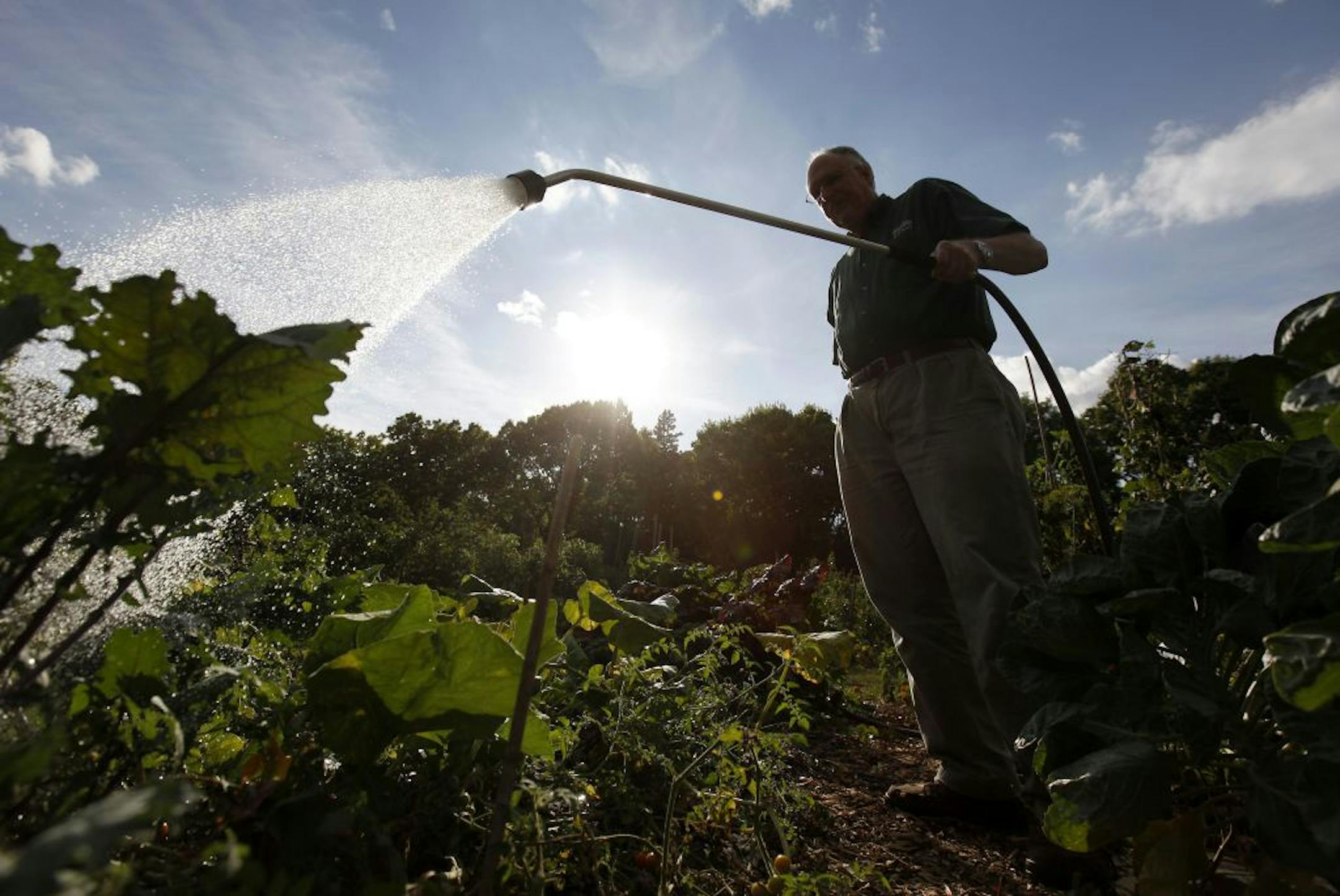
It takes sunshine, water and a lot of helping hands to make a community garden grow — and sometimes, a little seed money from the state.
On Knox Avenue in north Minneapolis, young gardeners watch over the tomatoes, peppers, greens, strawberries and melons they've been tending since the spring thaw. They range in age from teens down to an industrious 4-year-old with a shovel, all eager to bring in the harvest and sell it at their local farmers market.
"It's a lot of hard work, but it's fun," said Loreal McKelvy, who turns 10 next month. She and her brother, Latrell, 12, have been gardening here for the past two years, digging and composting, watering and weeding and waiting for the harvest.
The money they get from the market, and a small stipend they earn working in the garden, goes right into the bank. That way, Latrell said, their savings account "grows and grows" just like their garden.
Peace Garden is just one of many around the city that grew with the help of state taxpayer dollars.
Over the past two years, the Minnesota Department of Health has spent about $89,354 to help start community gardens around the state through its Statewide Health Improvement Program, also known as SHIP. Those funds were funneled through communities and nonprofits, who added private funding to the mix to help the gardens thrive.
Those garden grants are a sliver of the $15 million SHIP budget, which in turn is a sliver of the $11.2 billion state Health and Human Services budget. But Republicans in the Legislature pushed hard to have the funds cut from the budget entirely.
During an April debate, Senate Minority Leader David Hann, R-Eden Prairie, questioned why the state was spending thousands of dollars to help "suburban folks to grow vegetables." He had no beef with veggies, but surely, he argued, there were better uses of taxpayer funds.


