

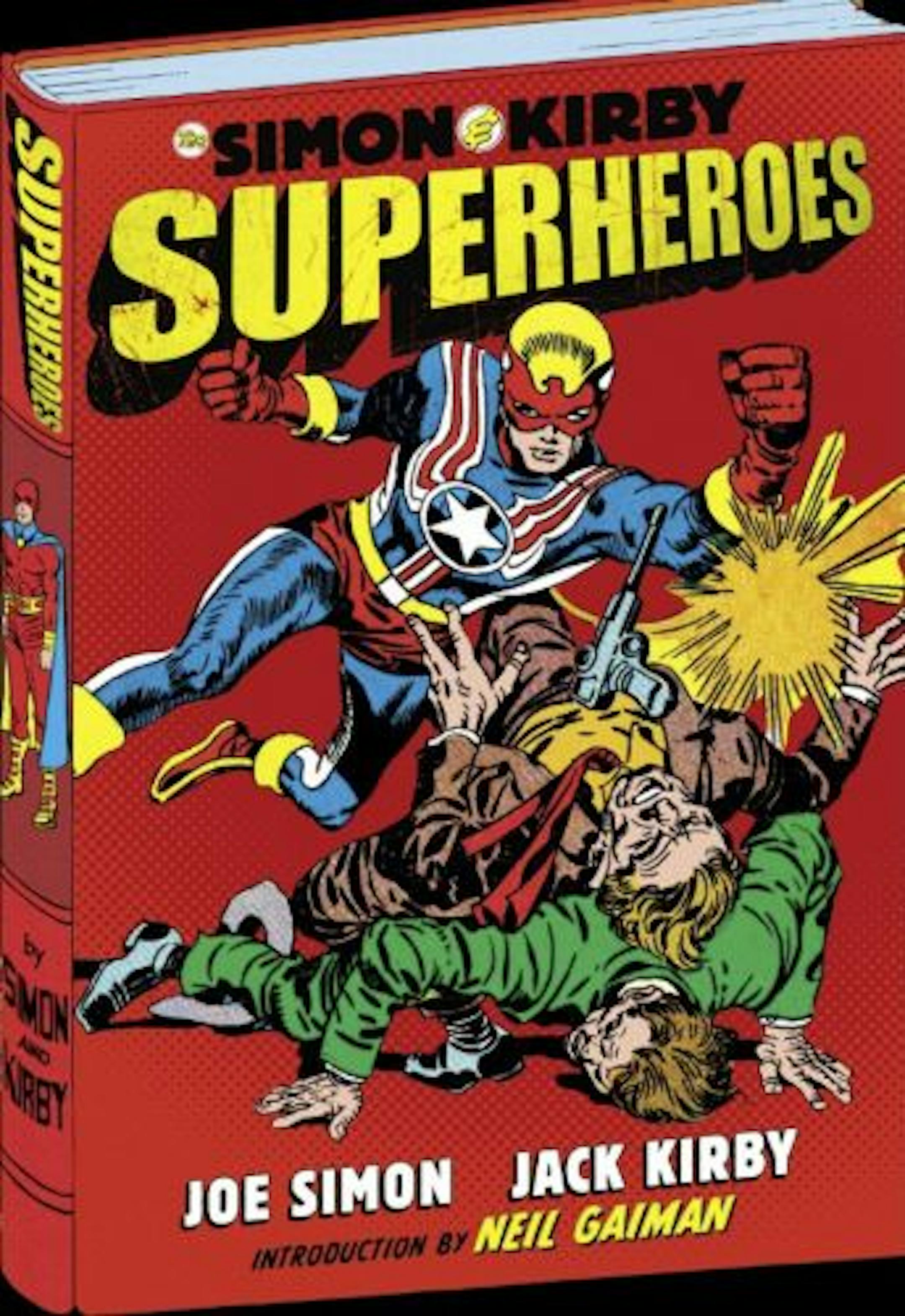
Titan Books has released the second volume in its library of comics by the team of Joe Simon and Jack Kirby. It's like finding the Rosetta stone of superhero comics.
Simon and Kirby were the rock stars of the early comic-book industry. They created Captain America and at least two genres (romance comics and kid-gang comics), and mastered all the rest. They were the first creators to get their names on covers as a selling point, and most of their work still holds up.
The first volume in the Simon and Kirby Library was an overview. Now comes "The Simon & Kirby Superheroes" ($50).
"Superheroes" doesn't contain Simon and Kirby's best-known superhero work, which is still owned by major publishers who jealously guard those valuable trademarks. So you won't see Sandman (DC Comics) or Captain America (Marvel).
Instead, "Superheroes" contains runs of the pair's characters whose series were cut short by the industry's notorious boom-and-bust cycle, or failed for other reasons -- but not poor quality:
Black Owl (1940-41): A rare Simon and Kirby series without much humor, as Black Owl (whose silhouette resembles a certain Dark Knight's) was positively grim.
Stuntman (1946): A former circus aerialist uses his athleticism as a secret stuntman for movie star Don Dashing and as a masked crime fighter.
Vagabond Prince (1947): A greeting-card writer discovers he owns the east side of Esten City (New York) due to an ancestor's deal with American Indians and protects its downtrodden citizens from crooks and greedy capitalists alike.


