

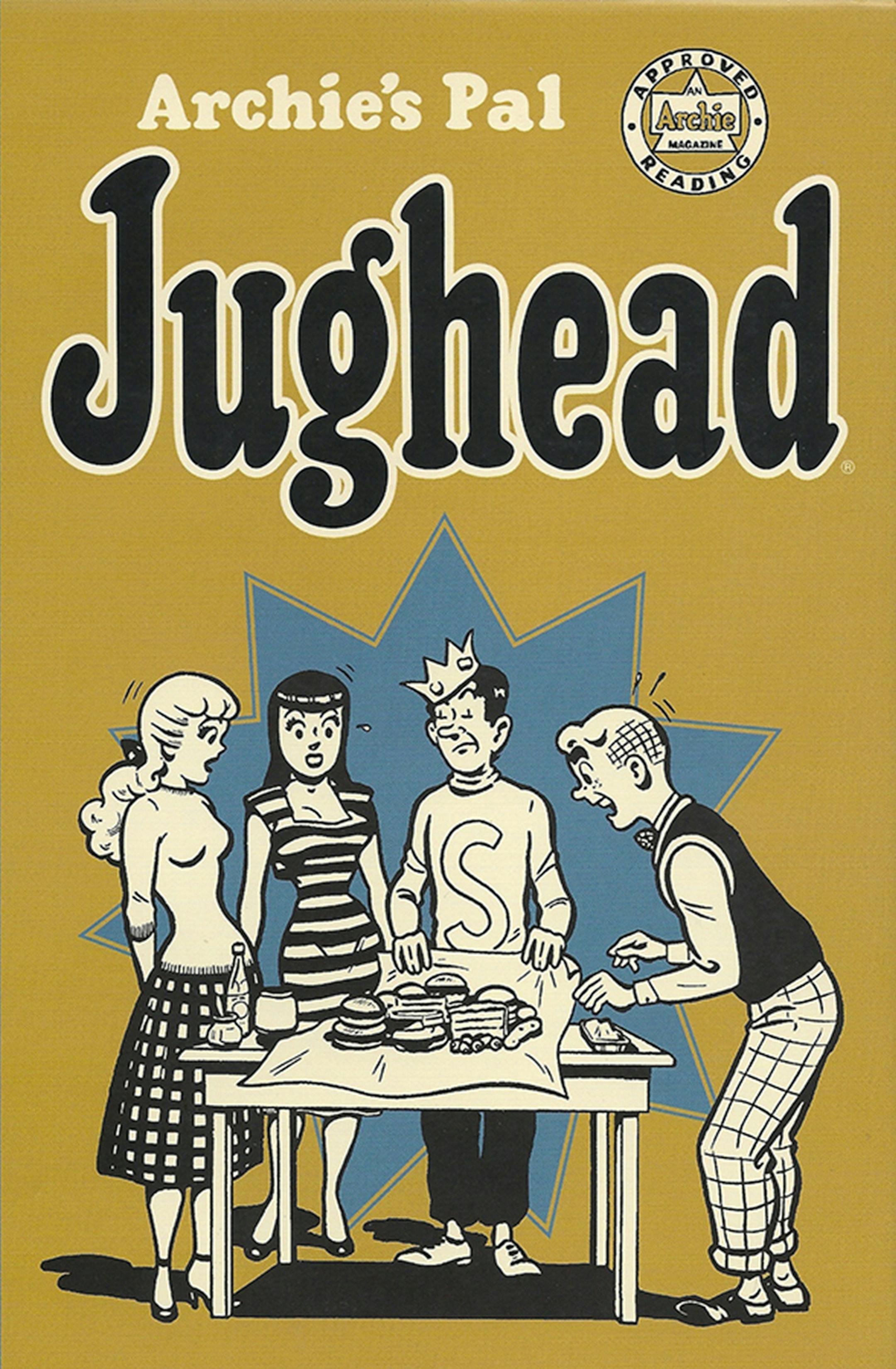
Who is Jughead Jones?
Many know him as Archie's best pal and Riverdale's resident chowhound. A quietly confident eccentric, Jughead has been known as a talented prankster (he regularly turns the tables on Reggie) and isn't as girl crazy as his peers (although he does date). He wears the most famous beanie in America (called, among other things, a "whoopee cap"), and his eyes are always at half-mast, as if a nap attack is always an imminent possibility (it is).
He's lazy, clever, loyal, imperturbable, insatiably hungry, unconventional — and funny.
But how'd he come to be that way? The rest of the Riverdale cast is pretty straightforward: Archie Andrews is the clumsy everyman, Betty Cooper the girl next door, Veronica Lodge the spoiled rich kid and Reggie Mantle the selfish, snarky member of the gang that nobody really likes. But Jughead is unique — and something of an enigma.
Fortunately, Dark Horse Books is shedding some light on the mystery of Forsythe Pendleton Jones III — yes, that's his real name. Dark Horse has been doing the universe a huge favor in recent years by reprinting Archie Comics in chronological order, beginning with the redhead's first appearance in "Pep Comics" in 1941. And now that they've reached 1949 (with volume 10), the year when Jughead was first awarded his own book, they've released "Archie's Pal Jughead Archives Volume One" ($49.99), collecting the first eight issues.
One element that jumps out from reading all the "Archie Archives" in order is that Jughead was once poor, but his circumstances improved. In his early appearances in "Archie," "Pep" and "Laugh," if Jughead was ever depicted at home it was a dismal scene. His wallpaper was peeling, his furniture had broken legs tied together, his plaster was cracked and his sheets were patched. His "alarm clock" involved livestock, and there was no sign of parents or relatives.
Comedy has always found humor in lack of means, especially in the Depression era. Charlie Chaplin's "Little Tramp" and vaudeville acts like Laurel & Hardy leap to mind as predecessors in the penury-for-laughs arena. One must assume that Jughead was a sort of stock character of the time, or at least one with which the audience would be familiar and/or comfortable.
But those scenes disappeared pretty quickly. By 1949, when "Jughead" No. 1 debuted, the Jones house was firmly in the middle class, like those of the rest of the Archie gang — excepting the ultrarich Lodges. Jughead acquired family, too. A ditsy inventor uncle appeared occasionally, but he didn't last any longer than it took for the writers and editors to realize that Jughead was funnier as the instigator of chaos rather than as its victim. Jughead's parents began making appearances, as well.


