

Students stepping onto Century College's campus are greeted by a sign: "Welcome to the 2012-2013 academic year!" Below the message is a man in a graduation cap.
From the start, community colleges are emphasizing the end, trying to improve stubborn transfer and graduation rates as national pressure grows.
The challenge is sizable: Fewer than half of students who enter a community college earn a degree or transfer to a four-year school, or they are still enrolled six years later, according to a recent report by the American Association of Community Colleges.
Colleges now begin their efforts the moment students arrive. In some cases, even earlier. Alexandria Technical and Community College interviews students about their goals before they enroll. Inver Hills Community College groups first-year students into "learning communities." Itasca Community College takes the full first day to orient students, inviting them to "Let's Chat" sessions and a picnic.
This fall, Century College in White Bear Lake is requiring students who tested into developmental reading -- all 1,450 of them -- to take a three-credit course called "New Student Seminar."
"For a long time, community colleges' mission was opening up access," said Melinda Mechur Karp, senior research associate at the Community College Research Center. But in recent years, "there's increasing recognition that isn't enough. It's not enough to say, 'Come on in,' if we can't get you through."
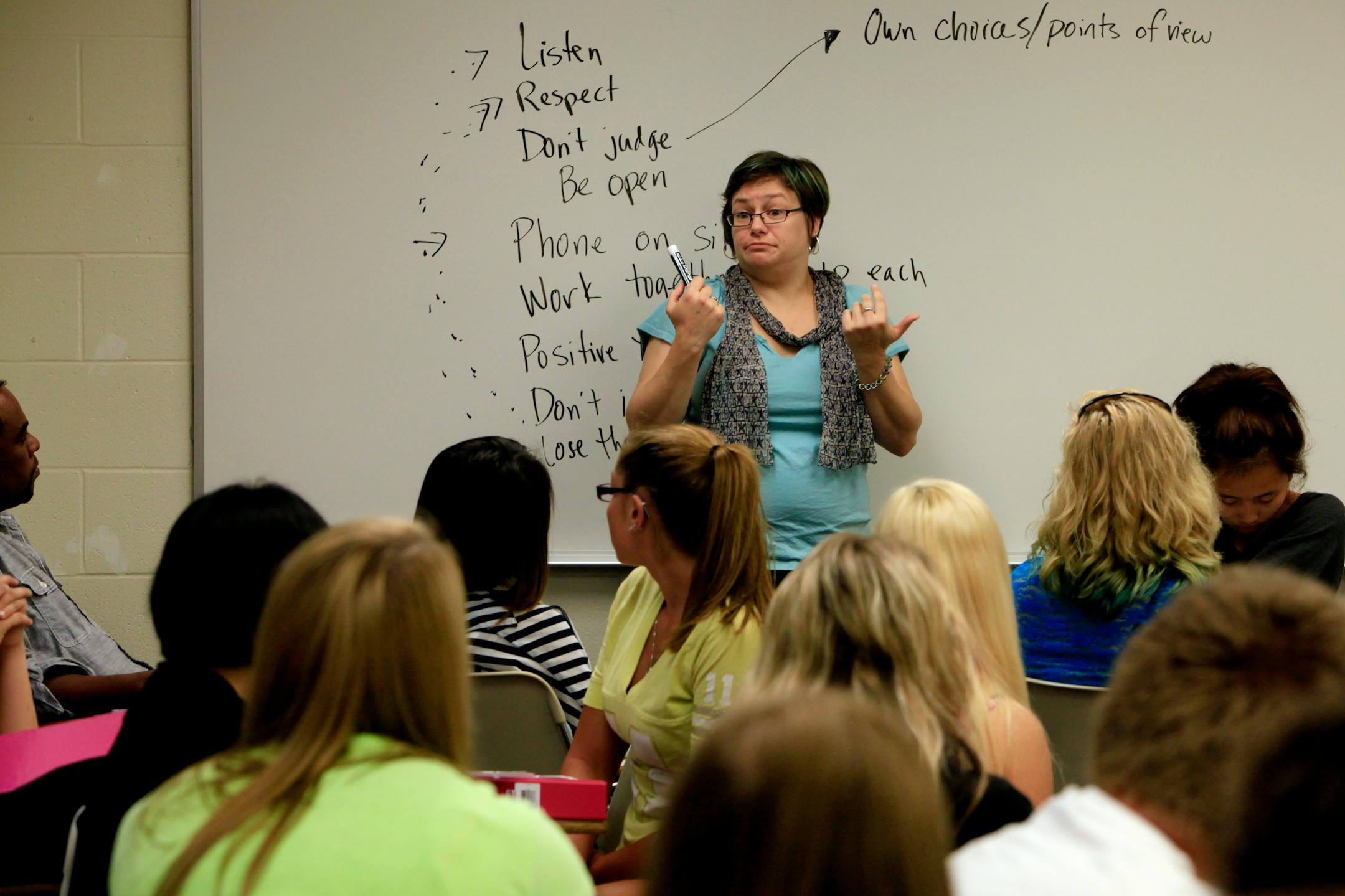
Last Tuesday was the first day of college for most of Cathy Crea's "New Student" class at Century. They spent the first half hour learning about what they have in common -- and what makes them different. "I'm a carnie at the State Fair," one woman said. "I own my own business," said another. Later: "I have a kid."
"Stand up if you have a kid," Crea said. The four standing shared ages, names.


