

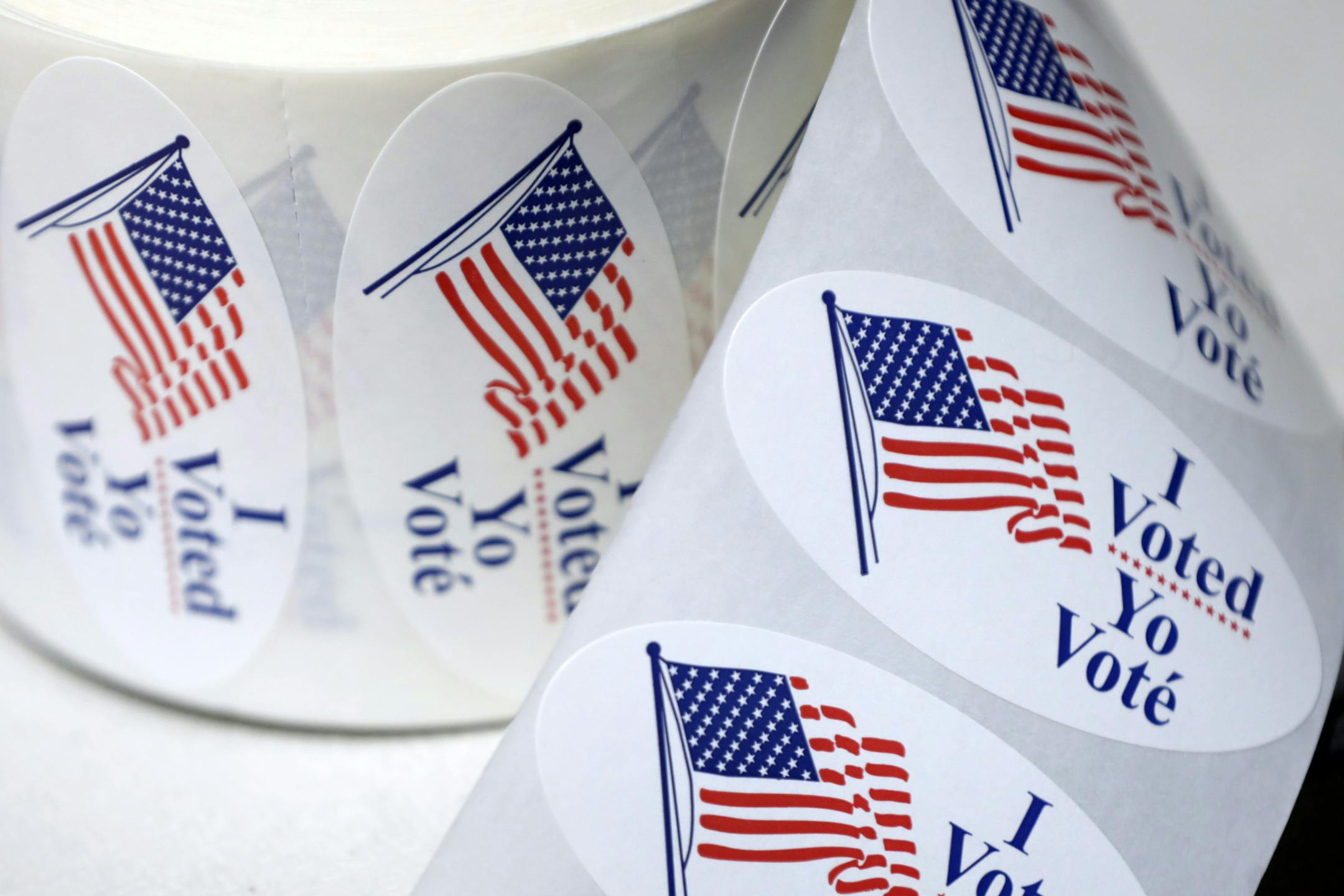
It's alarming how increasingly and dangerously divisive our nation has become. This year's contentious election has demonstrated hyperpartisanship, increased fear mongering and name calling. We believe our nation's leaders, representing both major parties, can and should do better.
As presidents of the College Republicans and College Democrats at Saint Mary's University of Minnesota, we stand on opposite sides of many national issues. Yet we stand united on two fronts: empowering students to vote and the need to model civil discourse.
We share a complex understanding of the democratic process and encourage our peers to make their voice and their values heard in this election.
We are both political science majors who grew up immersed in politics, and we see the political process as a way to help people make a difference, locally and globally. That difference can take many forms. While one of us hopes to run for political office in the future, the other hopes to advocate for an end to international human rights injustices, especially in the Middle East and East Africa.
In a recent New York Times article, "Why don't young people vote, and what can be done about it?" the statistics were troubling, and we hope to address the trend. In a joint project with the President's Office, the Student Senate, and the College Republicans and Democrats, we have focused on a "get out to vote" campaign, while also promoting our university's civil discourse series.
During these past few weeks, we assisted with hosting a voter-registration drive, formulated social media campaigns, distributed flyers with QR codes to direct students to each state's voter registration and absentee ballot request sites and spoke to 40 classes campuswide. We were excited to see the positive response across the university community.
We are also preparing for the results of the Nov. 3 election, regardless of who wins. We are pulling together resources so that students can and will be involved beyond the election. We are available as a resource to fellow students to help them get in contact with political parties and the candidates, volunteer organizations and opportunities to be activists for change.
As we have worked together to develop a culture of respect and civil discourse within our campus community, we've remained aware of differing perspectives and worldviews. Our generation can address the dangers of confirmation bias, through which people become trapped in an echo chamber, refusing to read or believe anything that differs from their own viewpoint.


