

In the midst of frantic weekend reporting about the status of coronavirus and its potential to shut down the major college football season, a set of two tweets stood out above the fray.
Matt Hayes, a senior college football writer from Bleacher Report, shared a text message he had received from a Power 5 college athletic director:
"You and your colleagues are chasing the wrong story. The virus alone is enough to stop the season. But presidents are terrified of players organizing. It's the paradigm shift to change amateur sports. You potentially lose one season with the virus. You lose the entire framework of your mission statement with players organizing. They need time to figure out how to attack it."
There's a lot to unpack there. But the tweets — sent around 5 p.m. Saturday — continued to resonate and gain even more relevance as the weekend continued.
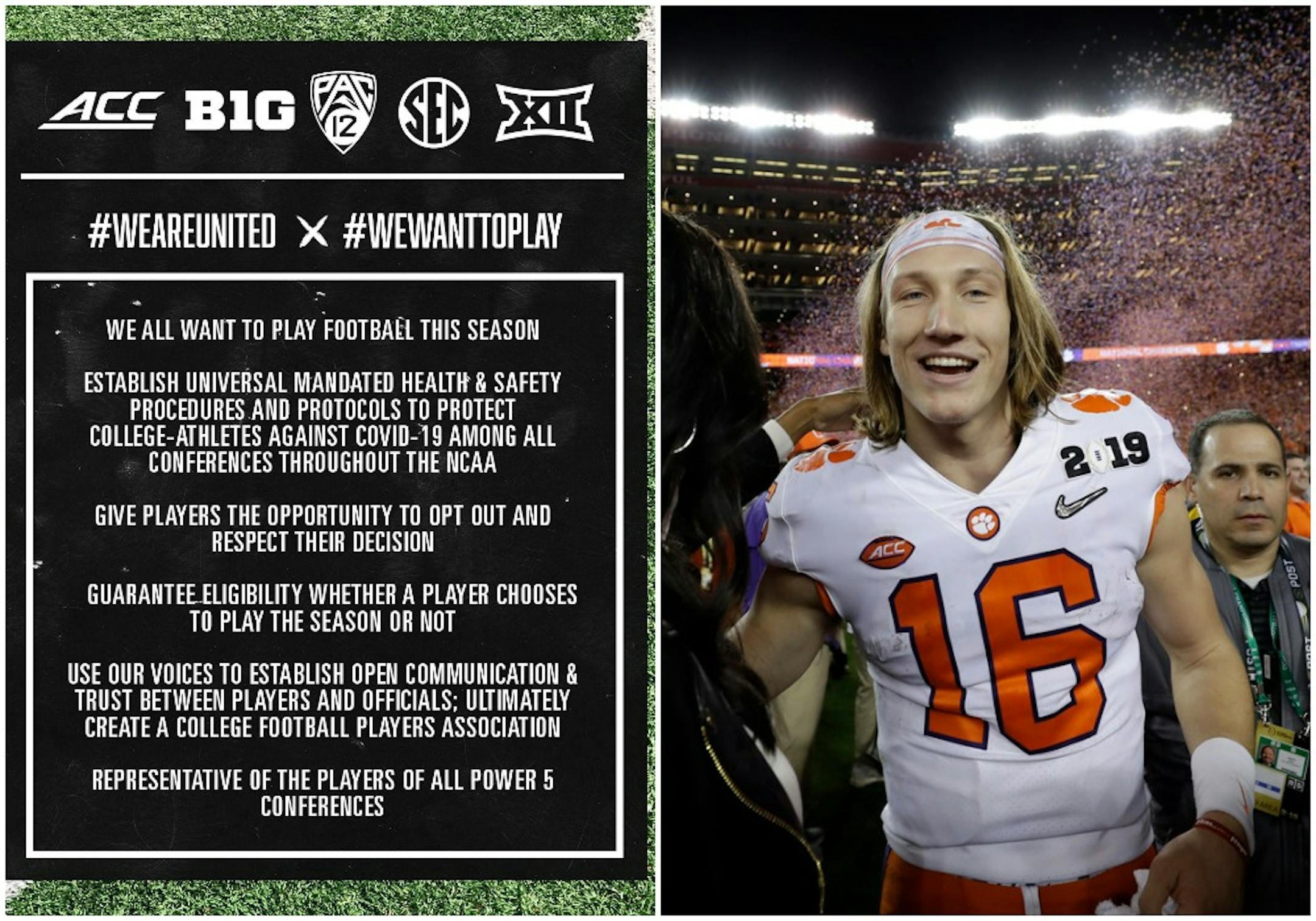
First there was an increasing sense that Power 5 schools will soon vote to postpone the fall season. Perhaps more importantly, there was another layer to the notion of players organizing and demanding change when dozens of college football's best players released a statement late Sunday saying they want to play this year while asserting several rights they would like addressed if such a thing is going to happen.
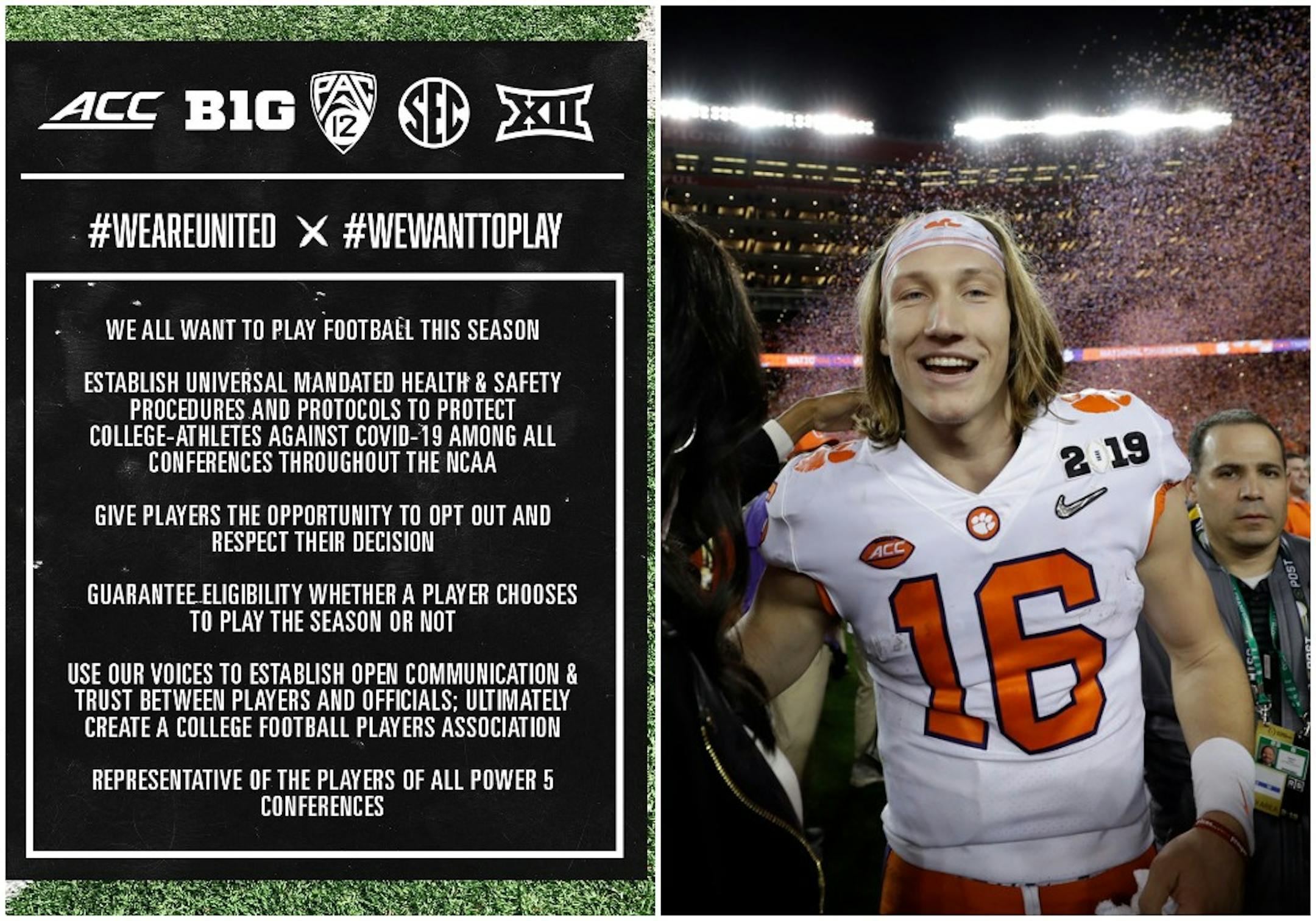
The statement united two groups — #WeAreUnited and #WeWantToPlay — that had seemingly been on separate tracks. #WeAreUnited had been used to show support for organizing efforts demanding player rights already underway in the Big Ten and Pac-12. #WeWantToPlay had been used by Clemson star QB Trevor Lawrence and others who hoped to salvage the season.
The unified message was summarized nicely by ESPN.com: "The group asked for uniform health and safety protocols for dealing with the coronavirus pandemic and laid out their intentions to form a college football players association in the future. The statement also said players should have the chance to opt out of the upcoming football season and that they should be guaranteed another year of eligibility whether they play this season or not."
Whether it's enough to turn momentum and play this season is an interesting question, but it's not the most interesting question. Rather, this is: What does this mean for the long-term status of major college sports?


