

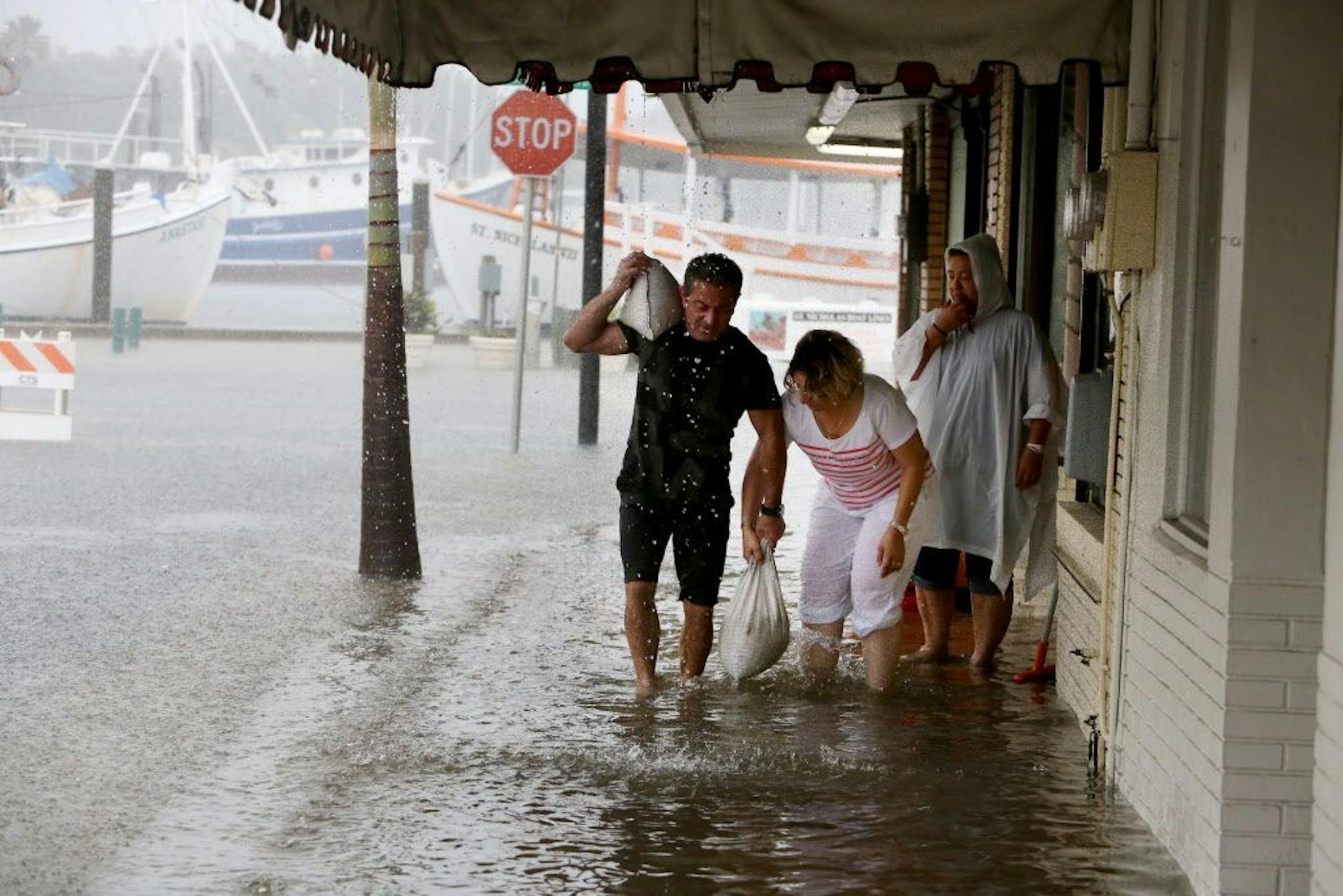
Colin headed out to sea Tuesday after dumping as much as 9 inches of rain on parts of Florida, forcing at least one city to pump partially treated sewage into the Gulf of Mexico ocean because the system was overloaded with rainwater.
Colin flooded roads and caused thousands of power outages in Florida and a team investigated a possible tornado related to the storm that damaged homes and toppled trees in Jacksonville. The city of St. Petersburg said it was pumping sewage into Tampa Bay because its sewer system has been overloaded with rainwater infiltrating leaky sewer pipes.
Although the storm was out to sea, forecasters said Colin is expected to produce additional rainfall of up to 2 inches across far eastern North Carolina, and as much as 5 inches across central Florida through Tuesday evening.
The U.S. Hurricane Center said Colin, which formed Sunday, was the earliest a third named storm had developed during the Atlantic hurricane season, which officially began June 1.
In Dare County, North Carolina, which includes pencil-thin territories from Kitty Hawk down to Hatteras Island, Emergency Management Director Drew Pearson said rain had been falling nearly continuously since Tropical Storm Bonnie, which formed May 28. So far, there had been no major flooding.
"We're really just seeing large amounts of water," Pearson said, noting that many roads in the Outer Banks are at sea level, meaning that they can be quickly impacted by heavy rains. Traffic may be slow but hadn't been stopped anywhere, he said.
Tropical storm warnings were discontinued on Tuesday as the remnants of Colin sped away from the mid-Atlantic coast and out to sea.
Although maximum sustained winds are at 68 mph with higher gusts, the system's strongest winds and heaviest rains were over water and southeast of the center. The hurricane center said some slight strengthening was possible Tuesday night, but gradual weakening was expected to begin on Wednesday.


