
Brown: It’s 10:30 p.m. Do you know where your shared TV experience is?

Pending cancellation of “The Late Show with Stephen Colbert” shrinks our communal media space.

Columnist Icon
The Minnesota Star Tribune
July 22, 2025 at 11:00AM
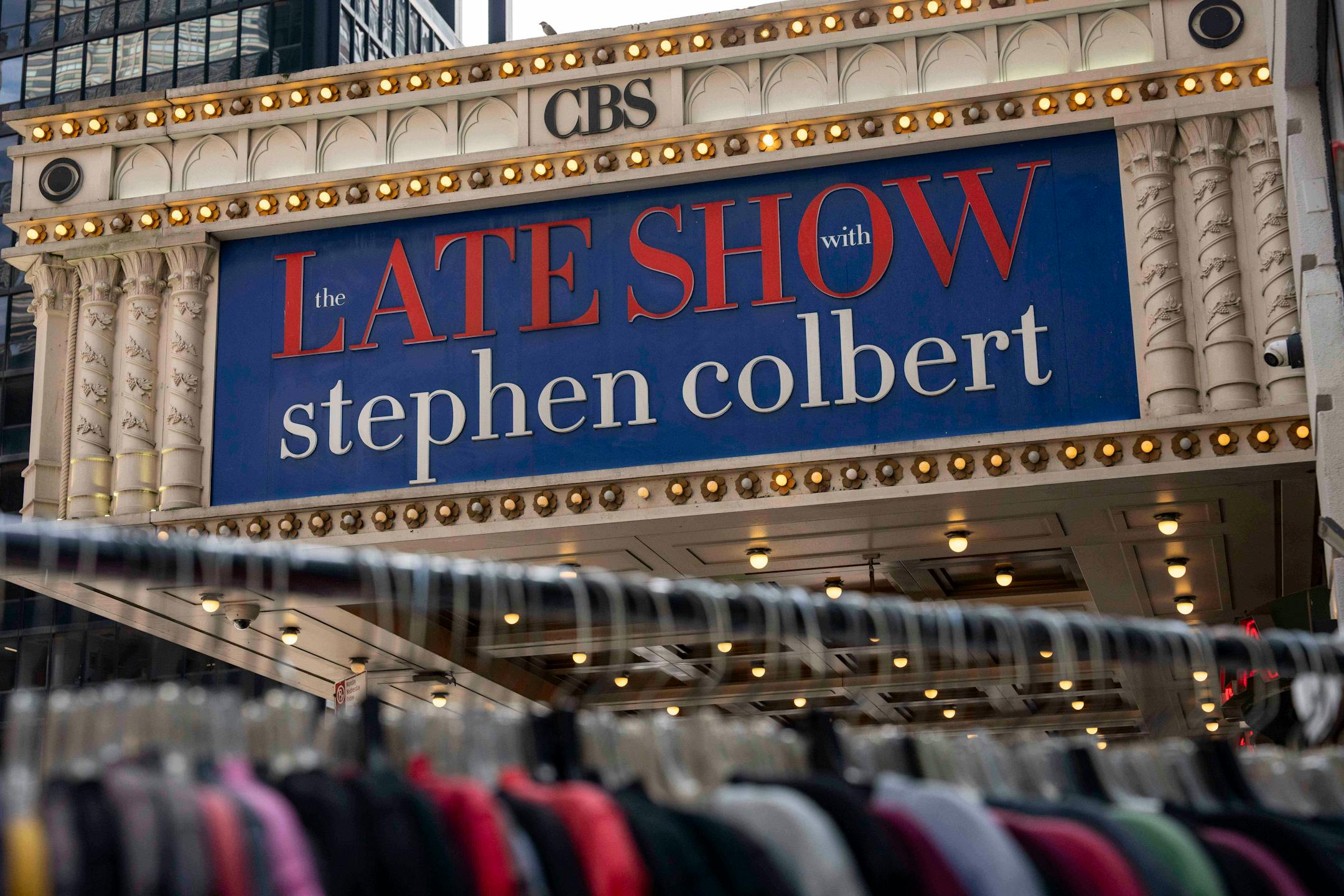
The Ed Sullivan theater, where "The Late Show with Stephen Colbert" is taped in New York.
The Ed Sullivan theater, where "The Late Show with Stephen Colbert" is taped in New York. (Yuki Iwamura/The Associated Press)

Opinion editor’s note: Strib Voices publishes a mix of commentary online and in print each day. To contribute, click here.

•••

By now, our media ecosystem digested the news that CBS will cancel “The Late Show with Stephen Colbert” next spring with predictable output. President Donald Trump and his supporters hailed the outcome. Colbert’s fans and those more amenable to his pointed jokes about the president remain sad and outraged.

But I’d like to highlight another, much larger group of people — those who don’t really care that much about this. People who saw Colbert come on after the news and sometimes chuckled and sometimes didn’t. People who might have seen Colbert’s social media clips hover through their feed, occasionally watching one or two.

This group swings elections. This group can grant and — at least for the time being — retract power from governmental leaders. How? By voting for one candidate or another, or maybe not at all. They can even, by current appearances, drive a president mad just by paying less attention to him.

The waning empire of network television depends on these citizens, and so do our political leaders. So that leaves some important questions:

Was this just business, the end of an era in TV, as the network suggested? Or is Colbert’s ousting part of an effort to cool those who might use the mighty corporate instrument of national network airtime to criticize those in power?

Among the national network late-night shows airing at 10:30 p.m. Central time, Colbert’s led in the ratings. Yes, cable networks, especially “Gutfeld!” on Fox News, which starts at 10, sometimes beat him and the other network shows, but there’s no strong argument that Colbert was flagging in the ratings or losing money for CBS. “The Late Show” consistently beat “The Tonight Show Starring Jimmy Fallon” and “Jimmy Kimmel Live.” Both Jimmys tell jokes about the president, and both remain on the air.

What is more compelling is the ownership situation at CBS’ parent company. Paramount is seeking a $8 billion buyout from Skydance Media, a gigantic merger that will require regulatory approvals. Normally that would be handled with minimal political interference, but the Trump administration believes in maximal political interference. That, many speculate, along with the personal views of Paramount executives, led to Colbert’s cancellation.

If networks fear retaliation more than they demand independence, the regulators will become programming directors. If these trends accelerate, the Jimmys won’t have long, either. But we’ll also lose something important that was, at least at one time, not some grand political trophy: funny stuff we all watched.

When I was a teenager, my room was in the basement. I’m not talking about a basement with carpet and drywall like the one I’ve got now. This was a moist basement with a concrete floor and a sump pump singing backup. But my dad put a spindly, high-powered antenna on our roof pointed at Duluth with a coaxial cable strung down to my room. I could get crystal-clear reception of all four channels, even the perpetually fuzzy Channel 3. That meant CBS. That meant Letterman.

Dave Letterman. Conan O’Brien. Heck, even old Tom Snyder. Talk shows like these put the greater world in context when my inner world was in turmoil. Yes, they had political sensibilities, but they always made fun of the president, no matter which party was in office.

I don’t know how my life would have been improved by watching media that stoked the anger and fear I felt back then more than my desire to laugh. And that, more than anything, might explain why the world feels so different today.

We live in a time that requires a wide lens. Stripping funding from nonpartisan public media, encouraging private media to suppress criticism — these are moves done to establish a de facto state media monopoly. It does not matter which “side” is doing it. Whoever has power will be able to do more harm than good under such a regime.

We can’t go back to the days of Johnny Carson uniting everyone around a shared experience. In some ways, that’s good. Today’s media allows more voices and perspectives. But we also lose something when our most watched media become the most likely to stifle criticism of those in power.

If you can’t make fun of the president on national TV, the Bill of Rights doesn’t mean anything. That’s no joke.

about the writer

about the writer

Aaron Brown

Editorial Columnist

Aaron Brown is a columnist for the Minnesota Star Tribune Editorial Board. He’s based on the Iron Range but focuses on the affairs of the entire state.

See Moreicon