
Cloth diapers making a comeback

Reusable diaper services are growing by attracting customers as interested in the overall lower cost as they are in being green.

January 3, 2011 at 9:59PM
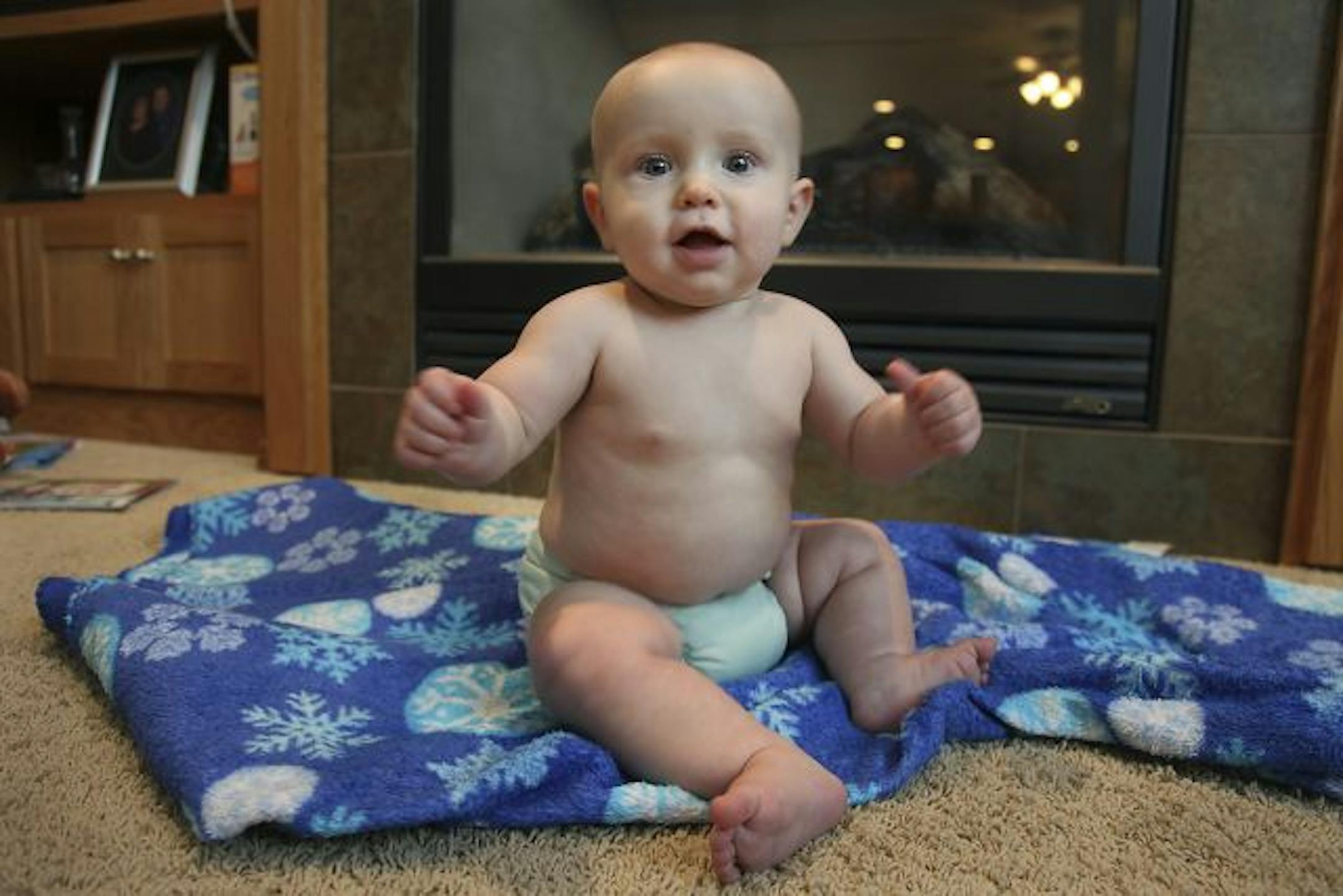
Eight-month-old Logan Schneider of Brooklyn Park wears reusable cloth diapers delivered weekly by a service.
Eight-month-old Logan Schneider of Brooklyn Park wears reusable cloth diapers delivered weekly by a service. (Star Tribune/The Minnesota Star Tribune)

Kristi Schneider of Brooklyn Park used disposable diapers with her first child, 10-year-old Quinn, when he was a baby. This time around with baby Logan, she decided to go with reusable diapers after several co-workers talked about their preference for cloth.

Schneider has been using the Blaine-based All Things Diapers laundry and delivery service for eight months. "The cloth soaks up a lot more than disposables do," she said. "And it's just so convenient."

"No trips to the store," chimed in her husband, Al. "The only way they could make it any easier is if they actually came in and changed him."

Logan is among the 3 to 5 percent of American babies put in cloth diapers at least some of the time. But after a brief period when reusable cloth diaper services dried up in the Twin Cities, at least two are steadily adding to their customer lists.

All Things, begun two years ago by husband and wife Martin and Patti Cross, has 40 full-time customers and a dozen more expecting parents signed up. The Crosses launder the diapers in small but industrial-strength washers and dryers in their Ham Lake home, and Martin makes wide-ranging deliveries in a gas-saving Prius.

The two-year-old Do Good Diapers of northeast Minneapolis, run by Peter and Kathy Allen, is considerably larger, with several hundred customers and eight metro-area delivery routes, with plans to expand to Rochester soon.

"If every parent in the Twin Cities used cloth diapers for only three months, that would be 25 million disposables out of landfills per year," Peter Allen said. "People think they have to go full-bore, but every little bit helps, even if it's just when it's easiest, during the infant's first three months."

While both Cross and Allen cite a desire to be green as a primary motivation for their customers, the overall cost factor is just as important to many. The services charge competing fees, around $20 a week for pickup of soiled diapers and delivery of 80 fresh ones, less than the cost of an equal number of disposables. All Things also offers a leasing program requiring the customer to wash their own diapers, for half the usual cost -- $10 a week.

"I thought there would be a typical customer when we started, but there's really not," Patti Cross said. "We have some suburban upper-middle-class people who are mostly worried about the chemicals in disposables, and young city couples who are concerned about expenses. The green stay-at-home moms are quite concerned about money because they only have one family income."

But getting people to switch from disposables can be a hard sell, as one would-be diaper entrepreneur found in St. Cloud.

"It just never took off here," said Margie Cota of her Go Green Diaper Service, which closed in August after only eight months in business. "I think some people thought it would be more expensive, even though it's not, and also some people don't want to deal with cloth diapers, because they do require a little extra effort."

Small Change, based in La Crescent, Minn., since 1991, is a full laundry that offers diaper cleaning and delivery as one of many services.

"If we were only doing diapers, we wouldn't be here," said manager Carmen Gavin-Barthel.

Happy Tushies, a northern Minnesota company that sells wholesale colorful custom diaper liners and bags to services and stores nationwide, gave up offering its delivery service, mostly to clients in Duluth, in 2009. But sales of its product lines are increasing, said owner Hope Wilson.

While launching a diaper service may be bumpy in non-metro locales, stores and websites that sell cloth diapers and accessories are also seeing an increase in business.

Peapods, a 10-year-old baby store and longtime champion of cloth diapers in St. Paul, is expanding early this month to a larger storefront.

Karinne Prashanth of Eden Prairie, who opened her online-only Green World for Babies cloth-diaper and accessory business a year ago, has seen 20 percent growth each quarter, with a 40 percent jump over the typically busier holiday season. "I do free consultations, and the people I see are either really green and want no chemicals or dyes, or it's purely for financial reasons."

Kristin Tillotson • 612-673-7046

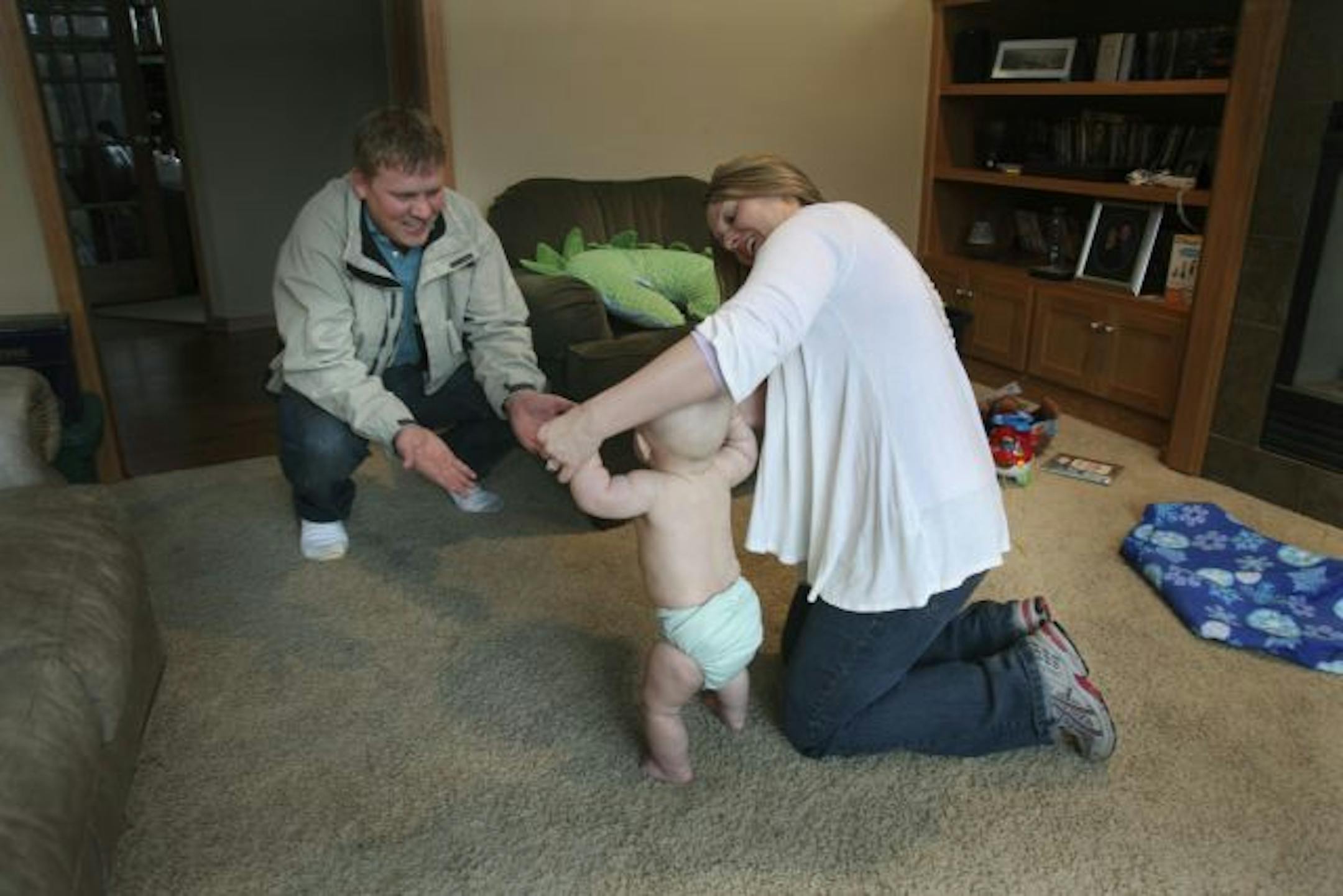
Martin Cross greeted a happy customer, Logan Schneider, and his mother, Kristi Schneider. Cross and his wife, Patti, run All Things Diapers out of their home, laundering diapers in industrial-strength washers and dryers in their basement. Their business is growing; about 12 expectant parents are signed up.
Martin Cross greeted a happy customer, Logan Schneider, and his mother, Kristi Schneider. Cross and his wife, Patti, run All Things Diapers out of their home, laundering diapers in industrial-strength washers and dryers in their basement. Their business is growing; about 12 expectant parents are signed up. (Star Tribune/The Minnesota Star Tribune)
Martin Cross uses a gas-saving Prius to deliver diapers to 40 customers on a wide-ranging route.
Martin Cross uses a gas-saving Prius to deliver diapers to 40 customers on a wide-ranging route. (Star Tribune/The Minnesota Star Tribune)
about the writer

about the writer

KRISTIN TILLOTSON, Star Tribune