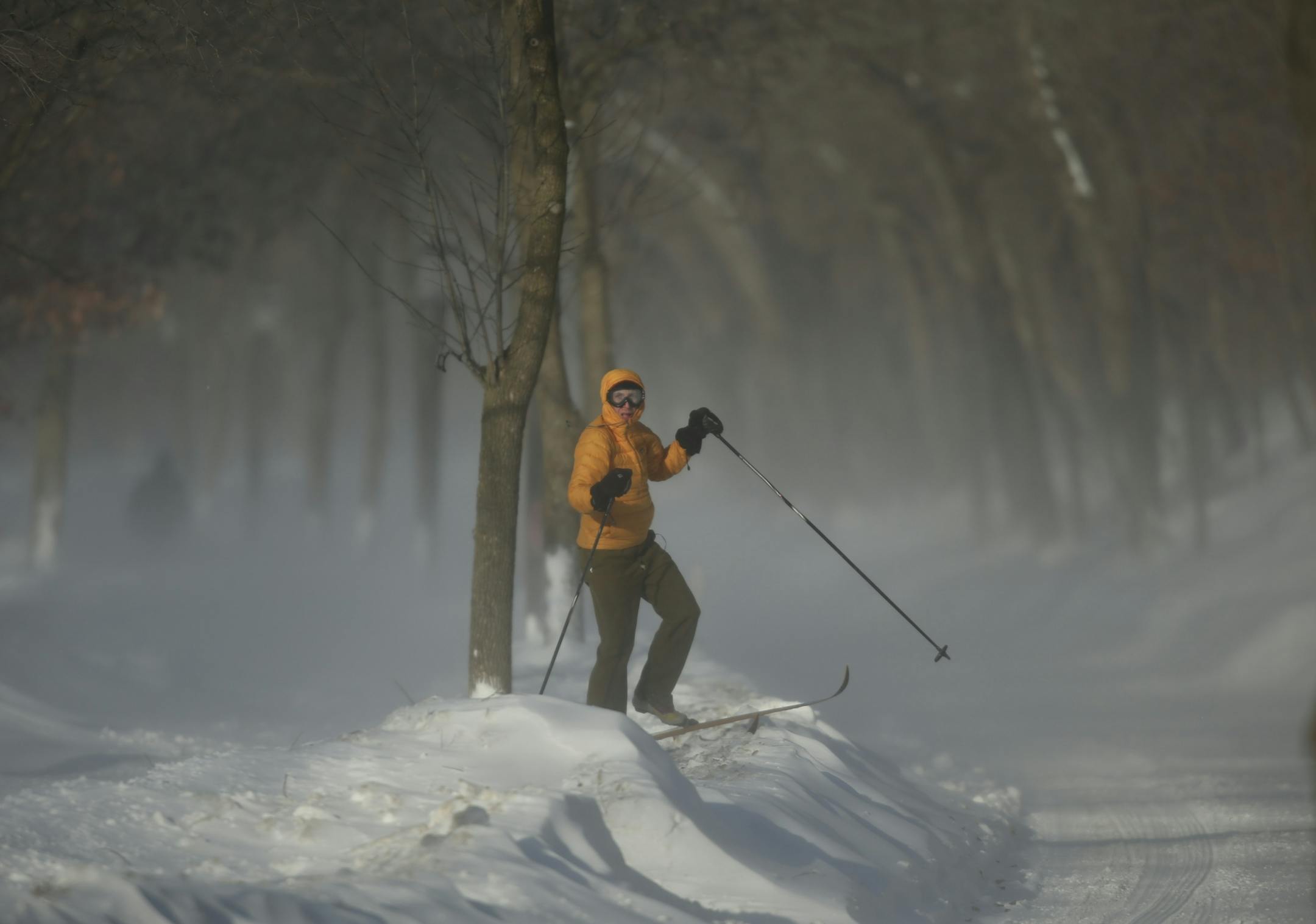
A bitter blast of winter weather blew across much of Minnesota on Sunday afternoon, canceling most school classes for Monday. The cold snap also left many residents shivering, as utilities urged customers to dial down their thermostats to conserve natural gas put in short supply by a Canadian pipeline explosion.
Anoka-Hennepin schools became the first metro-area district to call off Monday classes, followed shortly by Minneapolis and St. Paul. Officials in Rochester and Winona had made the call to cancel earlier in the weekend, and by late Sunday, as windchills headed toward 50 below zero, most metro districts had joined the list of schools that will be closed Monday. Classes at the University of Minnesota also were canceled.
Dangerous windchills will persist into Tuesday, forcing administrators to confront more cancellations.
Even as temperatures plunged Sunday, Xcel Energy asked all customers, including in the Twin Cities, to cut back on natural gas use in the wake of Saturday's pipeline blast near Winnipeg, disrupting supplies of natural gas service for more than 100,000 Xcel customers in northwestern Minnesota, eastern North Dakota and western Wisconsin. On Saturday night, Xcel officials asked customers in those areas to keep home thermostats at 60 degrees.
On Sunday afternoon, they expanded the request to all residential customers. CenterPoint Energy did not ask its customers to cut back gas use.
The fourth day of canceled classes at most schools since Jan. 6 is taking a toll on parents and teachers and raising questions about whether the days will need to be made up in June or during spring break.
But safety, school officials said Sunday, comes first.
Severe windchills can cause frostbite to occur in five to 10 minutes, said Mary Olson, a spokeswoman for Anoka-Hennepin schools. "We have students that walk up to a mile to school, and for a little first- or second-grader that's probably at least a 15- to 20-minute walk. And kids wait for the bus for up to 10 minutes. If there's a delay … we just don't want to risk students having frostbite."