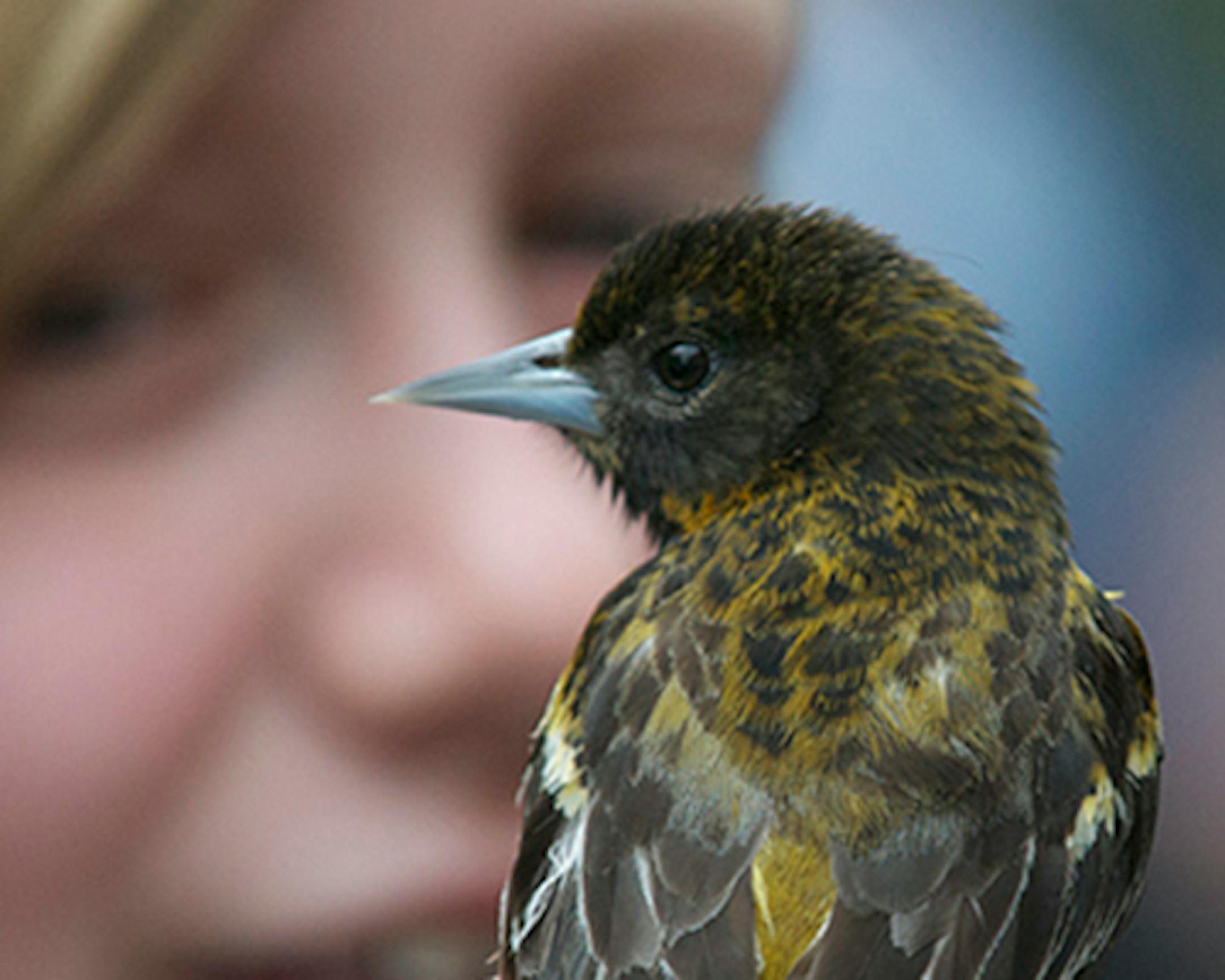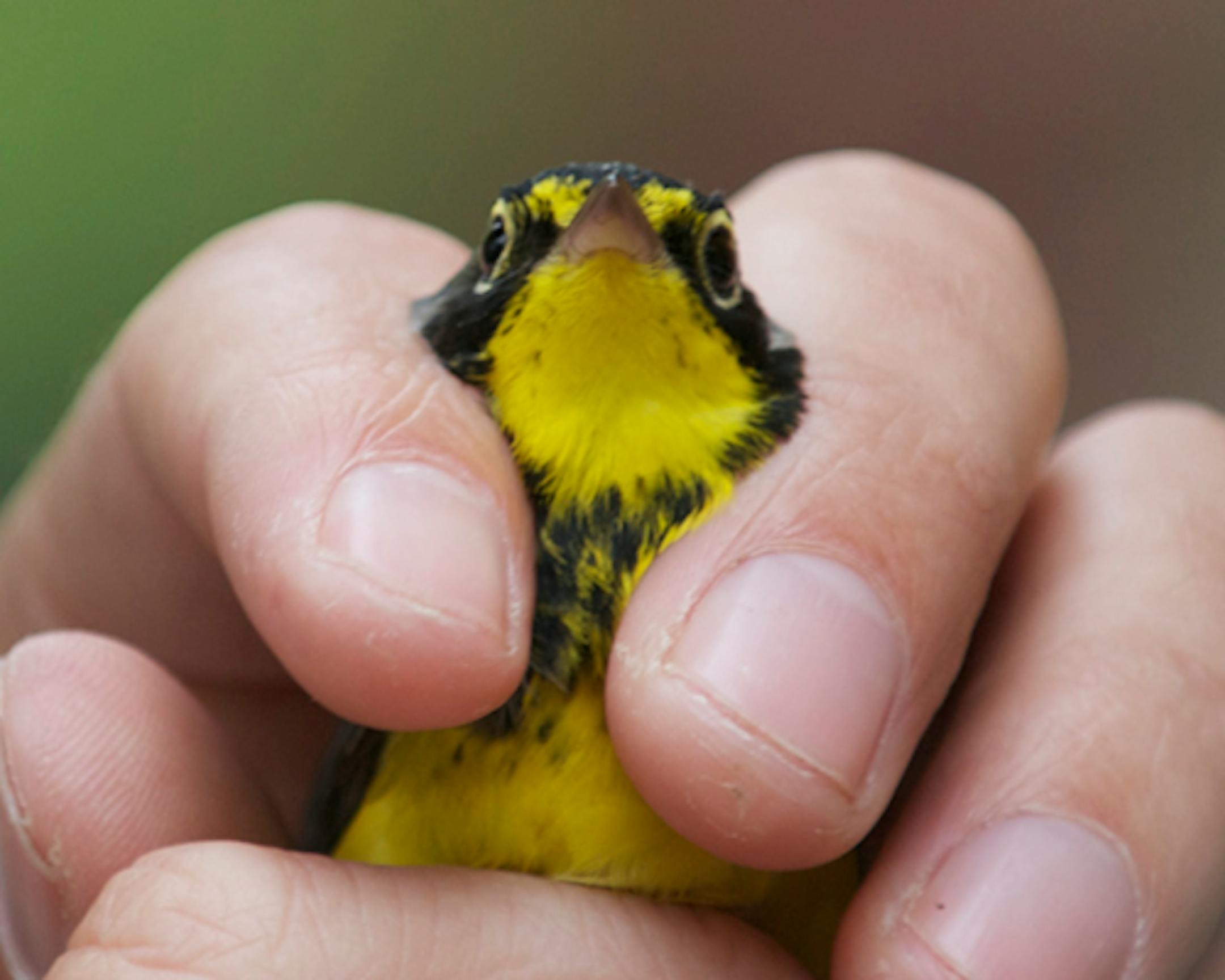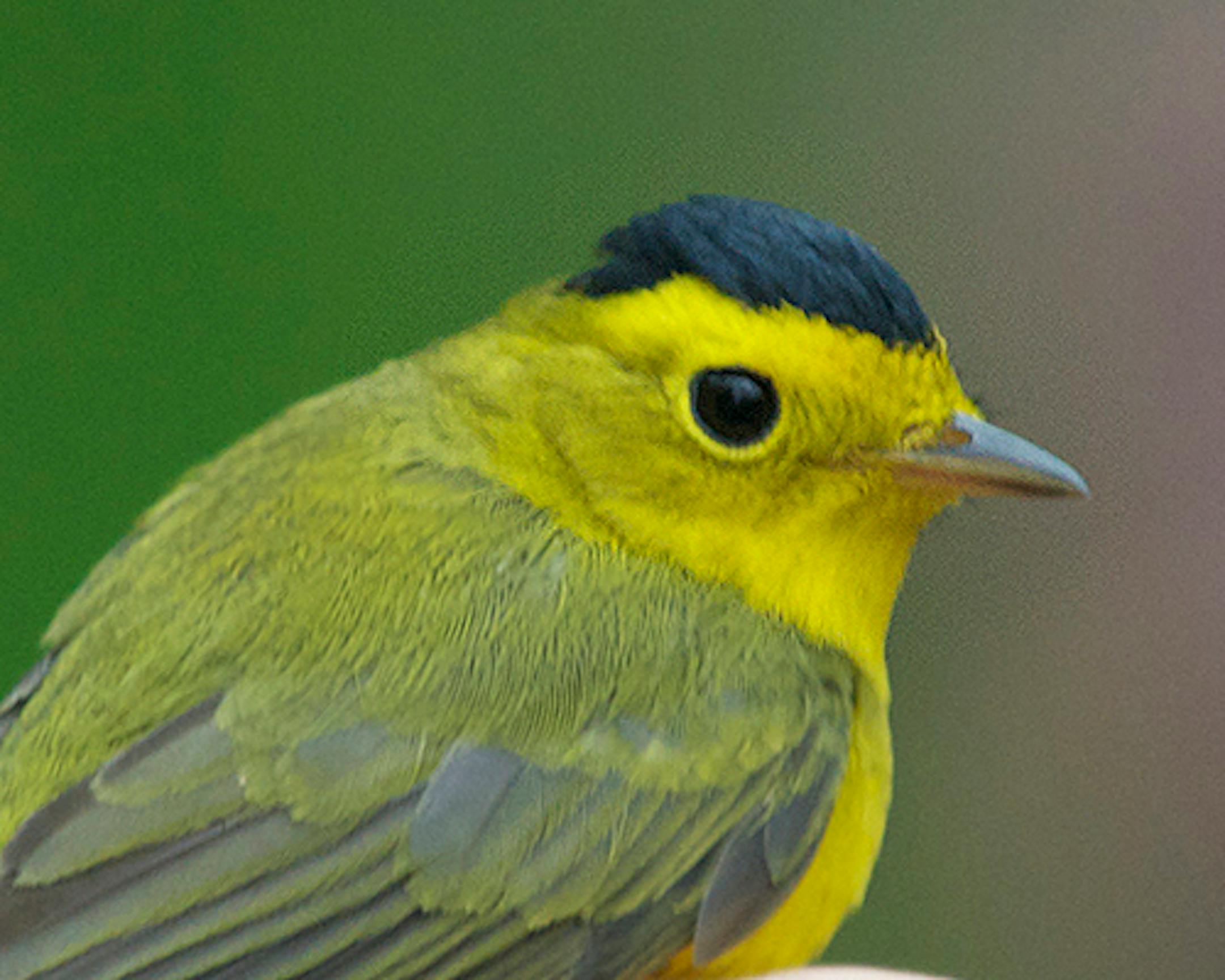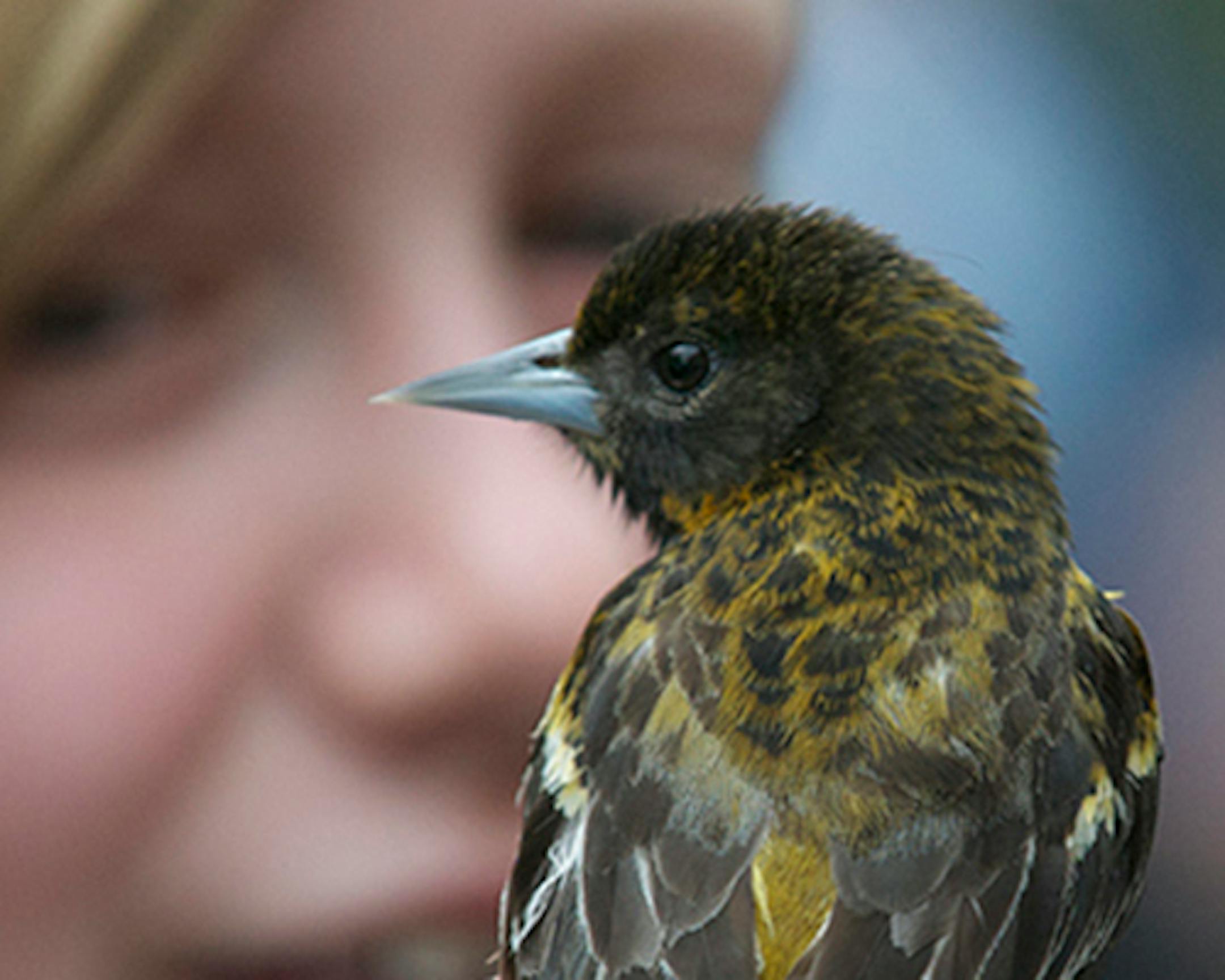
Bird-banding is in high gear right now as banders try to capture as many migrants as possible. Banding is a harmless method of putting an identification "bracelet" on a bird while gathering information about its breed, sex, age, and physical condition. The bird might be captured again by another banding station, allowing a travel track to be established, but the most important part of the effort is the data the banders record. We watched banding at Magee Marsh Wildlife Area in Ohio on Saturday as part of our birding visit there. Birders have no better way to see wild birds almost nose to beak. I highly recommend it. You often can find information on banding events in the Home and Garden event calendar (Wednedays, StarTribune H&G section). Or, call your local nature center or county park. It's worth a trip, especially for children who have not experienced the wonder of birds. I took these photos at Magee Marsh. We have a two-year-old Baltimore Oriole (its black color not fully expressed yet) with a young admirer, a Canada Warbler gently and firmly held while his audience gets a close look, and a Wilson's Warbler about to be released after making its contributions. At Magee, members of the audience were given the chance to hold the bird and release it. Children and adults one and all find this to be memorable. That opportunity is often given at banding demos here, too.