

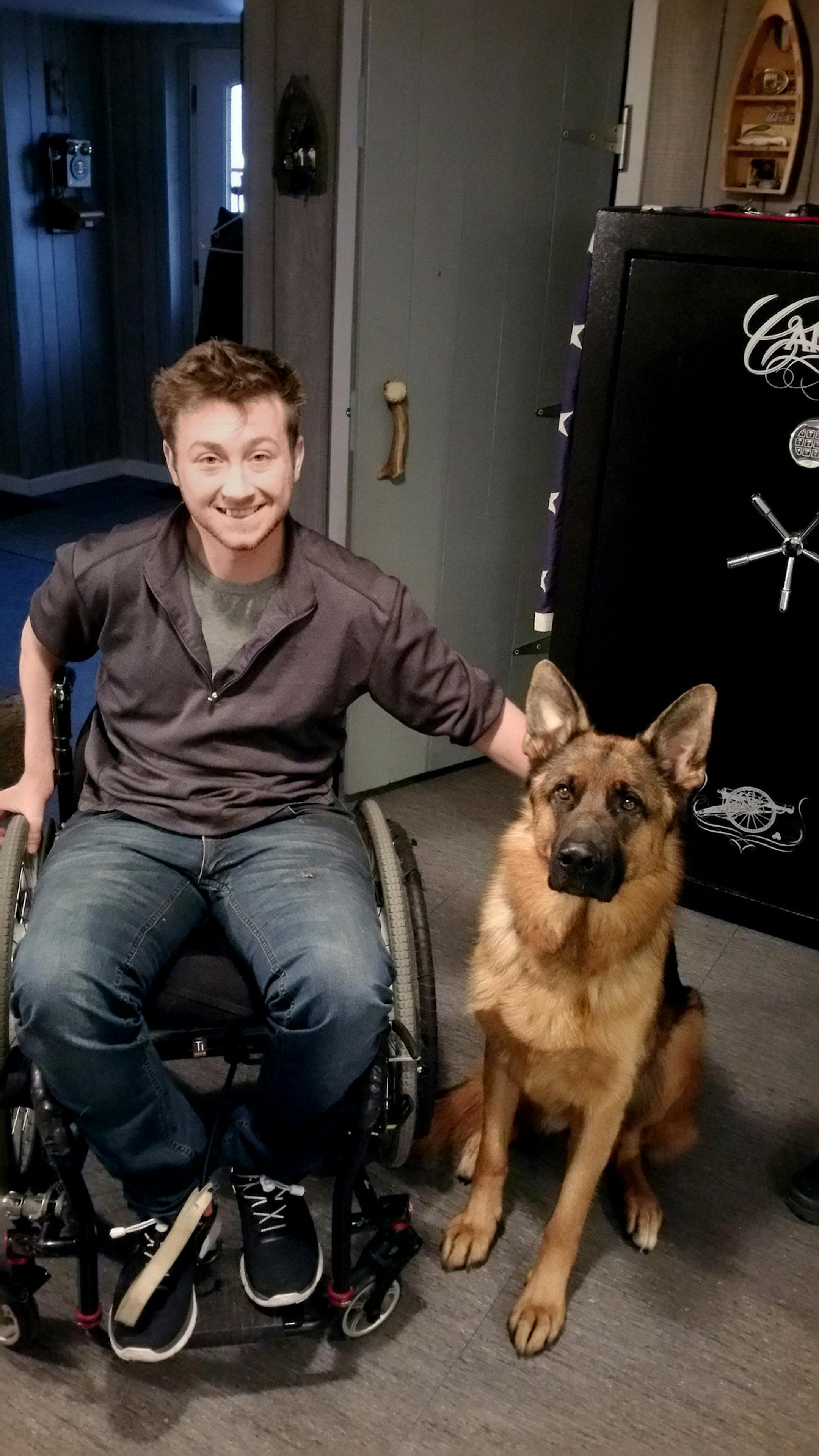
PITTSBURGH – Three years ago, Michael Fraser broke his neck in a diving accident near his home.
But in April, the man with quadriplegia underwent an experimental neural stem cell procedure that changed his life. It could also represent the first interventional treatment for spinal cord injuries.
Fraser, 24, now can lift himself from his wheelchair into bed without assistance. He breathes more freely and has greater core strength with better dexterity.
His condition so vastly improved that the Robert Morris University graduate who previously couldn't work plans to move to Atlanta with his brother and become an insurance actuary. "Honestly, whenever I signed up for the [University of Pittsburgh Medical Center clinical] trial, I kept myself in check and did not expect something crazy," he said. "But this definitely has exceeded my expectations."
If ongoing clinical trials confirm early results and lead to U.S. Food and Drug Administration approval, it could represent the long-awaited therapeutic treatment for people with paraplegia and quadriplegia.
Two early phase trials showed promise. With a phase II trial now underway, StemCells Inc. of Newark, Calif., is recruiting patients nationwide who have cervical (neck area) spinal cord injuries resulting in full paralysis of the legs and at least partial paralysis of the arms.
Stephen I. Huhn, the neurosurgeon serving as StemCells Inc.'s vice president of clinical research and chief medical officer, said the trial will test more definitively whether the surgical stem-cell procedure succeeds in restoring function and sensation in patients.
"We never have been able to offer a therapeutic intervention to restore function in people, and we may be able to do that," he said. "It's exciting and that's the advance we're trying to make."


