

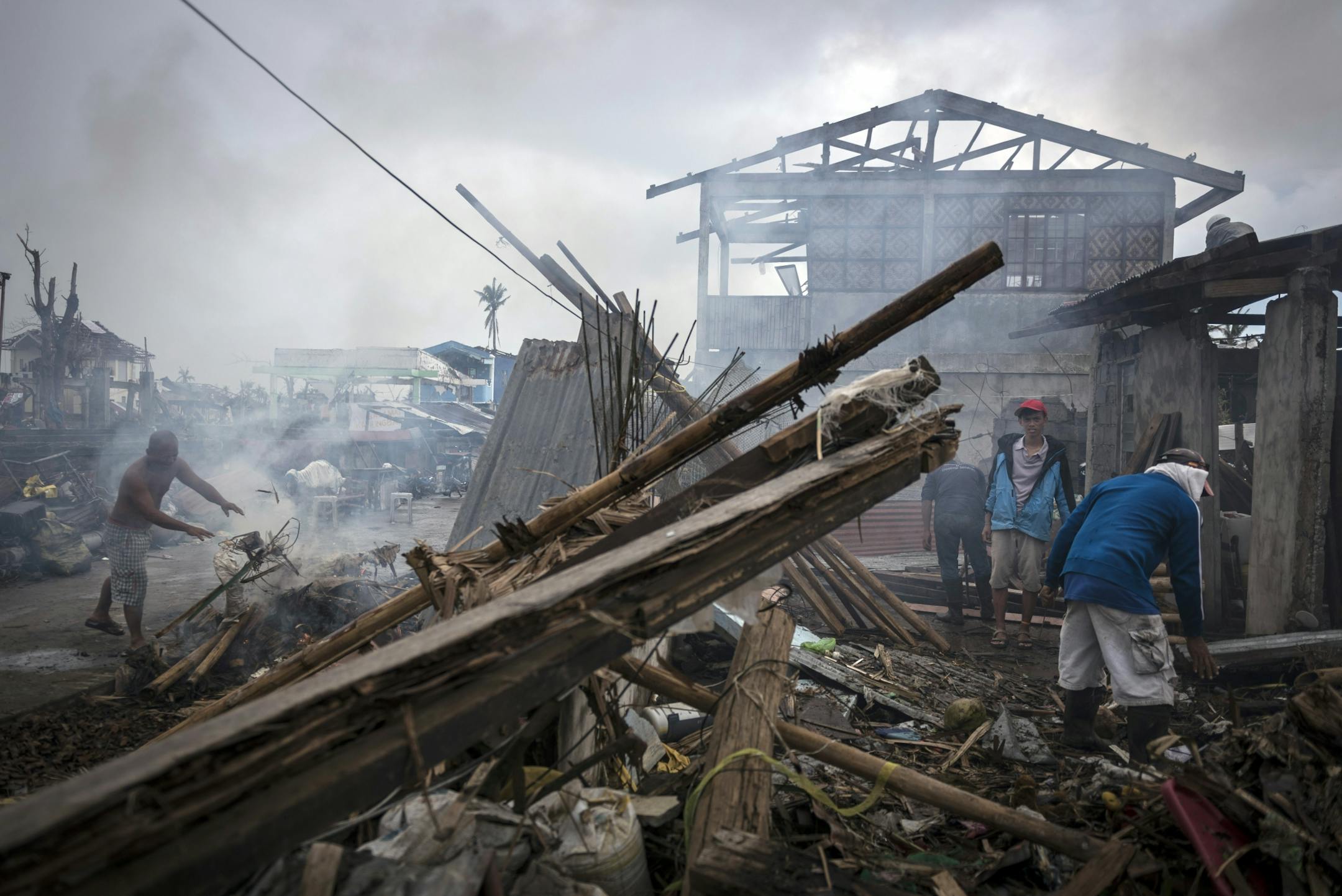
At the U.N. climate negotiations in Warsaw last week, the lead Philippine delegate, Yeb Sano, made an emotional plea: "Typhoons such as Haiyan and its impacts represent a sobering reminder to the international community that we cannot afford to procrastinate on climate action."
But was Sano's statement consistent with the science? Most of the scientists who have been asked that question in recent days have replied with dutiful statements that sound like "no." No single event can be attributed to climate change. No trends can yet be clearly detected - above the noise of natural variability - to indicate the increases in tropical cyclone intensity that we expect global warming to bring.
These statements are factually correct. But Sano is right too.
The climate is warming because of human-created emissions of greenhouse gases. Scientists can say that much easily, without hedging.
How does this warming influence extreme weather events? Because climate is the average, and extreme events are, by definition, anything but average, that is a more complicated question. But it isn't quite as complicated as scientists tend to make it.
Consider the relationship between cancer and smoking. (Some of the most prominent and influential climate-change deniers were also, decades ago, deniers of the harmful effects of cigarettes.)
Any individual cancer, on its own, can't be conclusively proved to be caused by smoking. You can get cancer without smoking: from asbestos or radon or from other people smoking in your home or workplace. The relationship between smoking and cancer is statistical; it becomes clear in the aggregate. Other factors might have played roles in each individual case. In that, it's like greenhouse warming and extreme weather events.
To make the analogy a little better, imagine we don't know everything we need to know. Did the smoker have a genetic predisposition to cancer, or live in a place with bad air pollution? Say we don't know. Then we really can't conclusively identify smoking as the predominant cause.


