

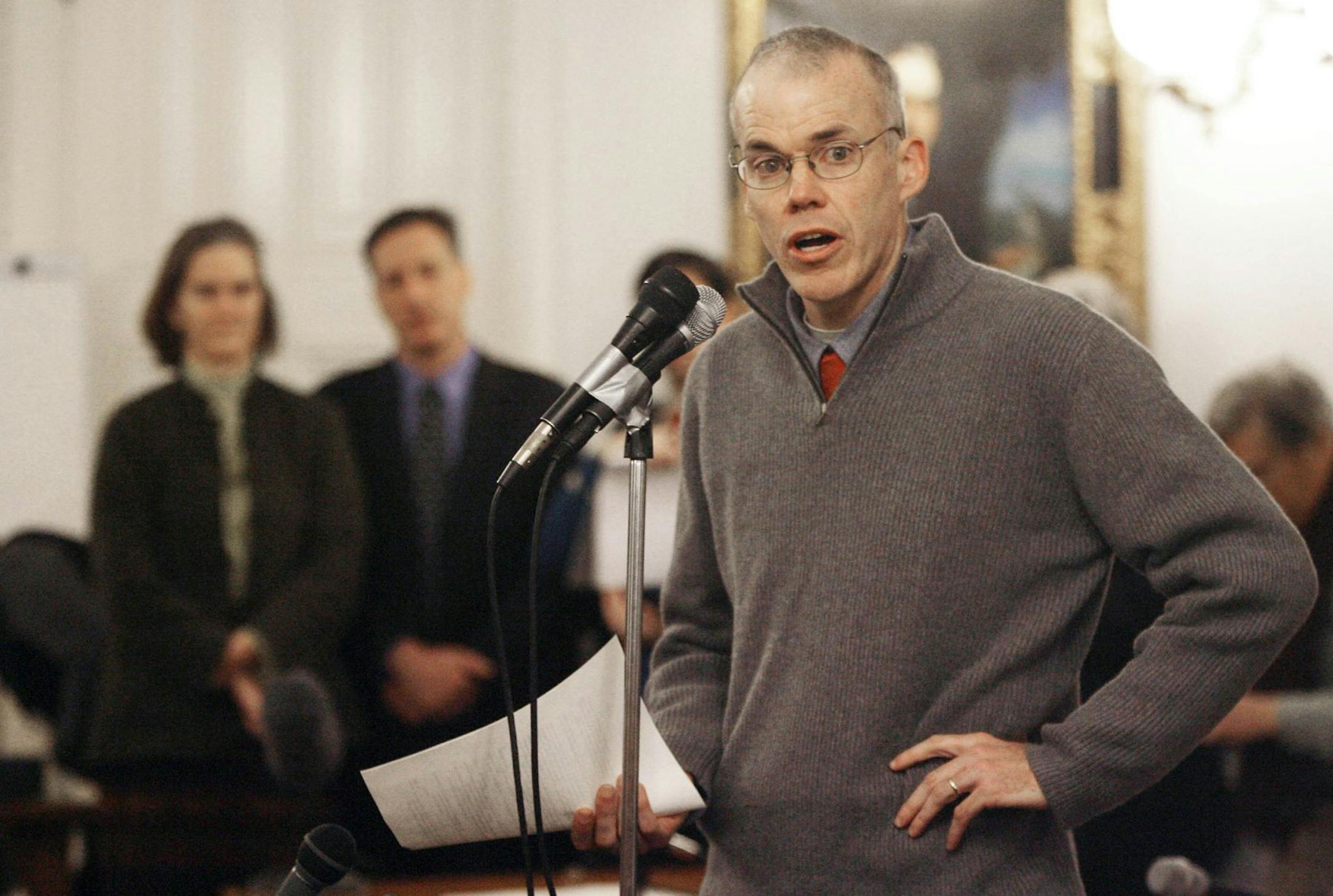
In the past week alone, Bill McKibben got arrested for tying himself to a gate at the White House in protest of the Keystone XL Pipeline proposal, and led what was described as the largest climate demonstration in history, also protesting Keystone and urging President Obama to get tougher on the causes of climate change.
The Vermont college professor and science writer who was called "the world's best green journalist" by Time magazine is now the standard-bearer for a movement to head off global warming, calling for colleges and other institutions to pull investments out of oil companies and advocating civil disobedience to get it done. This week he will be in the Twin Cities to take part in a program called "Celebrating and Preserving Winter." He'll speak at 7 p.m. Wednesday at the Anderson Student Center at the University of St. Thomas and at noon Thursday at the Weyerhaeuser Memorial Chapel at Macalester College. He spoke by phone with the Star Tribune on Tuesday.
Q: What's to celebrate about winter?
A: I confess I love winter above all seasons, partly because it's that season when friction disappears for a little while, so those of us who are ungainly most of the time can ski, skate and slide in all kinds of great ways. It's always seemed magical to me. Also it's a time of deep and powerful beauty — lushness replaced by starkness and clarity. I've spent most of my life in … places where winter's almost the default. You either learn to like it or I guess you move to Florida.
Q: What do you say to people who think warmer and shorter winters might be a good thing?
A: You can't have them without fundamentally and completely disrupting the cycles on which the Earth as we know it depends. … [Increases in mosquito-borne diseases, moose declines in Minnesota and elsewhere, shorter ice seasons on lakes] are pretty graphic reminders of what kinds of changes we're undertaking on everybody's behalf as we burn up our coal, gas and oil.
Q: In November you were at the University of Minnesota trying to get people to push colleges, churches and other institutions to divest from oil companies. On Sunday you headed the rally in Washington to get President Obama to stop the Keystone Pipeline. Is climate change and the global nature of it simply too broad to address in a focused way?
A: It's going to take all kinds of different things. Those two things are the two joined facets of this mushrooming movement in the U.S. There are now 256 college campuses with big active divestment campaigns. It was many of those people who showed up Sunday in Washington, coming in on trains from Minnesota and buses from all over the place. We know this is a fight on many fronts, that the fossil fuel industry is the richest industry on Earth and we've got to take them on wherever we can. We've played defense against bad projects like Keystone, and we're trying to go on offense with this divestment campaign to make people understand it's not OK to profit from the wreckage of the climate.


