

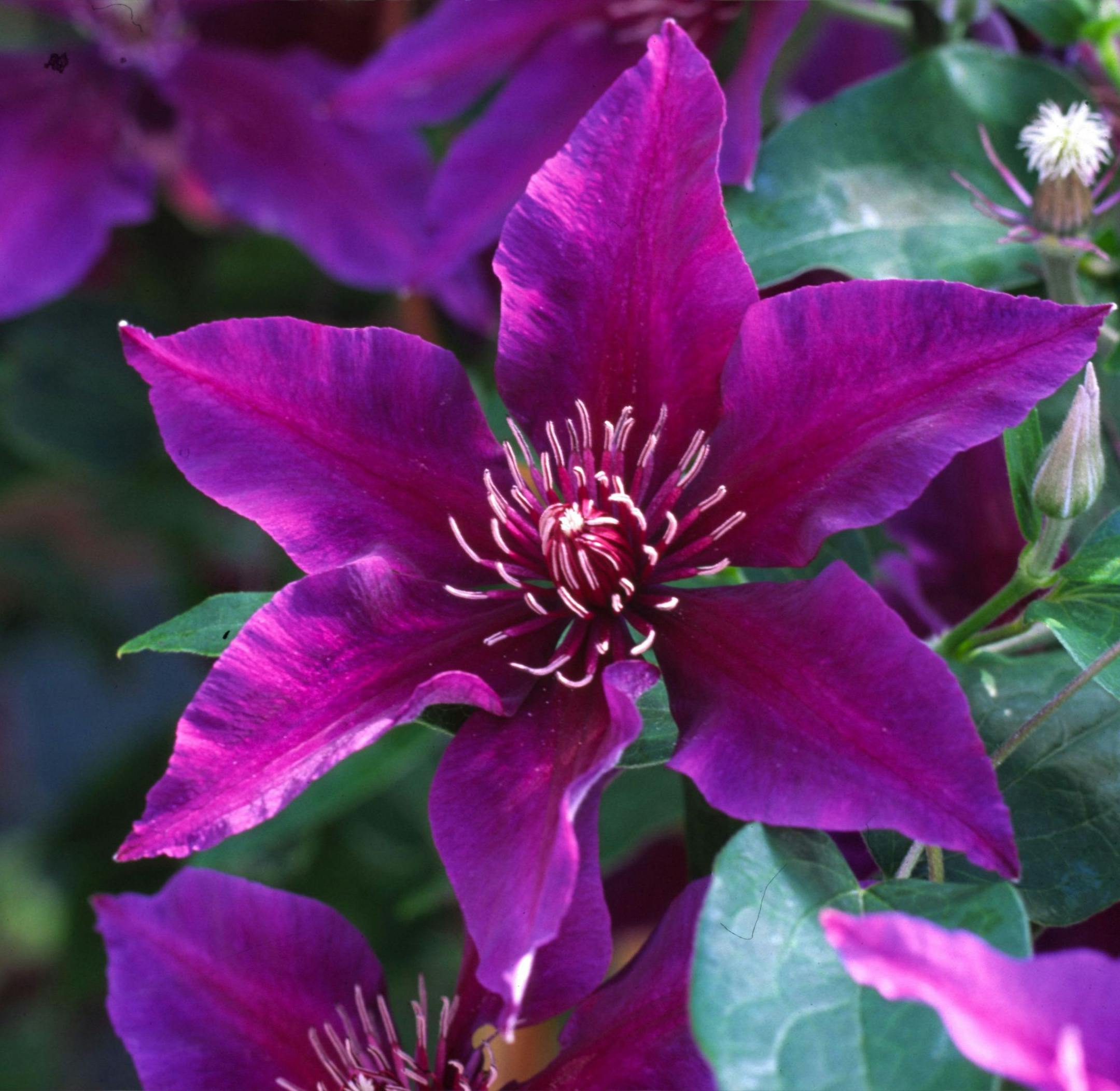
Purple clematis has long been a staple in Minnesota gardens. But lately, when gardeners here want a flashy plant, they've tended to gravitate toward exotics like mandevilla or annuals like cardinal vine.
Clematis has a reputation for being finicky and hard to establish, requiring lots of sun, and with a color palette limited to purple. But it's time for Minnesota gardeners to change those perceptions, according to Kathy Donahue Nass, part of the family that runs Donahue's Clematis in Faribault, Minn. Clematis is increasingly diverse and well suited to the Upper Midwest, she said.
"It's a plant that needs a winter to do well, and there are a lot of new plants out there," Nass said. Breeders here and around the world — Donahue's is one of the top three clematis growers and breeders in North America, shipping 850,000 plants per year — are producing clematis varieties that are shorter, fragrant, that thrive in shade, have double flowers and that rebloom or flower for much of the summer. There are brawny old varieties with leaves as big as your hand that need to be trained up a strong trellis and delicate, climbing types with tiny bell-shaped flowers.
But what about growing them? The key to developing strong plants, Nass said, is proper planting.
The old garden saw says clematis likes its head in the sun and feet in the shade, and for many types that's true. Mulching around the base of the plant will help keep the soil cool, but so will surrounding the base with plants like hosta or daylilies or spreading annuals.
Gardeners should dig a hole 18 inches deep to loosen the soil, then plant clematis deeper than they are in the pot, covering up one or two lowest sets of leaves. That helps establish roots and makes the plants produce shoots from below ground, so that even if rabbits chew a plant down or the wind breaks the vine, the plants will bounce back.
"That gets the plant started in the right way," Nass said. "It matters what happens that first year. It's best to prune the plants back to force that underground development. You have to be patient; it pays off later."
Clematis takes about six weeks to get established in the garden. During that time, Nass suggests watering well twice a week. After that, water once a week if it's dry. When an established plant is actively growing, she advises fertilizing once a month with something like Miracle-Gro or applying a time-release fertilizer like Osmocote.

