

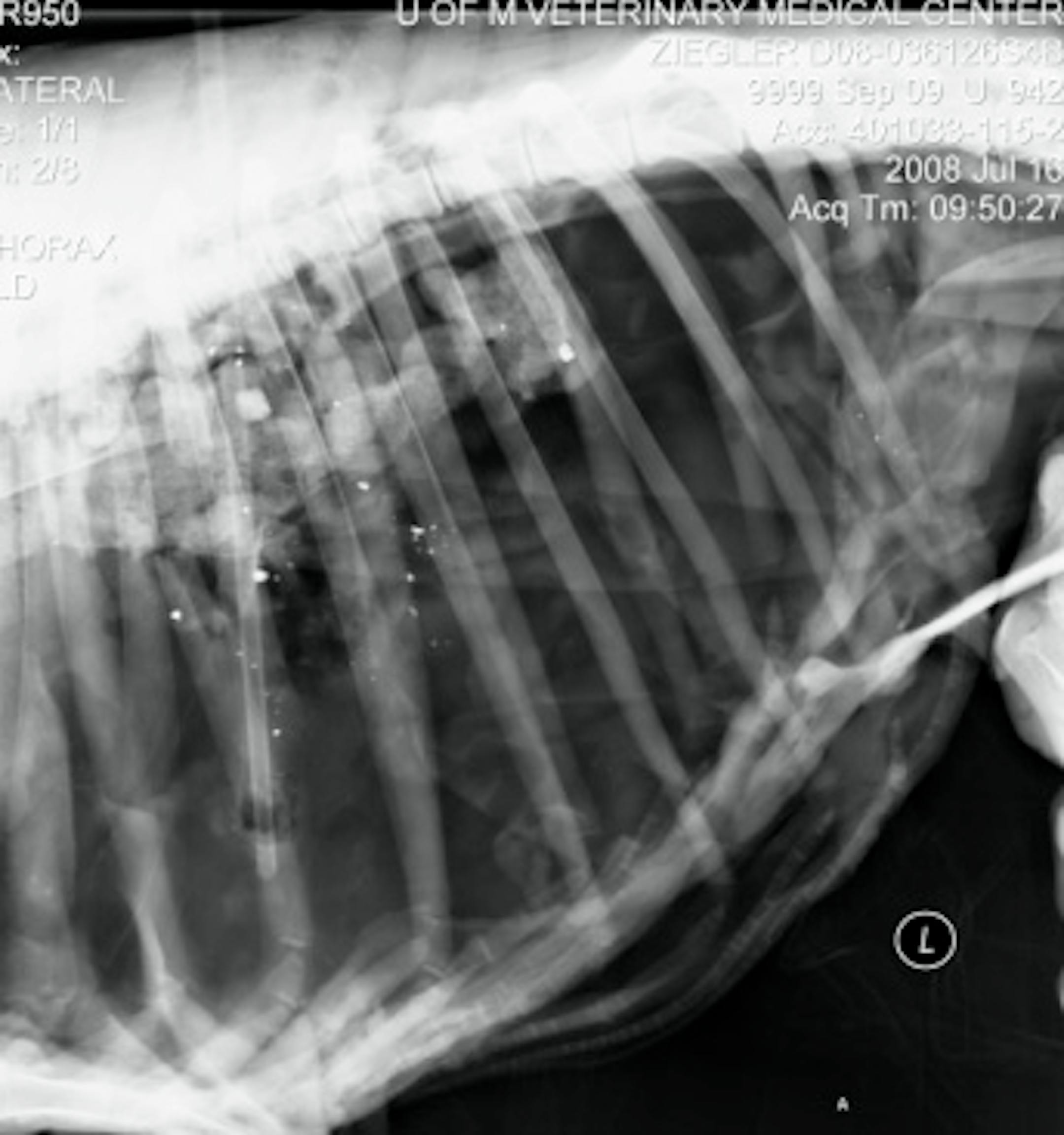
Some lead bullets fired from high-powered rifles scatter lead fragments much farther into deer than hunters might assume, according to a Department of Natural Resources study released Tuesday.
That means the state's venison processors and 500,000 deer hunters must trim much farther from wound channels to avoid lead contamination.
Lead was found up to 18 inches from wound channels in a study on sheep conducted by the DNR in July, said Lou Cornicelli, DNR big game program leader. The sheep, euthanized first, are anatomically similar to white-tailed deer.
"Some high-velocity lead bullets break apart almost instantly, throwing small pieces of metal all over the place," Cornicelli said.
Routine trimming likely will not remove all fragments, and the agency can't make a recommendation about how far out from the wound to trim. The fragments generally are too small to see, feel or detect while chewing.
The study also found rinsing a carcass tended to reduce lead near the wound channel by about 20 percent, but also spread lead.
Cutting 2 inches around the wound channel removes only about 30 percent of the lead fragments, Cornicelli said.
Ballistic-tip bullets, made to rapidly expand on impact, fragmented the most. They averaged 141 fragments per carcass, with an average maximum distance of 11 inches from the wound channel.


