

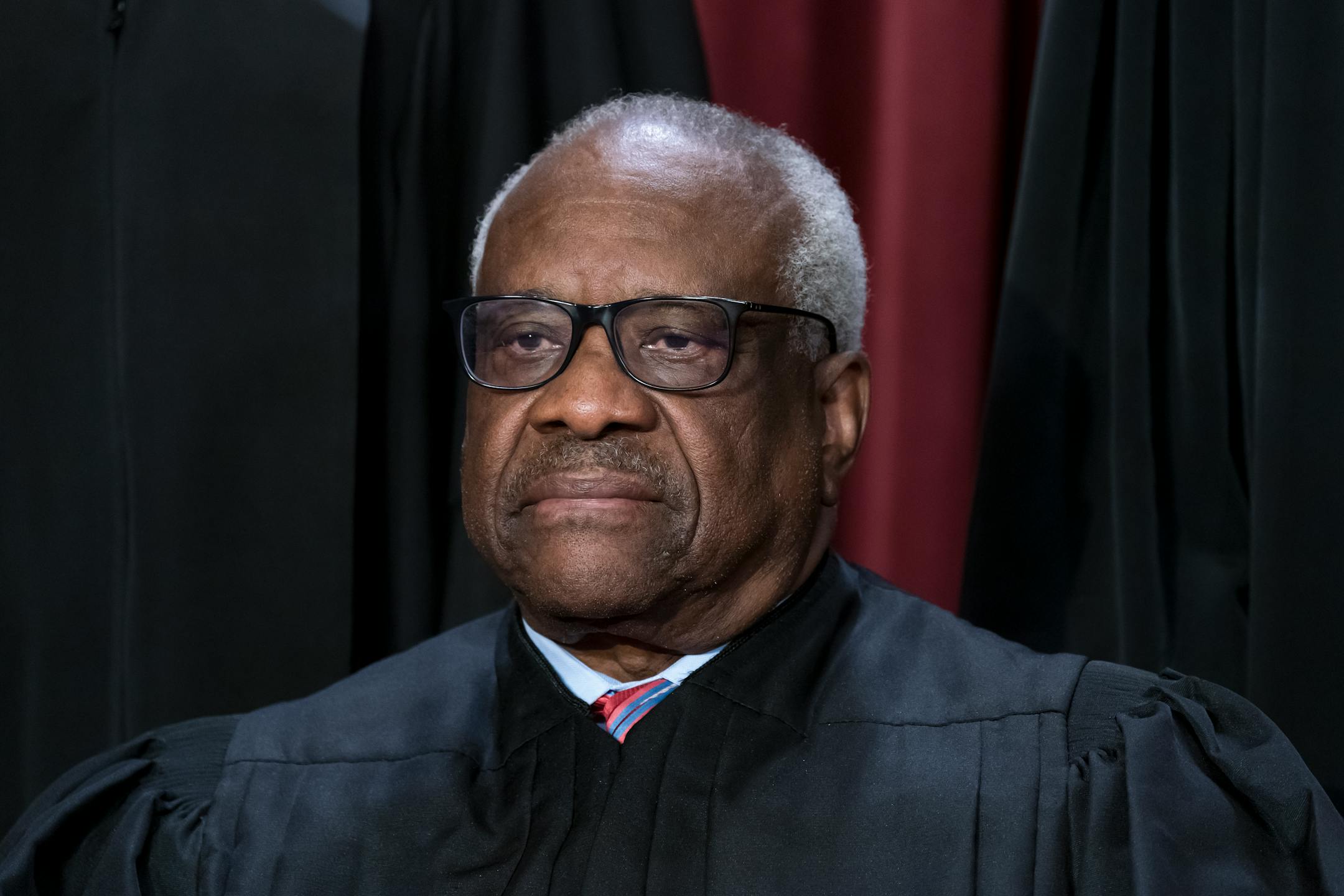
Over the last two decades, Supreme Court Justice Clarence Thomas has reported on required financial disclosure forms that his family received rental income totaling hundreds of thousands of dollars from a firm called Ginger, Ltd., Partnership.
But that company - a Nebraska real estate firm launched in the 1980s by his wife and her relatives - has not existed since 2006.
That year, the family real estate company was shut down and a separate firm was created, state incorporation records show. The similarly named firm assumed control of the shuttered company's land leasing business, according to property records.
Since that time, however, Thomas has continued to report income from the defunct company - between $50,000 and $100,000 annually in recent years - and there is no mention of the newer firm, Ginger Holdings, LLC, on the forms.
The previously unreported misstatement might be dismissed as a paperwork error. But it is among a series of errors and omissions that Thomas has made on required annual financial disclosure forms over the past several decades, a review of those records shows. Together, they have raised questions about how seriously Thomas views his responsibility to accurately report details about his finances to the public.
Thomas's disclosure history is in the spotlight after ProPublica revealed this month that a Texas billionaire took him on lavish vacations and also bought from Thomas and his siblings a Georgia home where their mother lives, a transaction that was not disclosed on the forms. Thomas said in a statement that colleagues he did not name told him he did not have to report the vacations and that he has always tried to comply with disclosure guidelines. He has not publicly addressed the property transaction.
In 2011, after the watchdog group Common Cause raised red flags, Thomas updated years of his financial disclosure reports to include employment details for his wife, conservative activist Virginia "Ginni" Thomas. The justice said at the time that he had not understood the filing instructions. In 2020, he was forced to revise his disclosure forms after a different watchdog group found he had failed to report reimbursements for trips to speak at two law schools.
A judicial ethics expert said the pattern was troubling.


