

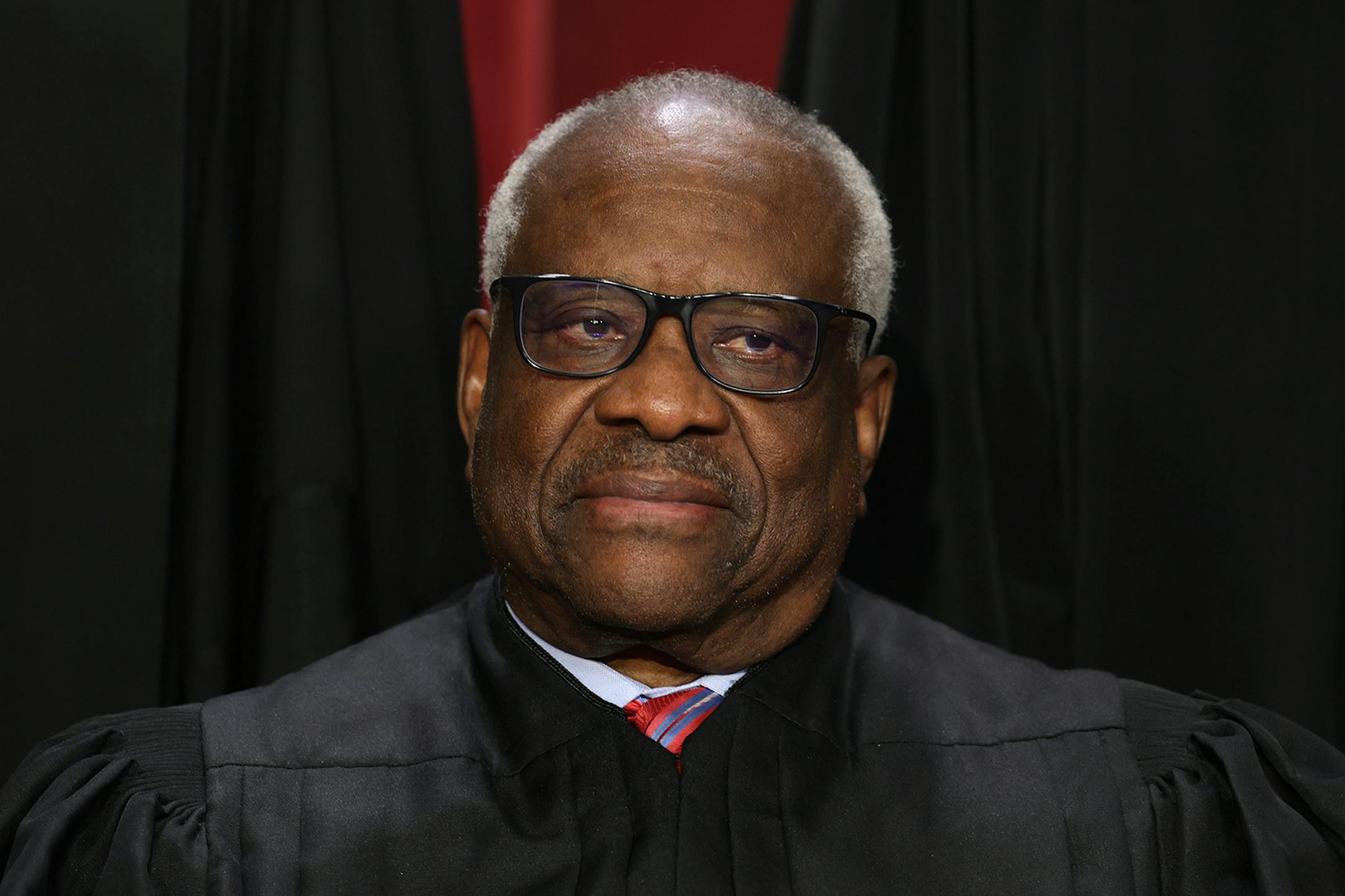
Supreme Court Justice Clarence Thomas faces escalating calls to recuse himself from upcoming cases centered on former President Donald Trump's efforts to overturn the results of the 2020 election.
The requests gained new urgency in recent days as consequential cases related to Trump speed toward the high court. Critics — including Democrats in the House and Senate — say Thomas' wife's publicly documented efforts to challenge the 2020 election results should disqualify him from making decisions on pivotal issues related to the Jan. 6, 2021 attack on the U.S. Capitol.
Thomas, who was appointed by former President George H.W. Bush, has garnered a reputation for refusing to back down to his critics. But legal experts said it will be more difficult for Thomas to ignore the requests to abstain from participation in the Trump cases this time — particularly considering provisions of the Supreme Court's new code of ethics.
"Under the standard in the new Supreme Court code, an objective, unbiased observer would question whether Justice Thomas can be objective in a case so closely related to his wife's political interests," said Steven Lubet, a judicial ethics expert at Northwestern University's Pritzker School of Law.
The code, released in November, was signed by all nine justices. It includes a section saying a justice should recuse him or herself if their "impartiality might be reasonably questioned." The code specifies that a justice's spouse having an "interest that could be affected substantially" by a case or who could be a "material witness in the proceeding" would be grounds for recusal.
No precedent
The Trump cases will have massive repercussions for the upcoming presidential election, determining whether Trump could be disqualified from the race or face trial and possibly prison time for his actions on Jan. 6, when he egged on a mob that stormed the Capitol as Congress was certifying the 2020 election results.
There's no historical precedent for the existential questions facing the court, Lubet said.


