

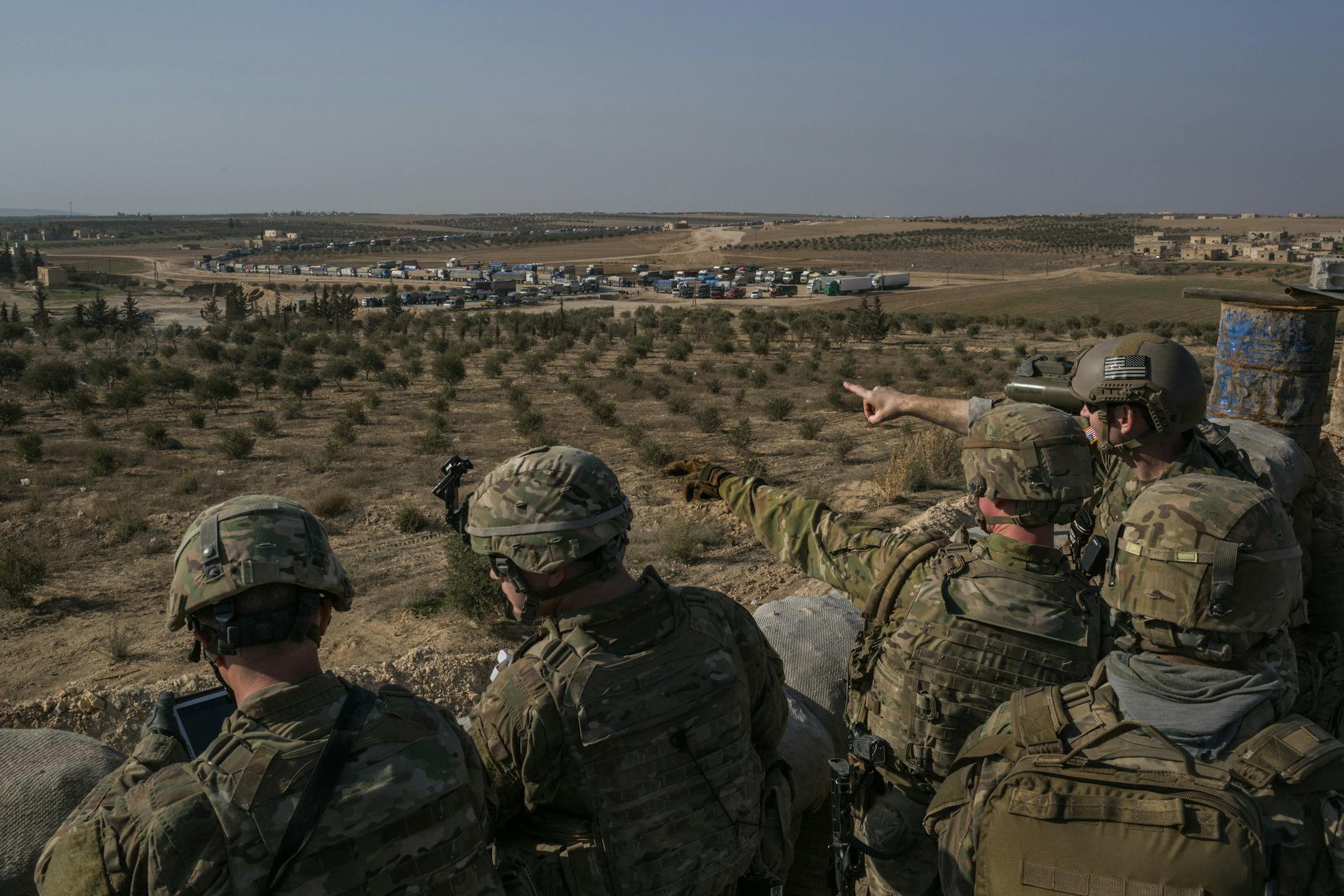
A single top-secret American strike cell launched tens of thousands of bombs and missiles against the Islamic State group in Syria, but in the process of hammering a vicious enemy, the shadowy force sidestepped safeguards and repeatedly killed civilians, according to multiple current and former military and intelligence officials.
The unit, called Talon Anvil, worked in three shifts around the clock between 2014 and 2019, pinpointing targets for the United States' formidable air power to hit: convoys, car bombs, command centers and squads of enemy fighters.
But people who worked with the strike cell say in the rush to destroy enemies, it circumvented rules imposed to protect noncombatants, and alarmed its partners in the military and the CIA by killing people who had no role in the conflict: farmers trying to harvest, children in the street, families fleeing fighting and villagers sheltering in buildings.
Talon Anvil was small — at times fewer than 20 people operating from anonymous rooms cluttered with flat screens — but it played an outsize role in the 112,000 bombs and missiles launched against the Islamic State group, in part because it embraced a loose interpretation of the military's rules of engagement.
"They were ruthlessly efficient and good at their jobs," said a former Air Force intelligence officer who worked on hundreds of classified Talon Anvil missions from 2016 to 2018. "But they also made a lot of bad strikes."
The military billed the air war against the Islamic State group as the most precise and humane in military history, and said strict rules and oversight by top leaders kept civilian deaths to a minimum despite a ferocious pace of bombing. In reality, four current and former military officials say, the majority of strikes were ordered not by top leaders but by relatively low-ranking U.S. Army Delta Force commandos in Talon Anvil.
The New York Times reported last month that a Special Operations bombing run in 2019 killed dozens of women and children, and that the aftermath was concealed from the public and top military leaders. In November, Defense Secretary Lloyd Austin ordered a high-level investigation into the strike, which was carried out by Talon Anvil.
But people who saw the task force operate firsthand say the 2019 strike was part of a pattern of reckless strikes that started years earlier.


