

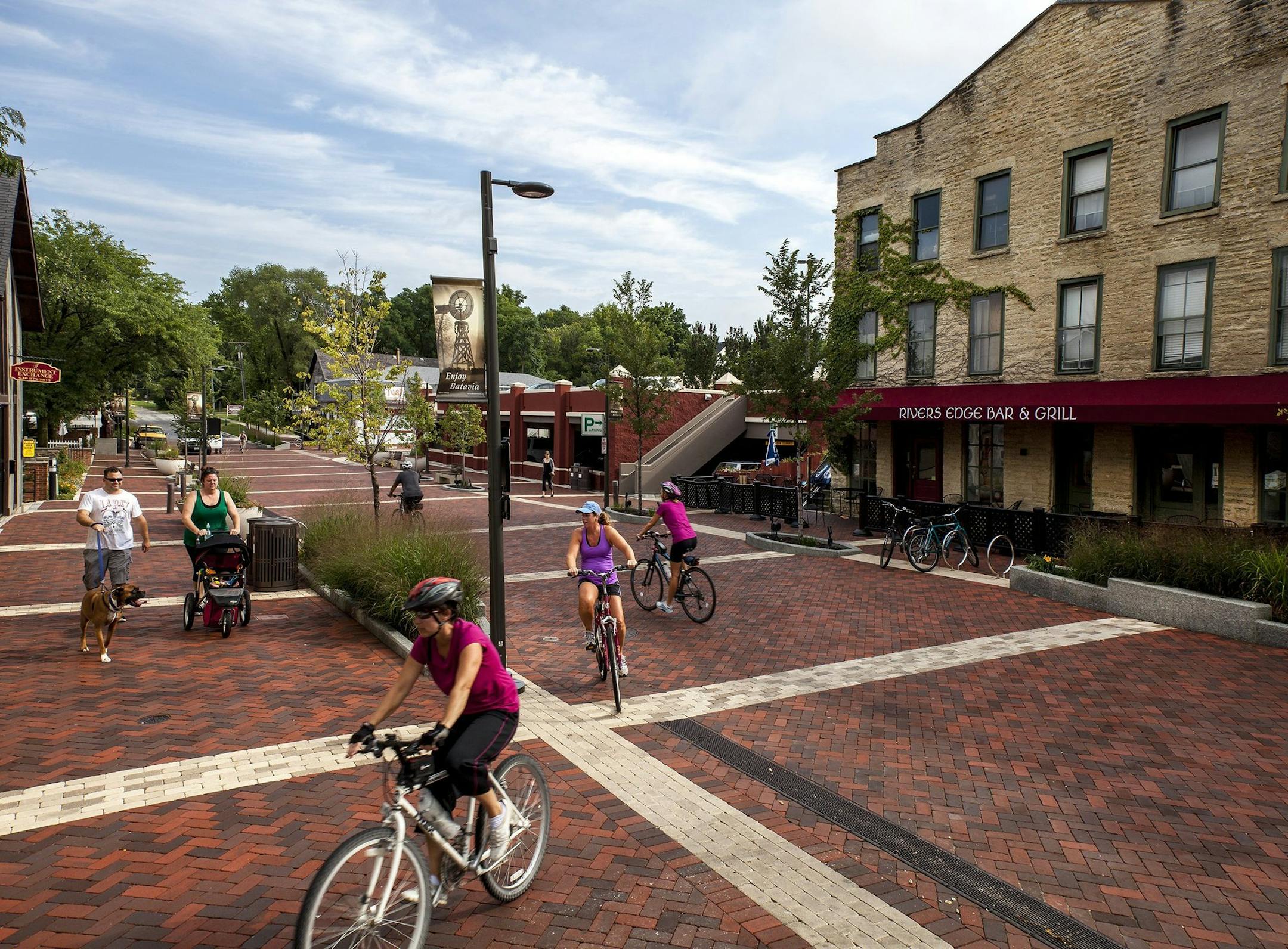
W. 29th Street could look considerably different in Uptown if the city can find extra money to make a European-style traffic-calming plan happen.
Council Member Lisa Bender has focused attention on a potholed six-block section of the side street one block north of Lake Street, and the city has $750,000 set aside in 2016 to start work.
But the design liked best by area residents likely could cost closer to $2 million.
That's because the top option among about 30 people attending a presentation of design alternatives is called a woonerf. That's a traffic-calming street, popular in parts of Europe, that uses street obstacles such as curbing, planters or other amenities to discourage and slow traffic. They're considered pedestrian-friendly.
Creating a one-way street without parking got almost no support, but there was more liking for a one-way option with parking, especially in the westernmost blocks of 29th west of Colfax Avenue. But the woonerf option got the biggest support, especially if it encourages active street life.
Creating a woonerf will involve more curbing than other options, plus outlays for other amenities to slow traffic. One option discussed was flexible use of the street in which obstacles such as planters could be rolled in when activities such as a farmers markets or street fairs are planned, but also be moved to allow more car access.
But creation of more amenities will also require more money and neighborhood buy-in to help program the space, said Don Pflaum, a transportation planner. That could entail seeking outside grants for alternative transportation projects.
Bender said the design preference of the crowd reinforces the area's interest in a flexible street design. "Now we have to figure out how to make that happen," she added.


