If a pilot can land a 300-ton jetliner traveling 170 miles per hour on a strip of pavement at the Twin Cities airport without slipping, why is it that cars weighing 2 tons have been spinning and sliding through metro-area intersections for much of the winter?
The answer is complicated, involving traffic patterns, timing and, of course, money.
"We could provide the same level of service the airport does, but we'd go broke," said Minneapolis street maintenance supervisor Mike Kennedy.
The airport uses plows, sweepers and blowers when snow falls, as well as an ice-busting chemical that costs about $15,000 for each pass. Kennedy said it would cost $455,000 to coat 1,000 miles of city streets once with the chemical, potassium acetate.
Sodium chloride (aka rock salt) remains the chief de-icing tool for street and highway departments, in part because it's so cheap. But it can't be used at the airport because it corrodes airplane bodies and parts. Cars, obviously, don't qualify for the same protection.
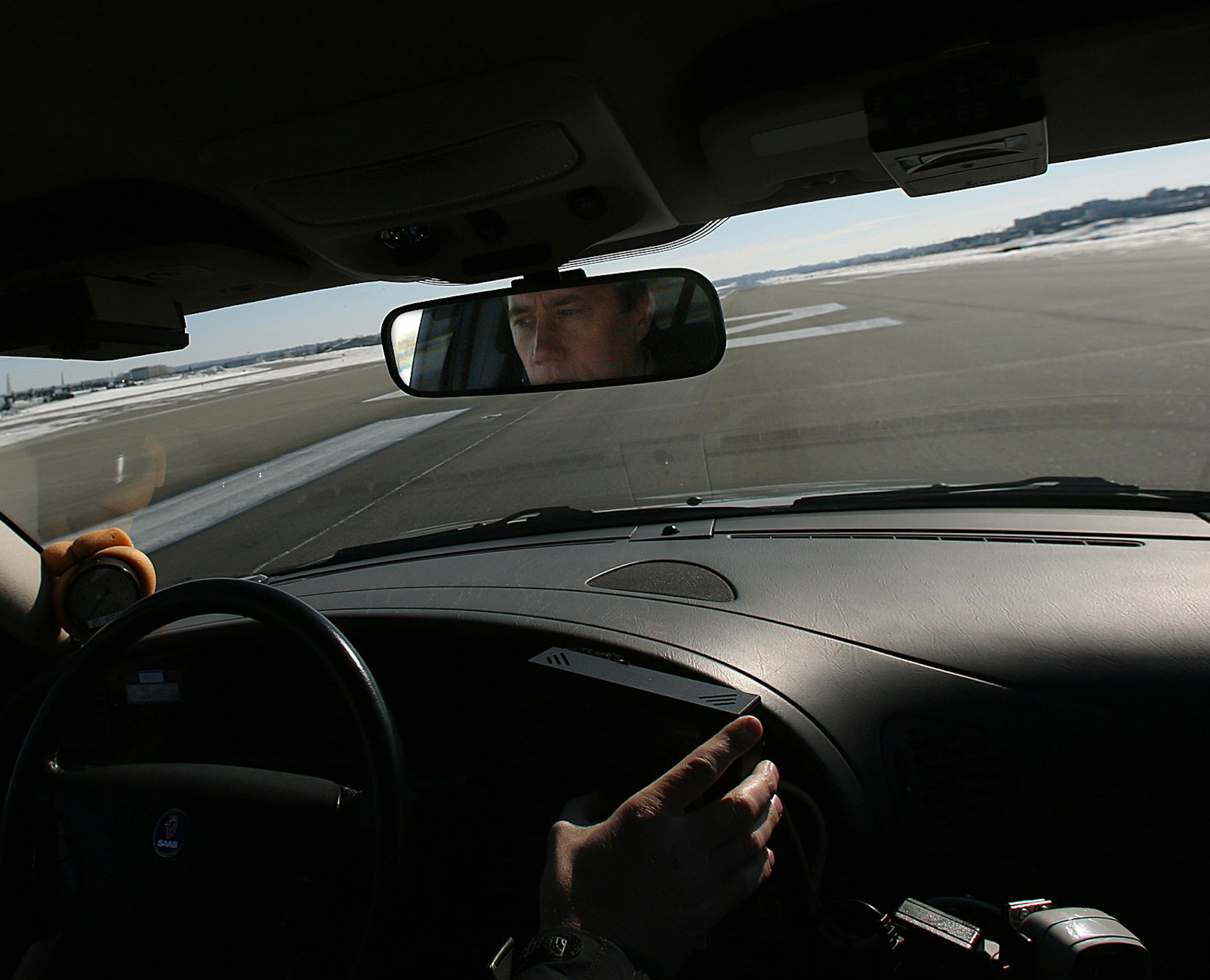
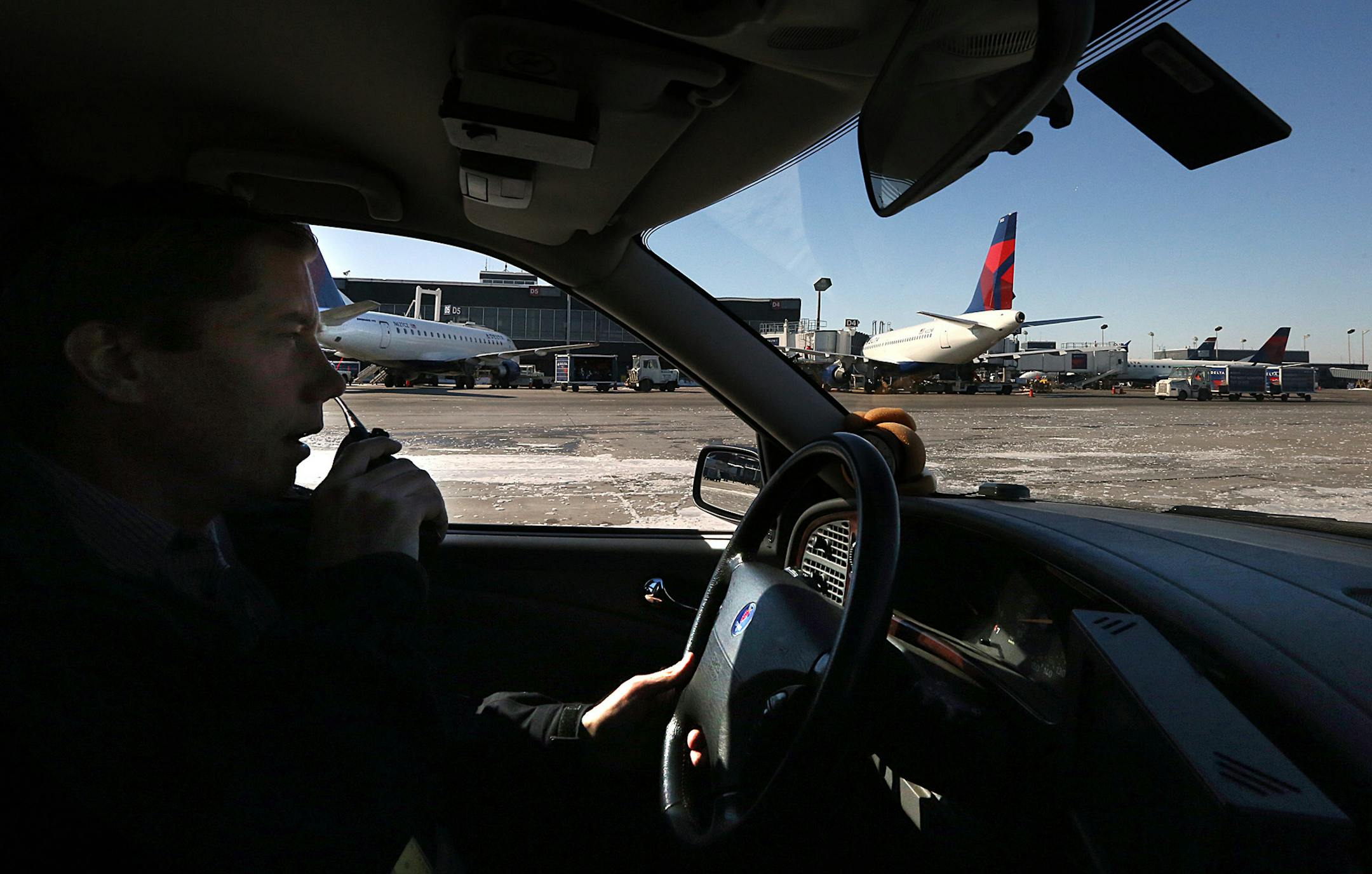
Crews at Minneapolis-St. Paul International Airport are also able to rotate incoming and outgoing planes among four runways during a snowstorm, allowing ground crews to attack pavement when it's free of traffic — a far different task than clearing a metro freeway during a rush hour. Plows and sweepers and chemical sprayers are followed by specially equipped cars that measure traction on the runway against FAA minimum requirements.
While metro streets and highways have been plagued with packed snow and stubborn ice since December, causing thousands of traffic accidents, the airport has not suspended traffic on its runways once this winter.
On Wednesday, as ice on Twin Cities streets began transforming into spring slush, MSP's runways were dry and clear, as they had been for most of the time since a 9.9-inch snowfall ended Feb. 21.
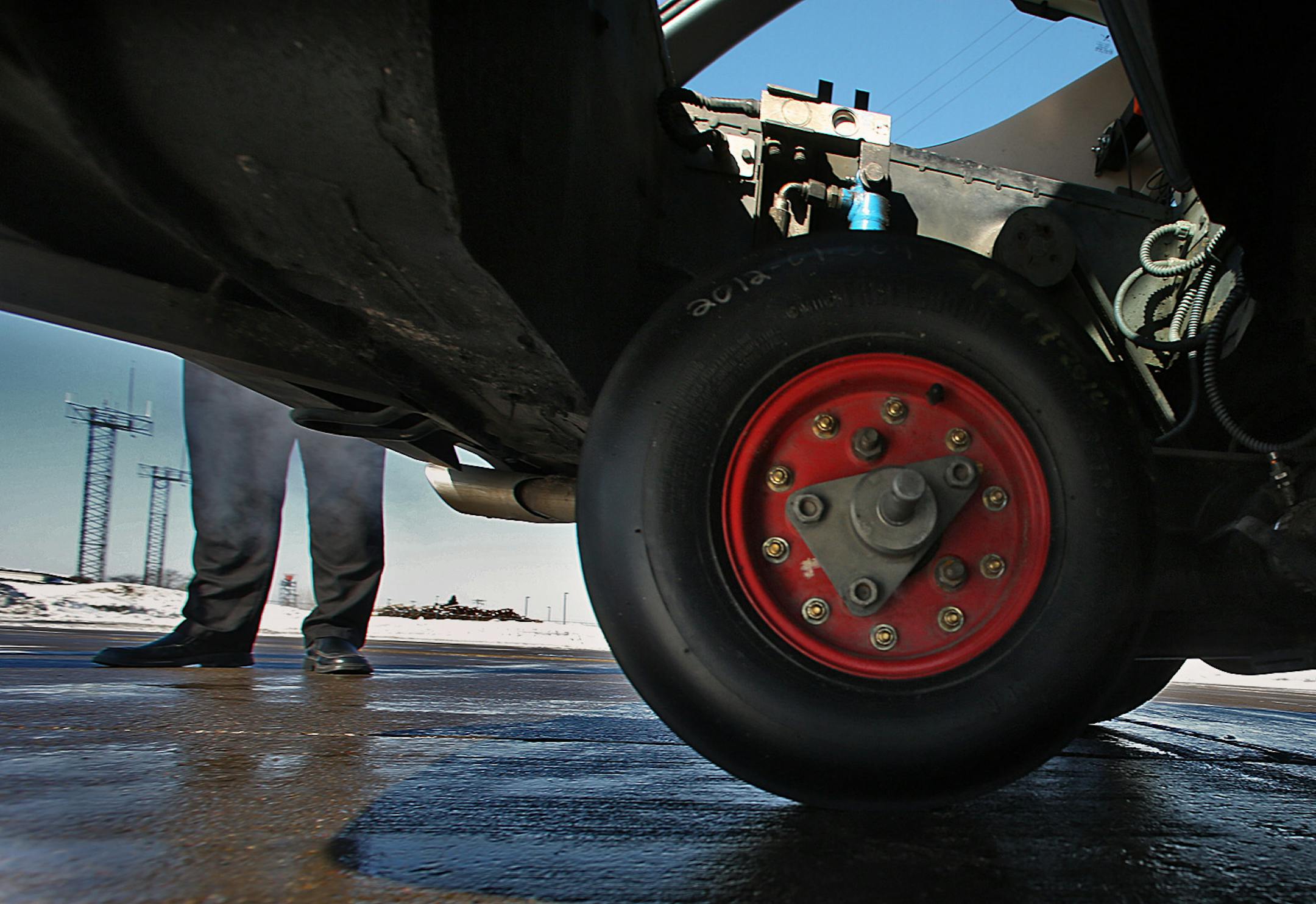
![A wheel is dropped down from a mechanism in the car’s trunk and used to measure the coefficient of friction along the runway. ] JIM GEHRZ • jgehrz@startribune.com / Bloomington, MN / March 5, 20134/ 11:30 AM - BACKGROUND INFORMATION: Minneapolis-St. Paul International Airport has several cars (Saabs) equipped to measure the friction on runways after plowing.](https://arc.stimg.co/startribunemedia/N3BL5GUGORCOFI75SYKYPIL444.jpg?&w=1080)