
Citizens United was the wrong decision

As elections (and democracy) are influenced, the dangers will be apparent.

July 15, 2012 at 11:33PM
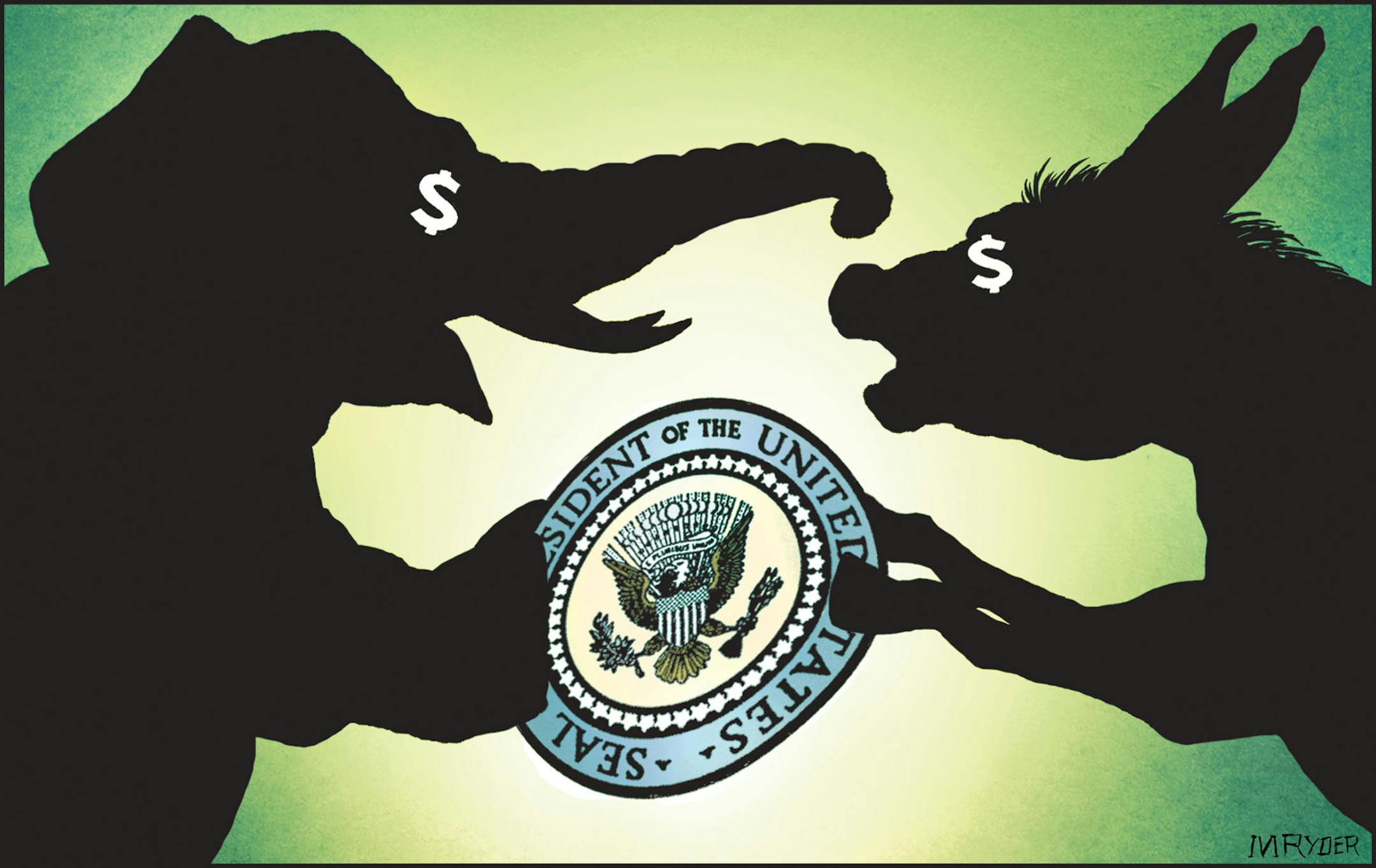
This artwork by M. Ryder relates to political fundraising by Democrats and Republicans.
This artwork by M. Ryder relates to political fundraising by Democrats and Republicans. (Susan Hogan — Tribune Media Services/The Minnesota Star Tribune)

Counterpoint

A July 12 headline claims that "Citizens United was the right decision." I disagree. I'm not saying that it was the "wrong" decision, only that it was a bad one. It has been decided on what the Supreme Court judged were constitutional grounds.

As the article's author, Michael Kinsley, points out, the objections have been mostly by liberals who now "love to hate" the current court. On that score, he is partially correct, because as shown later, this decision has tilted future elections heavily to the right for a variety of collateral reasons.

But, above that, it has distorted the electoral process in America -- possibly forever. For that reason alone, citizens of all political stripes should view it as a potential danger to our democracy and should be wary of its effect.

The influx of obscene amounts of money into our elections has been conceded by Kinsley ("the influence of money in politics is greater than ever, and the influence of people with money is growing apace").

Given that, I am baffled as to why he's so sanguine about the ruling. The influx of money at this point in our history is unfortunately combined with the changing characteristics of modern campaigning, creating a lethal mixture of money and media.

With the exception of a few TV debates, political dialogue has been drowned by the massive explosion of media sound bites. This is far different from an intelligent dialogue between two reasonable but competing views on how we can best govern our nation.

Indeed, most of this media blizzard is nothing more than attack ads. With the introduction of Citizen United in this milieu, the race then often is not decided at the ballot box; it frequently will be decided by fundraising.

But the issue is not just that liberals may be outspent, because embedded in the decision is an unhealthy condition often not apparent as we go into future elections. This condition is best described in the decision made by our own Target Corp. in the 2010 election, and it is likely the dangerous example that will be followed going forward.

Quick history. Target gave a $150,000 campaign contribution in 2010 to an organization called MN Forward. That organization was staffed and headed by former staffers of Gov. Tim Pawlenty's administration, and subsequently gave strong financial support to the Republican gubernatorial candidate, Tom Emmer.

Like Target, these substantial (actually unlimited) corporate contributions mostly have been going to entities (especially PACs) that are tilted to the right. In the short history of Citizens United, this has proven to be true. These PACs have obscene amounts of money now.

In the case of Target, Gregg Steinhafel, Target CEO at the time of the contribution, was known as a strong Republican supporter. He is reported to have given Emmer $2,000 individually (the maximum) and more than $25,000 mostly to various Republican causes.

Further, as CEO of a major corporation, Steinhafel is obviously well-compensated. There is little question where such contributors will (and have) sent their company's money.

Also distressing, as with most corporations, the Target Board is made up of current or former executives with other major American corporations. These include directors associated with such companies as Eli Lilly, General Mills, United States Cellular, Xerox and Wells Fargo. This creates a "club" of individuals with a common cause, most often supporters of the right.

So, now we have major corporations (American and foreign) ... who are most often led by extremely wealthy executives ... with interlocking boards of similar wealthy persons ... capable of giving unlimited amounts of their company's money to (generally) conservative causes.

But there is even more concerning news. The money contributed does not belong to the CEO, or the board; it belongs to the shareholders -- and there is no doubt that a fair percentage of them will not be supporters of the same politics. There are other interested parties as well -- the employees of Target, many of whom would probably not be pleased to see their company supporting a candidate they did not approve of.

Then, there are the customers of Target (I include myself) who do not wish to see their purchases contributing to the revenues of the corporation -- then delivered to candidates they seriously oppose.

Once this interlocking, synergistic money-giving machine matures, and the entities it funds become even more adept at influencing elections, the hidden dangers of the court ruling will become more and more evident.

And Kinsley has failed to recognize or describe this dangerous long-term new dynamic.

-----------------------

Miles Spicer is a retired ad agency executive in Minnetonka.

about the writer

about the writer

MYLES SPICER

More from Commentaries

See More
card image
card image