

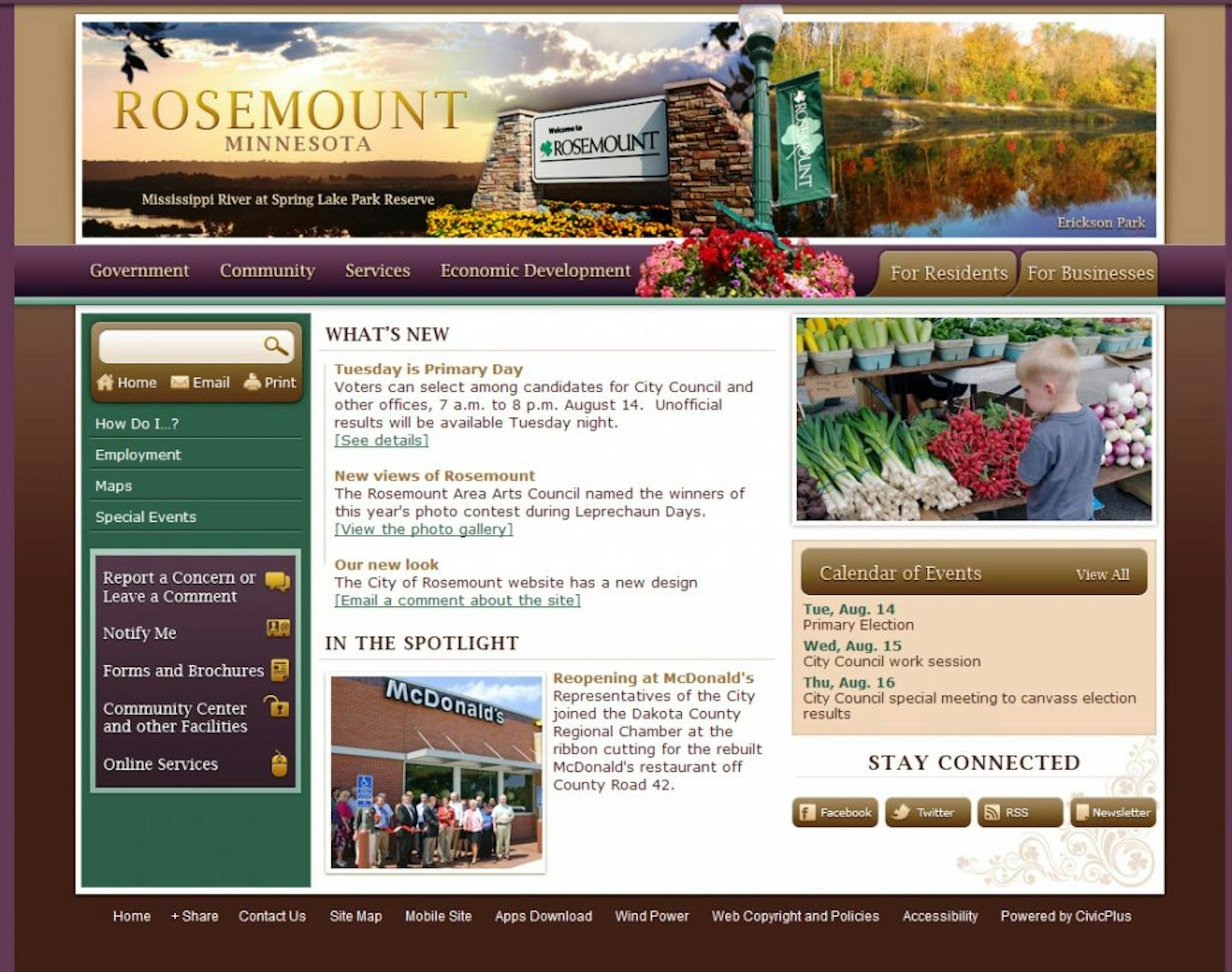
Asked to peek at the websites of a sampling of south-metro cities, Michael Schlotfeldt finds a lot to object to.
But it's when he's asked to do something as simple as locating the agenda of one city's next council meeting that the professional Web page designer really grows exasperated.
After struggling for two minutes and 12 seconds -- an eternity in Web time -- he finally declares: "I give up. I have no idea."
And that, says the president of St. Paul-based Plaudit Design, sends a terrible message.
"Because it's so hidden, it feels like government is not welcoming, like they don't want your input. They've designed this to keep you away, is what it feels like -- as though it's a tool for insiders to exchange documents among themselves."
Navigability -- the ease with which a newcomer can find important information -- is a big reason there's a growing movement across the metro to overhaul the way cities present themselves to the public.
"It's extremely difficult right now to get to any actual document or data on our site," said Brad Tabke, the mayor of Shakopee, which is about to narrow a large field of Web design applicants to a workable number and then set them loose on a re-think. "It must be 20 clicks just to pull up a council agenda."
The issue is important. Even small cities' websites draw thousands of visits a week.


