

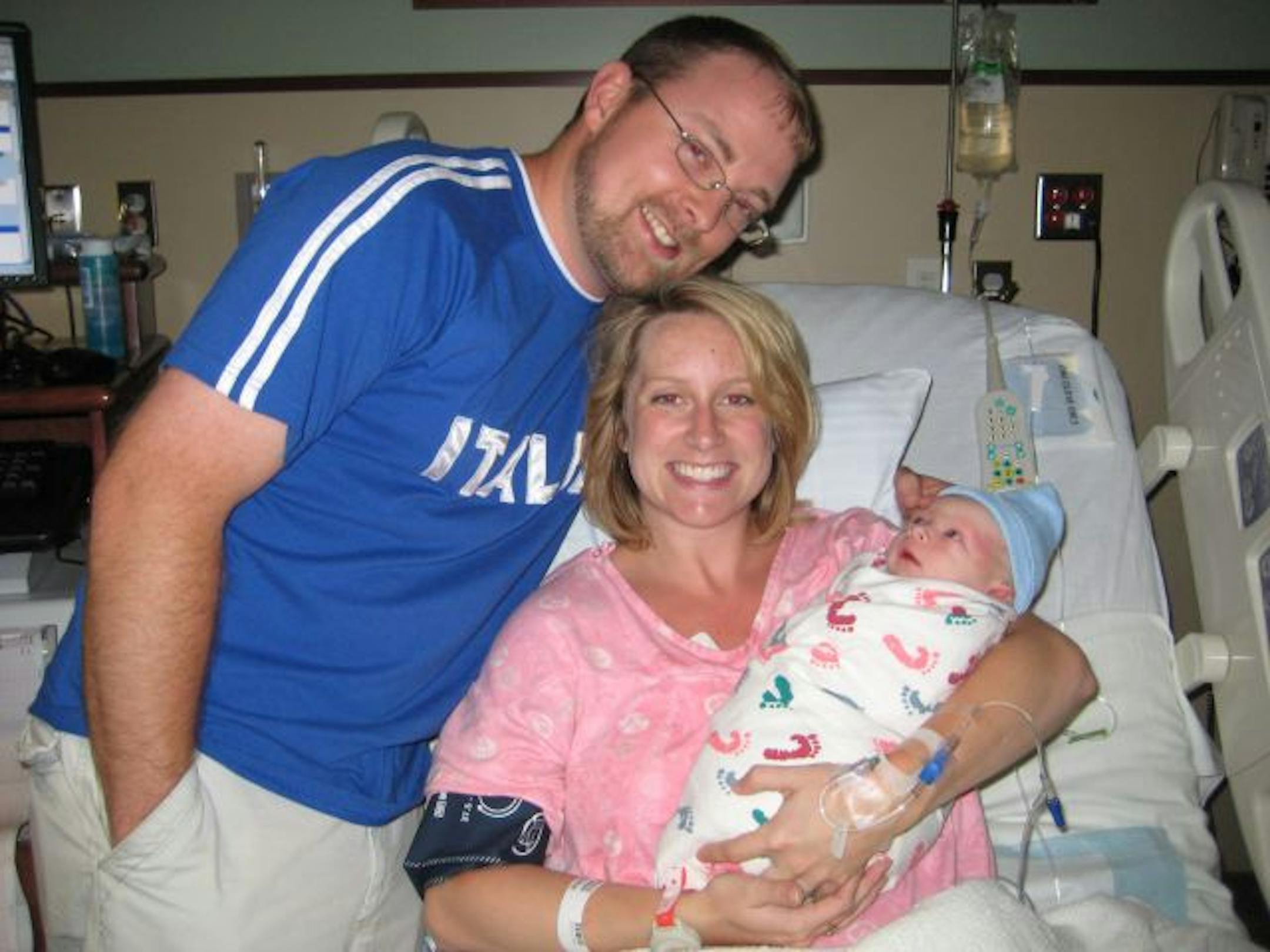
Whether to circumcise is among the first decisions that parents of baby boys have to make.
Michael Miller of Ramsey chose to have the procedure done on his newborn son because he wanted him to "look like me and like the other boys in the locker room. It had nothing to do with religion and certainly nothing to do with any phony medical reason. Those first few showers in middle school are hard enough without being the different one."
Another new father, Troy Tepley of Minneapolis, said his wife ultimately left it up to him, as the other male in the family.
"I did a lot of research and decided it was unnecessary," he said. "We don't live in an era where cleanliness is really an issue, and conformity wasn't enough for me to change him from the natural way he was born."
The number of boys getting circumcisions has been falling nationwide for many years, from about 80 percent in the 1970s to below 60 percent at the start of this decade. But a sharp drop indicated by a recent study -- from 56 to 32.5 percent between 2006 and 2009 -- is being challenged by doctors. The numbers were presented by a researcher for the Centers for Disease Control, but CDC officials have not endorsed them, saying they aren't definitive.
Circumcision rates vary considerably by region, with the Midwest and Northeast having the highest rates. Doctors in the Twin Cities say most parents in this region still opt to circumcise their baby boys, based on cultural mores.
"Social norm is the only thing that matters to most parents I see," said Dr. Karl Chun of Fairview Children's Clinic. "People walk in and say, 'I want it done,' or 'I don't want it done.' Rarely does anyone change their mind based on anything medically related I tell them."
The decision to circumcise can even vary by neighborhood, he said. "In some areas almost everyone does it, and in others almost everyone doesn't. It's more universally done in suburbs and rural areas."


