

Learning to cook a dish well offers many benefits, including these three: confidence, creativity and convenience.
Whether it's a cooking technique or basic recipe, learning one does wonders for your self-confidence in the kitchen. After all, success breeds success, so practicing a dish enough to feel good about serving it to your family and friends raises the probability you'll find another dish to conquer, then another. Before you know it, you'll be thinking of yourself as a good cook.
This will free you to experiment with different ingredients and flavor combinations. After all, if you're a good cook, what could go wrong? More often than not, nothing. In fact, you're much more likely to hit on a winning new dish than to come up with a clunker.
Then there's the convenience and creative factors. Being able to look in your pantry and refrigerator and figure out "what's for dinner" saves time and money.
So what dish do you learn first? There are many candidates: risotto, omelets, pizza, tacos, enchiladas and stir-fries. What they all have in common is that they are a wonderful platform for any number of fresh vegetables, meats and cheeses.
But my choice would be for chowder. It's easy to learn, inexpensive to make and almost anything can go into it successfully. It's also popular with the younger set. While clam chowder is the most iconic version, I find myself making vegetarian chowders, chicken chowders, sausage chowders and seafood variations all the time.
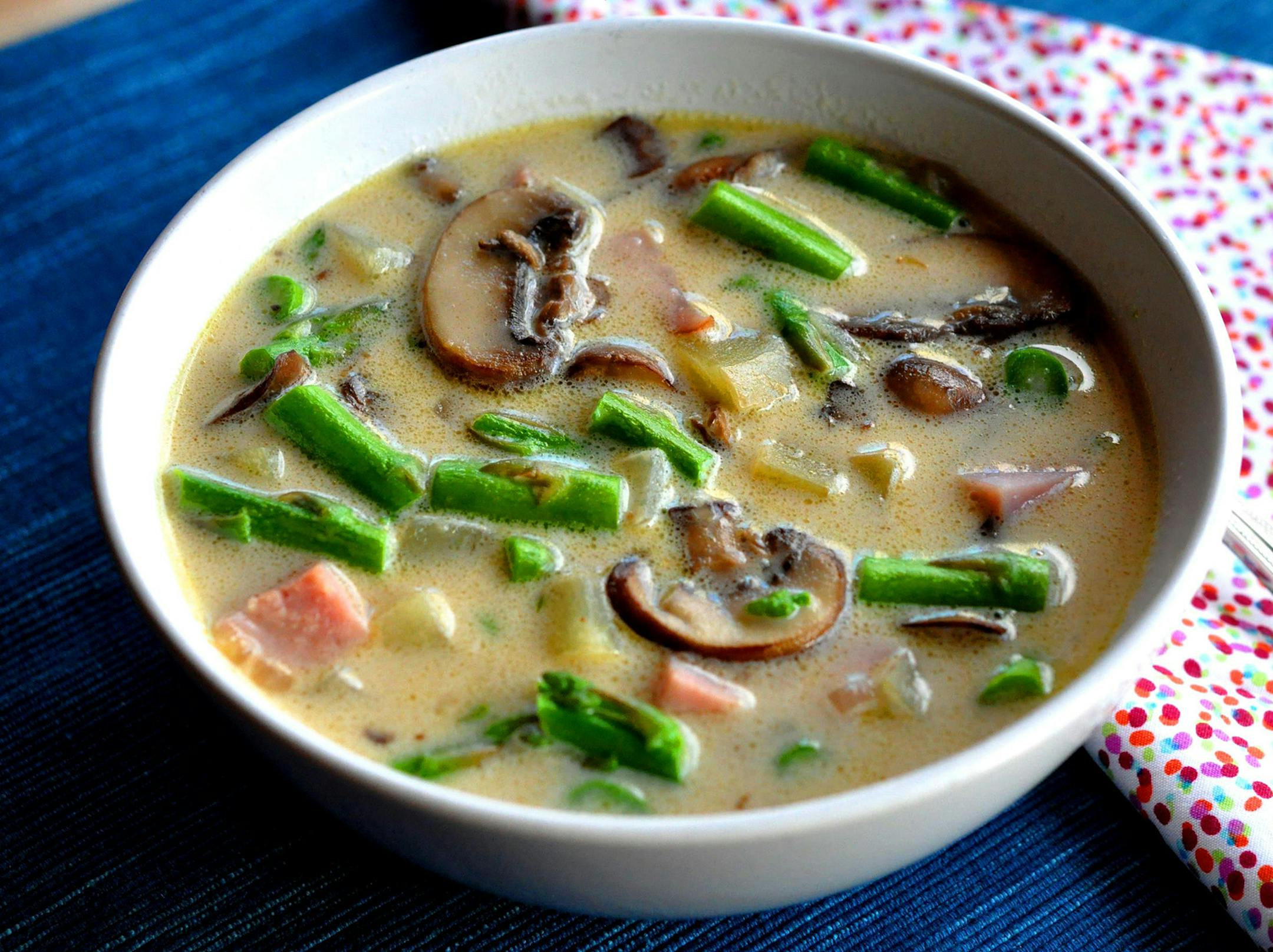
Right now, we are waiting anxiously for the local crop of springtime vegetables to arrive, so an Asparagus, Mushroom and Ham Chowder could make good use of extra vegetables you will likely have in your refrigerator soon. Don't like asparagus? Substitute broccoli, cauliflower, Swiss chard, green beans or whatever you need to use up. Or it could be a combination of all of those vegetables. When the proportions are right, practically anything will work in a chowder.
No mushrooms? No problem. Leave them out or replace them with sweet peppers or shredded cabbage, both vegetables that, like mushrooms, benefit from a little sautéing before the liquid is added.


