

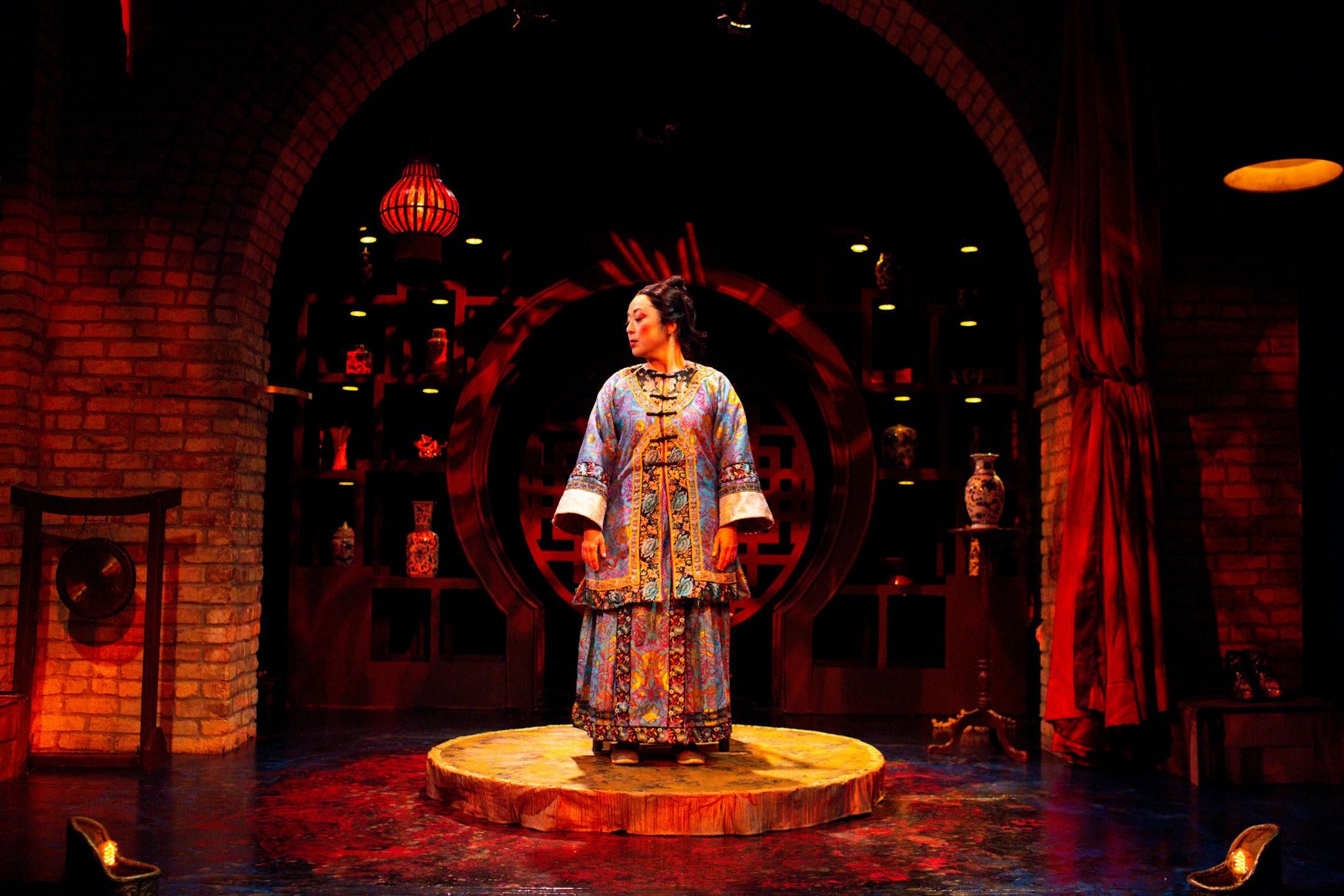
The first Chinese woman in the United States was exhibited like an object in a room full of Asian goods and furniture.
Teenager Afong Moy was brought from her home in Guangzhou, China, to New York in 1834 by two traders with a promise that she would go back in two years. She was put on display as the "Chinese Lady," with her 4-inch feet, because of the practice of foot-binding, becoming an advertised attraction.
As more people became curious about her, she headlined tours up and down the Eastern Seaboard. But we do not know much about her, including whether she made it home or when she died, partly because her words were not written and partly because her story has some dire twists.
When playwright Lloyd Suh first read about her in "The Making of Asian America: A History," a 2015 book by former University of Minnesota professor Erika Lee (who left for Harvard University in July), he was immobilized. In fact, he became obsessed with her.
Moy was a stranger in a land where she did not speak the language and could not realize her dreams, Suh said. "She is unknowable in a way that began to really hurt. It was painful to think about how she was discarded and forgotten."
He decided to honor her in the best way he knows by writing "The Chinese Lady," now up in a regional premiere at Open Eye Theatre in Minneapolis. Marked by pathos and wry humor, "Lady" is as much about a historical figure as it is about "the experience of being lost," Suh said.
"This play is an opportunity for me, the actors and the community to try and conjure her. It's a way to find a healing."
A different kind of actor


