

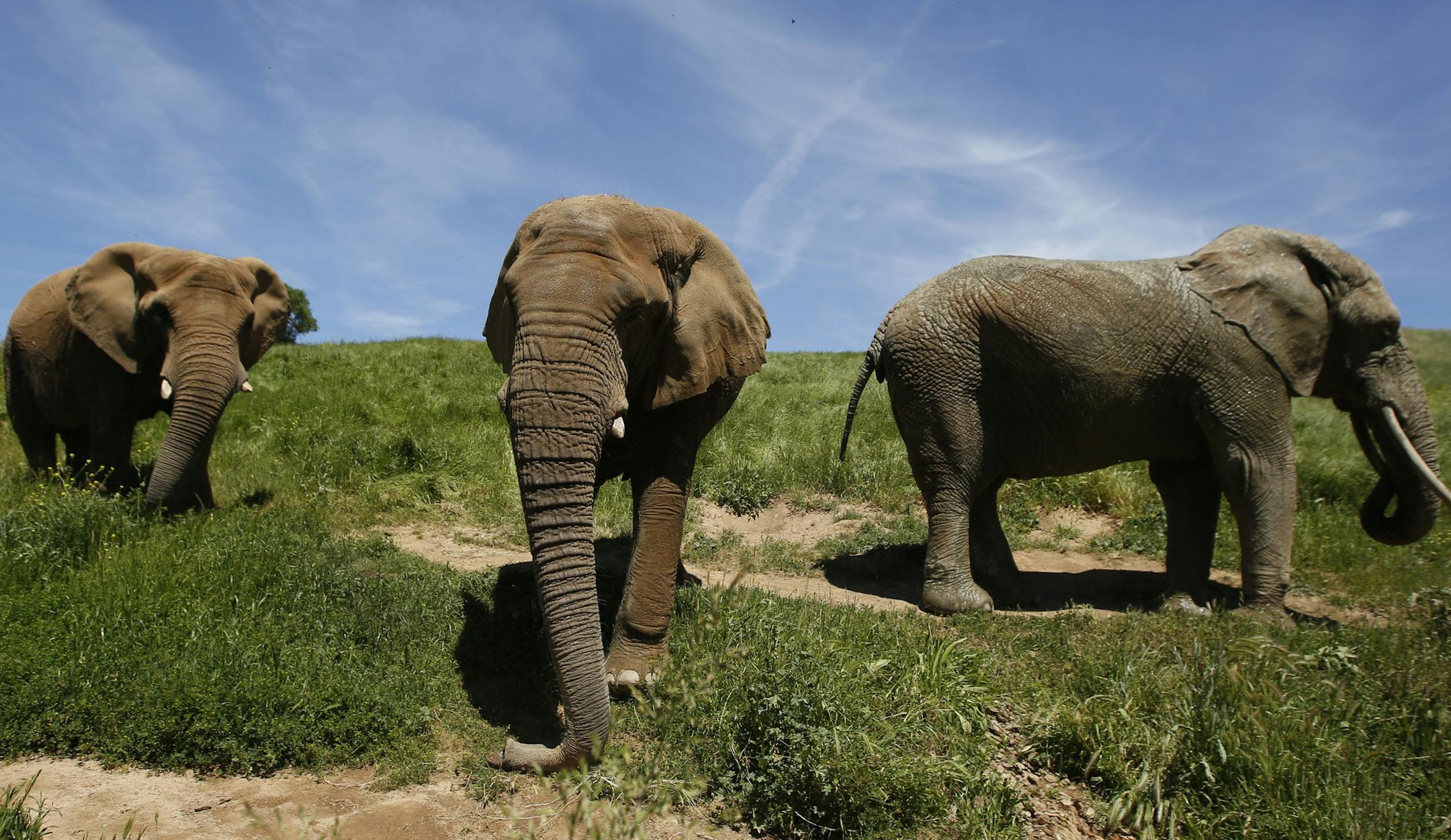
Zoos and circuses in the United States and China may soon be barred from buying African elephants that have been captured in the wild.
A vote at the 18th meeting of the Convention on International Trade in Endangered Species in favor of limiting international trade in the animals would change regulations that allow four southern African nations — Zimbabwe, Namibia, Botswana and South Africa — to sell their elephants to zoos and wildlife parks on other continents.
Together, the four are home to nearly half of the world's African elephants, and they have fewer trade restrictions than nations where the pachyderms are under serious threat. Zimbabwe has shipped dozens of baby elephants to China in recent years and said in June it's open to selling its wildlife to anyone who wants it.
On Sunday, 46 member countries of the convention backed a plan to restrict the sale of wild elephants to so-called in situ conservation programs in their natural habitat, meaning they can't leave Africa to be sold into captivity, said Iris Ho, senior policy specialist at the Humane Society International.
"It's a huge step forward," Ho said by phone from Geneva, where the meeting is being held. "It's really historic that the majority of the parties present recognized that African elephants should not be captured in the wild, sent to zoos and be kept in captivity for the rest of their lives."
The U.S. and the European Union rejected the proposal. The decision will still have to be formally adopted.
Botswana and Zimbabwe both say they have too many elephants and want the convention to relax some of its rules, including a moratorium on ivory sales. That will be discussed at the convention later this week.


