

Granite peaks spiked on the horizon. Clouds whipped overhead. It was February in the Patagonia region of southern Chile, and I was on a mountain bike riding through the grandeur of Torres del Paine National Park.
The road curved and dropped ahead, my riding partners braking as wheels sliced the gravel. "Look at that view!" someone shouted as the Patagonian wind picked up, cancelling any opportunity to respond with its fierce roar.
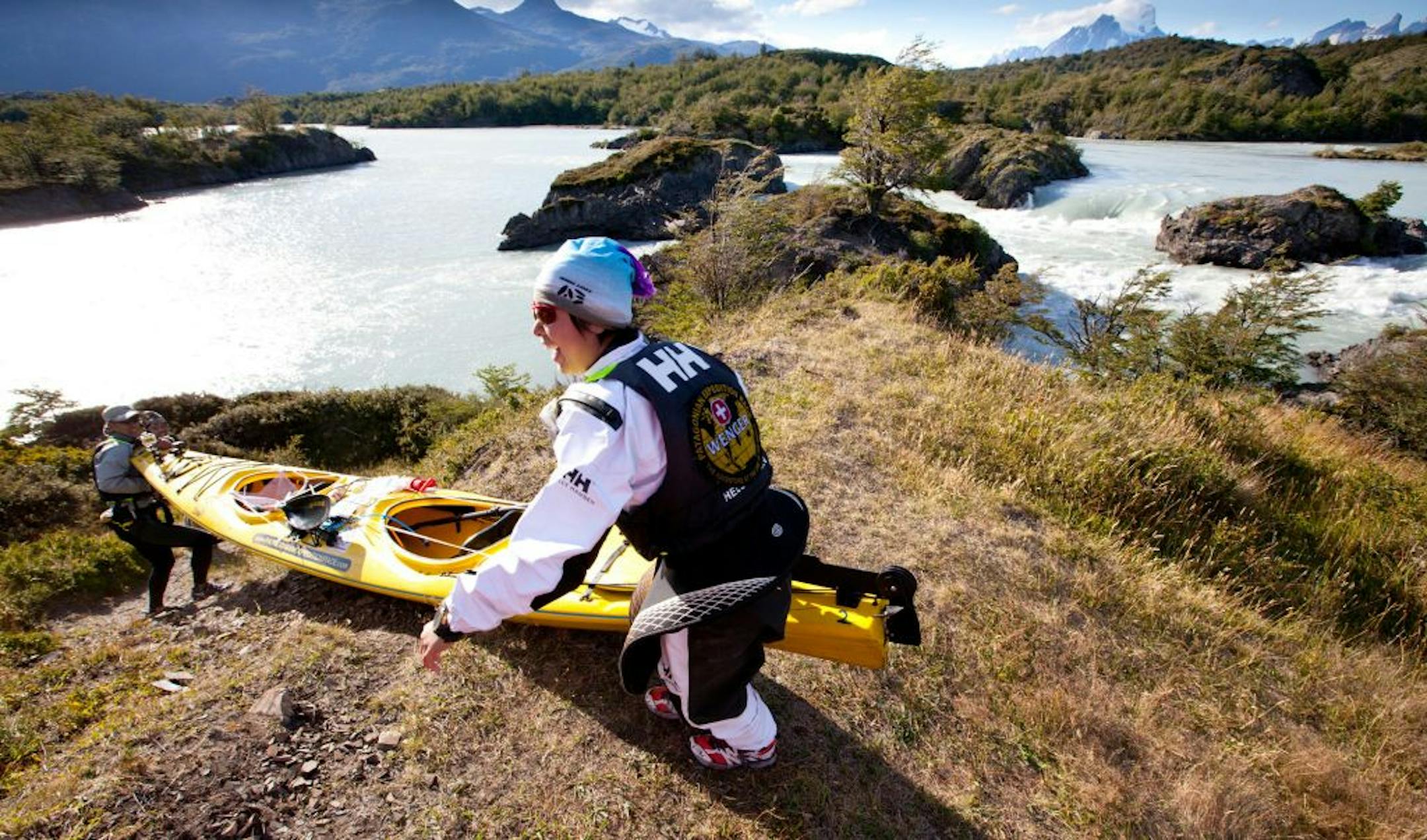
I was speechless anyway. It was day one of an endurance event, the Wenger Patagonian Expedition Race, that I was competing in for the second year in a row. With a team of four people, my journey ahead would include biking, kayaking and mountain trekking -- one after the next -- for a week straight.
Beyond serving as the craziest adventure of my life, the race has allowed me to see an enormous swath of Chile's famous wilderness. Indeed, I have spent almost two months in the region, most of it outdoors and immersed in lands so wild that few humans will ever see them.
From my experience, I offer this guide to Chilean Patagonia, an end of the Earth kind of a place with the scenery and the climate to match. Pack your best rain jacket (it's often wet and windy at the bottom of the world) and load up on your sense of adventure. Patagonia is one of the planet's last great wild places.
PUNTA ARENAS
A trip into the outback of Patagonia often begins in this city, the capital of Chile's Magallanes and Antartica Chilena region. It is a hub for adventure travel in southern Patagonia, including an airport, guides and outfitters, hostels, grocery stores and gear shops. I flew to Punta Arenas from Santiago -- via Minneapolis/St. Paul International, New York and Lima, a 20+ hour trip -- and took a taxi to the city's central square. Punta's streets slope to the Strait of Magellan, a blue-gray plane of cold water. It is a welcoming if somewhat sleepy city, and a perfect base for your trip into the wilds.
STRAIT OF MAGELLAN
Picture Lake Superior. But with salt water and strong currents. Oh, and penguins, too. The Strait of Magellan is a great, dark waterway that cuts an immense V-shape through the tip of South America, providing passage for ships and numerous opportunities for the adventurous traveler. In and around Punta Arenas, you can rent kayaks and take boat tours, a popular one motoring northeast to Magdalena Island where tiny Magellanic penguins live and breed.
ISLA GRANDE DE Tierra del Fuego
Across the strait from Punta Arenas, the main landmass in the archipelago of Tierra del Fuego, the "land of fire," is Isla Grande, and it is a wildly diverse place with seemingly endless dry plains in the north, forests, beaches, vast swamps, glaciers and mountains in the far south. In the Patagonian Race, my team biked more than 150 miles on dirt roads and trekked into the Darwin Mountains. It was likely the most wild place I have ever seen. Infrastructure for tourism in the island's interior is sparse, though trout fishing (some of the best in the world) is luring more people inland. On the south side of the island, the town of Ushuaia, which is in Argentina, is one of the world's most southerly towns, a major port and a hub for area tours.


