By Shannon Healy
Our sweet baby boy, Jack, was born Oct. 18, 2012. When he was only a few weeks old, we started noticing he was having "episodes." His body would tense up and he would scream like he was in pain. These continued to worsen as he got older and got to the point where he would wake up with them every time he tried to go to sleep. He also began having episodes where he would appear to be laughing but still looked terrified and in pain.
For months, we sought out different specialists to try to diagnose our baby's episodes. Finally, in April 2013, we were referred to the neuroscience program inside the St. Paul campus of Children's Hospitals and Clinics of Minnesota. Still unsure of what his episodes were, the staff began following him closely and keeping a close eye on his other symptoms (a large head and low muscle tone).
In August 2013, Jack had an MRI on his brain. Within days, we had a diagnosis: Jack had a tumor on his hypothalamus and his "episodes" were gelastic and dacrystic seizures associated with the tumor. This time was so overwhelming for us, but we finally knew what Jack was battling.
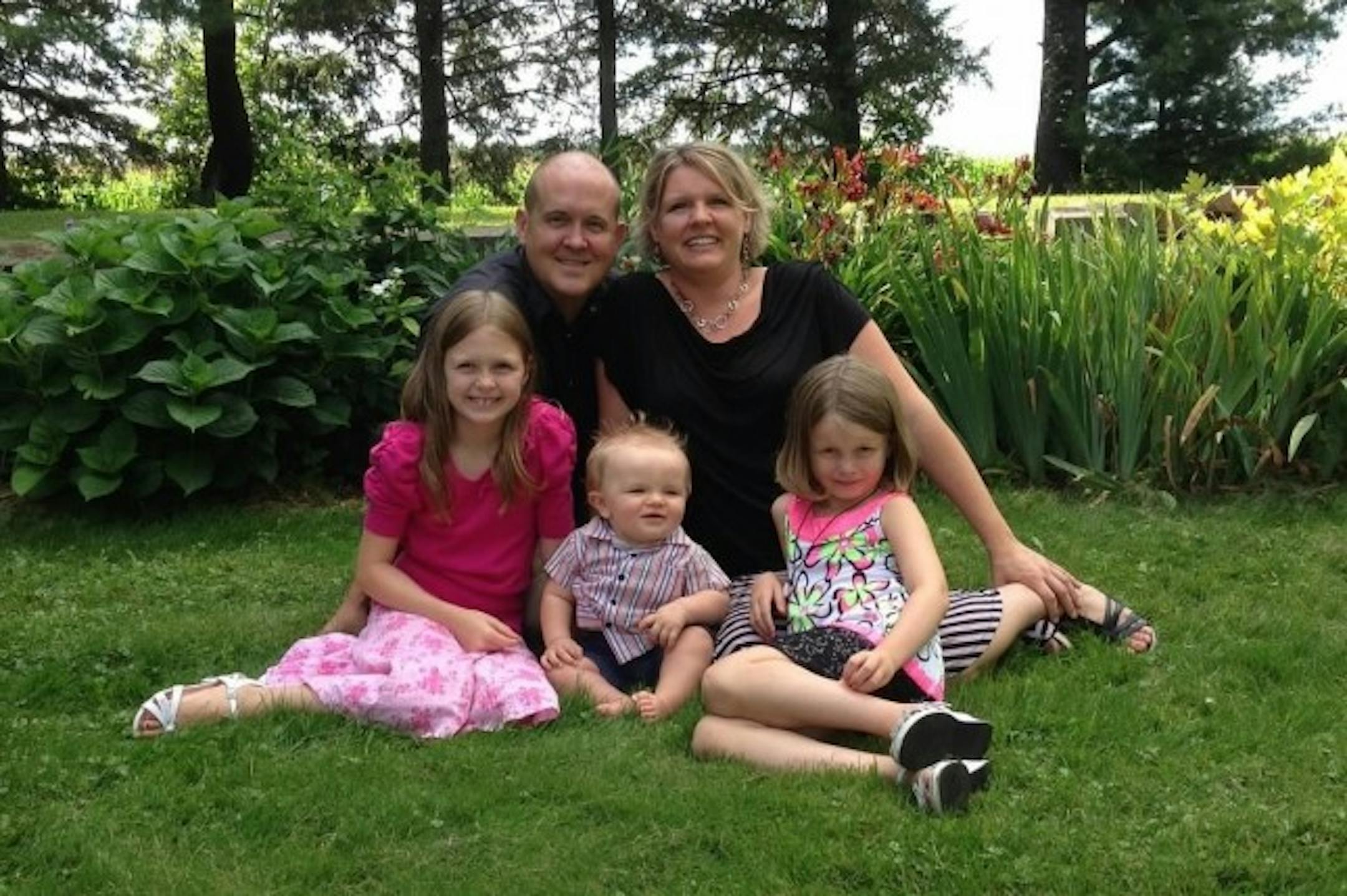
Jack was prescribed a few different seizure medications, but his seizures continued to worsen. At the peak, he was having up to 15 seizures per day; more severe and longer in duration than when he first started having them. They were taking a toll on Jack and our family. He has two older sisters who adore him, and they would get extremely upset every time he would have one of his "fits," as they called them.
It seemed like the seizures were affecting every aspect of Jack's life and development. He began refusing all solid foods and would take only bottles of milk. His seizures constantly would interrupt his sleep. He was having severe delays in his gross motor development and also was falling behind in his speech. Defeat and hopelessness were setting in for us.
After watching the tumor for three months, the neurology team at Children's was able to confirm that Jack had a rare, benign tumor called a hypothalamic hamartoma. We were told that these tumors occur in only one in 1 million people, often appearing in young children. According to Meysam Kebriaei, MD, Children's neurosurgeon, that number could be underestimated since hypothalamic hamartomas can be missed without high-resolution MRIs.
In December, we met with Dr. Kebriaei, who discussed a new surgical procedure calledVisualase, an MRI-guided, minimally invasive laser procedure. He thought Jack would be a great candidate.